
Moving companies play a crucial role in various industries by facilitating the transportation of goods and services. ‘Have Truck Will Haul Moving Service,’ a notable moving company in Riverdale, Maryland, served its community for over four decades under the leadership of Jonathan Lathrop. This article delves into the company’s history, customer experiences, its economic impact on the local community, a comparative analysis with its competitors, and insights that can be gleaned from its closure. By examining these dimensions, we aim to highlight essential aspects of the moving industry that can inform future business models and service delivery strategies.
Moving with Care: The Long Arc of Have Truck Will Haul Moving Service in Riverdale
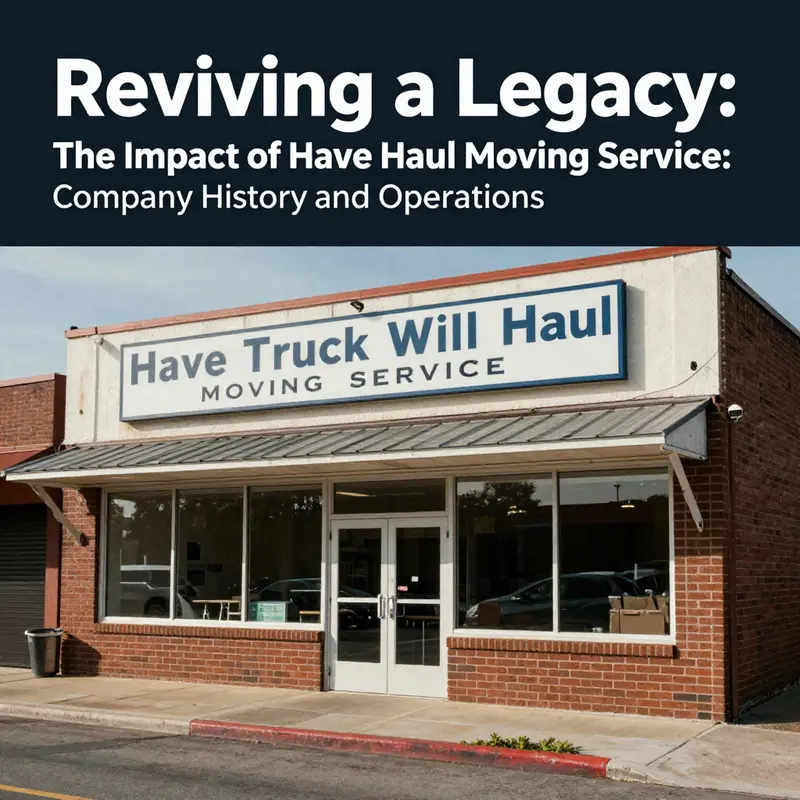
In Riverdale, Maryland, a neighborhood tucked between the charm of suburban streets and the steady hum of highway commerce, Have Truck Will Haul Moving Service stood for more than just a transfer of belongings. It embodied a concentrated slice of American small-business life—one built on steadiness, hands-on expertise, and a simple creed: move people with care, keep costs reasonable, and let reliability accumulate into lasting relationships. The story of this company—founded and stewarded for decades by Jonathan Lathrop—reads as a quiet testament to the craft of moving, a trade that often goes unseen until it becomes personal. From the outset, the company’s identity was clear: a locally rooted operation capable of handling both local and long-distance relocations, approached with the meticulous attention that only a small, focused team can offer.
What made Have Truck Will Haul distinctive was not the flash of modern marketing but the accumulation of experience. Since 1981, Lathrop shepherded many hundreds of moves each year, a volume that reflected both demand and capability. The claim of 200 to 300 moves annually points to a business that could scale the logistics of a move without compromising the care of each client. It’s a rhythm that rewards those who treat each assignment as uniquely human—an effort that begins long before the truck backs into a driveway and continues long after the last box is set in place. In this sense, the company’s approach resembled a well-tuned operation where long-term relationships mattered more than short-term profits. The customer’s peace of mind was the metric by which performance was measured.
Core to that ethic was a straightforward business model: provide full-service relocation with a focus on local moves, but with the flexibility to tackle longer journeys when needed. The services ranged from careful packing and loading to safe transportation, unloading, and even unpacking. In practice, this meant a client could lean on Have Truck Will Haul for a comprehensive package rather than juggling multiple contractors. A small, focused team—likely drawn from a tight crew of seasoned movers—ensured that each step in the process received the close attention that larger outfits sometimes struggle to provide. This is the paradox of scale in the moving industry: while larger firms can promise broad coverage, a small team’s intimacy with a job often translates into fewer mishaps and smoother coordination on the day of the move.
The Riverdale footprint was more than just a mailing address; it was a community anchor. The company’s operations centered on a local service ethos, yet the capability to handle interstate or long-distance relocations broadened the scope for families and individuals seeking reliable help in new chapters of their lives. The practice of moving—in its most personal dimension—has always demanded a blend of logistical rigor and human empathy. Have Truck Will Haul seems to have balanced this duality by offering a service that respected a client’s possessions as if they were their own and safeguarded the emotional stakes of a relocation. The careful handling of personal items, the steady pace of a well-rehearsed crew, and the transparent communication that typically accompanies a small, client-focused outfit all contributed to a reputation that loyalty and positive word of mouth tend to cultivate over time.
There is a quiet tensile strength in a business like this. It stems from the founder’s consistent hands-on leadership and the decision to maintain a small, highly capable team rather than a diffuse workforce. When a moving company operates with a lean structure, it can tailor scheduling, adapt to specific client needs, and troubleshoot on the fly—qualities that shine when a family is counting on a move to go smoothly or a college student is relocating across state lines. The personal dimension cannot be understated: the owner’s direct involvement in planning and execution is often the single most important factor in delivering a move that feels seamless to the customer. For clients, this means trust built over multiple projects becomes the currency through which price is rationalized; the same crew that packs a delicate heirloom today may earn the client’s future loyalty for a future chapter in life that calls for another relocation.
In reflecting on the company’s operations, one sees a model of professional care wrapped in attainable pricing. The emphasis on affordability did not imply cutting corners; instead, it framed service as a practical investment in daily life. A moving project becomes more than a transaction when the price aligns with the customer’s expectations and the service delivers on its promises. This is where the value proposition of a small mover often shines brightest: the ability to provide a robust, customizable service at a price that remains respectful of the customer’s budget, all while maintaining a personal touch. The balance of price and performance is a delicate one, and Have Truck Will Haul appears to have navigated it by centering the human experience of moving—comforting, not coercive; predictable, not robotic.
The operation’s design—local strength with capacity for longer journeys—also offered a practical blueprint for reliability. A smaller team can execute with greater precision when each member understands the intimate details of a given move. The advantage lies not only in careful handling and efficient loading but in the capacity to adjust routes, manage inventory, and respond to last-minute requests with a cooperative spirit. In a moving day, the ability to pivot—whether a staircase is narrower than anticipated, or a piano demands special protection—defines the difference between a smooth relocation and a stressful one. It’s in these moment-to-moment decisions that the enduring value of Have Truck Will Haul was most palpable, the kind of value that adds up over dozens of moves to build a track record clients can rely on.
The broader industry context helps situate this story. While large, national moving brands often tout vast fleets and glossy claims, the local mover’s advantage lies in continuity and accountability. A company that has trained staff, reliable equipment, and a predictable schedule can create a sense of steadiness in communities where home and habit hold deep meaning. The moving routine—packing, loading, transportation, unloading—becomes more than a service; it becomes a relationship. In a community where people may call on a mover for a first apartment, a family’s first home, or a cherished storage transition, that relational capital matters just as much as the physical assets involved in the move.
The documented history of Have Truck Will Haul also intersects with broader shifts in the trucking and logistics space. Small operators, especially those with decades of experience, provide a counterpoint to the scale-driven dynamics that often dominate headlines about the industry. The level of personal accountability, the ability to customize, and the focus on careful handling—all of these elements echo through the evolving conversation about how moving work fits into the larger supply chain. For readers exploring this topic, a linked discussion of key drivers shaping the trucking ecosystem can offer useful context. See an exploration of several broad forces at play in the sector here: Key Economic Trends Impacting the Trucking Industry.
If one tracks the arc from inception to closure, the narrative of Have Truck Will Haul becomes a portrait of endurance and adaptation. The company’s status is listed as permanently closed in the current landscape, a reminder that the life cycle of small service businesses is rarely linear. The closing of a local moving firm often reflects a confluence of factors—personal transitions, evolving market demands, and the ongoing pressures that shape small-business viability. Yet even in closure, the imprint of such a business persists in the stories of customers who remember their moving day as well as in the lessons that other operators draw from a years-long practice of careful, client-centered service. The shop window may be shuttered, but the craft it celebrated endures in the routines of movers who came after and in the shared understanding that a move, done right, is as much about empathy as it is about equipment.
For researchers and practitioners studying the logistics and moving sectors, Have Truck Will Haul offers a compact case study in how a small, independent operation can sustain quality across a long horizon. The owner’s hands-on leadership, the decision to keep the team tight and skilled, and the commitment to transparent pricing together formed a working philosophy that prioritized dignity in the process of relocation. In an industry where the choreography of a move requires coordination among trucks, straps, blankets, and time, this approach underscores a timeless truth: trust is built through repeated demonstrations of competence, care, and clarity. Even as market structures shift and new technologies reshape workflows, the human core of moving—physical stewardship of possessions and the reassurance offered to anxious customers—remains the backbone of a service that many will remember long after the last box has been placed.
External resource: Have Truck Will Haul Moving Service official site provides a window into the company’s history, services, and reflections on its operational philosophy and client testimonials: https://www.havetruckwillhaul.com
From Local Haulers to Lasting Trust: Lessons on Customer Experience
When a small moving service in Riverdale serves a community, the measure of success goes beyond price and speed. It shows up in punctual arrivals, careful handling, and clear communication when plans shift. This chapter looks at customer experience through the lens of a local hauler known as Have Truck Will Haul Moving Service. While public feedback for this specific outfit may be limited, broad patterns in the moving industry provide a useful frame. The goal is to translate those patterns into practical steps that earn trust, deliver dependable service, and leave customers with more than a stack of empty boxes. The aim is to show how a local company can build a reputation that endures beyond the move itself. The discussion ties to professional trucking culture, investment in people, and evolving expectations around reliability, care, and transparency in the moving process.
To begin, the heart of a strong moving experience rests on three pillars: punctuality, item care, and clear communication. Punctuality signals respect and reduces anxiety by setting the day’s tempo. Late arrivals, rescheduling friction, or vague estimates can create doubt and lead to misaligned expectations about pricing and effort. In the broader industry, punctuality paired with attentive handling often correlates with higher customer satisfaction. The contrast matters because a local outfit can differentiate itself by turning reliability into a concrete promise.
Care for belongings is the second pillar. Proper packing, padding, secure loading, and careful unloading protect items and the home. The difference between a rushed job and a careful move shows up in tiny details. A consistently well handled move earns not just one referral but repeat business and word of mouth credibility that lasts years. This care also communicates respect for the client’s life during a transition. The literature suggests a tension between speed and care, and the best outfits balance both to deliver steady results.
Transparent communication ties the day together. A project unfolds in stages: estimates, scheduling, packing, transport, unloading, and final walk through. When customers feel informed rather than surprised, stress drops and collaboration rises. Honest pricing, timely alerts about obstacles, and the willingness to adjust plans with empathy reflect a company’s values. In small towns and mid sized markets, strong movers master clarity without becoming rigid. They prepare for contingencies and communicate ahead of time about stairs, layouts, or unexpected challenges. The goal is not to eliminate surprises but to manage them gracefully while preserving trust.
The absence of direct public feedback for Have Truck Will Haul Moving Service poses a practical challenge. Without a consolidated set of reviews, it makes sense to ground analysis in industry norms and in the broader discourse about moving experiences. Comparisons with related services reveal common pain points and bright spots: punctuality and care are decisive drivers of satisfaction, while breakdowns in communication can erode trust. The Riverdale outfit can translate this general wisdom into localized practice that reflects its own heritage and neighborhood context.
Experience in moving services is shaped by behind the scenes investments. Long standing operators credit training, staff continuity, and a culture that supports employees. A stable crew builds tacit knowledge about packing methods, safe handling of stairs, and navigation through typical home layouts. This human element matters as much as the mechanical one. A company can signal its commitment through onboarding, ongoing safety and customer service training, and a feedback loop that turns lessons into improved routines. In tandem with industry trends that emphasize workforce development, these practices help sustain reliability over time.
In striving for a superior customer experience, the space between intention and execution is where real work happens. A moving crew must operate with a rhythm that appears effortless but is the product of disciplined practice: planning, efficient packing methods, proper equipment use, and a shared language. The client sits at the edge of the action, watching the clock and the stairs, hoping for a smooth collaboration. A friendly, transparent demeanor complements technical skill and turns a potentially tense situation into a collaborative project. The strongest outcomes come when every team member understands their role and remains approachable to the client.
This discussion does not claim a single script for every move. Each relocation brings unique challenges: stairs, narrow hallways, heavy wardrobes, or delicate pieces that require extra care. The defining factor is how a company adapts in real time without sacrificing safety or transparency about charges and timelines. A credible operation offers transparent estimates, options for padding and protection, and an on site assessment that informs the final bill. In practice this translates to a culture where workers can raise concerns, pause work when necessary, and coordinate with clients to protect property and peace of mind. The result is a service experience that travels beyond the move itself and into relational value, where the client feels seen, heard, and supported.
Centered in this frame, Have Truck Will Haul Moving Service sits at a crossroads common to local operators: the tension between staying lean and ensuring consistent quality. The founder’s long career in the trade remains a source of insight, but enduring value today depends on translating experience into dependable practice. The takeaway for small and mid sized moving outfits is to cultivate a culture of reliability through people first training, maintain clarity in communication with customers, and treat each move as an opportunity to demonstrate care. When a company weaves these threads into daily routines, it earns trust that referrals depend upon. For readers seeking deeper context on workforce development and operational excellence in trucking and moving, related resources provide further perspective.
In closing, the arc of a local moving service’s reputation is built by many small acts: timely arrivals, careful handling, and honest, proactive communication. Even without abundant public feedback about Have Truck Will Haul Moving Service, the patterns described here offer a practical lens for evaluating and improving moving experiences. The chapter invites providers and customers alike to see satisfaction as the result of a consistent, respectful, and professional approach to every step of the journey, turning a routine relocation into a trusted, repeatable service that communities rely on when life changes direction.
Moving Local Lives and Local Markets: The Economic Footprint of a Riverdale Haul-and-Move Service
In Riverdale, Maryland, a modest moving service once threaded the neighborhood with a steady rhythm of trucks, tape, and the careful choreography of hinges, blankets, and memory. It was more than a business moving furniture from one apartment to another; it functioned as a quiet engine of local exchange. The operator, a figure named in public records and company histories, claimed a long arc in the trades, having provided moving services since 1981 and averaging hundreds of moves each year. Even after the door closed, the traces of that enterprise linger in the way households and small businesses think about relocation, storage, and the logistics that bind a town together. This chapter follows that thread, using the Riverdale example to illuminate how a local hauling and moving service can ripple through a regional economy, touching households, employers, neighborhoods, and the broader market climate in ways that are both tangible and transformative.
At the core, a local moving service serves as a catalyst for mobility—the essential first step for households seeking to settle into a new home and for businesses aiming to grow, shrink, or relocate their operations. When families decide to move, they do not only transfer belongings; they shift routines, social ties, and expenditure patterns. The immediate effects are visible in the demand for packing materials, professional packing services, and temporary storage facilities, as well as in the scheduling and routing operations that make the move efficient and predictable. A Riverdale move is a small logistical project with outsized significance for adjacent services: movers leverage local hardware stores for supplies, engage with storage facilities to accommodate transient needs during multi-phase relocations, and connect with cleaning and remediation services when a move reveals warehoused messes or aging dwellings. This cluster of activity creates a micro-economy in which a single relocation feeds multiple adjacent enterprises. In a town like Riverdale, the cumulative effect becomes a recurring pulse that supports small businesses, maintenance workers, and a more fluid housing market.
The economic logic extends beyond households to encompass the way small businesses relocate or expand. Relocation is a recurring feature of a vibrant local economy: a business might consolidate its operations, open a satellite location, or move into a larger space to accommodate growth. Each transition requires a moving plan, a timeline, and a crew that can handle fragile items, equipment, and the delicate choreography of a commercial shift. For a city at the edge of a metro area, these moves are part of a broader pattern of economic adaptation. A local hauler, by providing flexible, affordable options, lowers the barrier to change. This matters because small business owners increasingly need to experiment with location, footprint, and layout without exhausting capital on fixed transportation assets. The research materials reflect this sentiment: moving services reduce operational barriers for entrepreneurs, enabling them to scale operations or enter new markets with relative ease. In practical terms, this means more frequent relocations, more opportunities to optimize layouts, and a more dynamic business environment that can respond quickly to market signals.
As moves occur, they set in motion a chain of employment and income generation that stays close to home. The direct workforce—drivers, dispatchers, and field laborers—gains steadier hours and wages. Indirectly, skilled labor tied to packing, storage, and even post-move cleaning and refurbishment sees increased demand. This creates a modest but meaningful growth in household income across the community, which translates into higher local spending on groceries, services, and neighborhood amenities. It also broadens the tax base for local governments, modestly improving municipal finances and enabling a more robust provision of public services, parks, and infrastructure. The net effect is a subtle, recurring uplift in local economic vitality precisely when residents are looking for stability and reliability in a fluctuating housing market. The presence of a dependable moving option can also reassure potential newcomers or relocating businesses that the town has the logistical backbone to accommodate change, which, in turn, nurtures population turnover and economic diversification.
From a broader lens, the presence of accessible, flexible moving solutions can lower barriers to entrepreneurship. In a regional economy where capital for new transportation assets is constrained, a well-tuned moving service helps new operators launch pilot projects, relocate temporary premises, or consolidate resources without committing to large-scale capital investments. This entrepreneurial flexibility encourages competition and innovation, not by replacing assets but by enabling more efficient use of them. The interlocking effect of these decisions can lift the entire local ecosystem: retail experiences are refreshed when residents move to different neighborhoods, hospitality sees shorter-term demand as people explore new living situations, and construction activity may pick up as new homes come online and older spaces are repurposed. Each relocation becomes a micro-injection of demand across multiple sectors, reinforcing a cycle in which mobility fuels commerce.
Technology and automation, increasingly integrated into the logistics landscape, add new dimensions to this local story. A study from Carnegie Mellon University’s Department of Engineering and Public Policy, published in July 2023, flagged that automation is likely to shrink operator-hours in long-haul trucking over time. While the specifics apply more directly to long-distance routes, the implications cascade inward: if automation reduces the labor hours required to move heavy loads, it can lower operating costs and improve route efficiency for local haulers too. The ripple effects may include job shifts rather than outright declines, with trained personnel taking on higher-value tasks such as advanced packing optimization, real-time inventory management, and customer- facing problem solving that requires judgment beyond routing. In a small-town setting, this translates into trucks that arrive more precisely on schedule, reductions in labor intensity for routine tasks, and a potential reallocation of human effort toward roles that demand nuance and care—traits that are central to a trusted moving service. The narrative here is not one of displacement but of adaptation: local firms can sustain competitiveness by embracing automation as a force multiplier, freeing staff to focus on complex, highly personalized moves and on ancillary services that add value for households and small businesses alike.
The interconnections extend to other local sectors as well. When mobility increases, so does the likelihood of supportive infrastructure and services that rely on fluid movement: retail businesses benefit from the turnover of residents, hotels and short-term housing accommodations gain appeal to families in transition, and construction activity—renovations, refurbishments, and new builds—benefits from predictable demand for space to stage materials and equipment. In this ecosystem, a Riverdale relocation service becomes part of a wider system that keeps goods and people moving with minimal friction. The research results emphasize a ripple effect across industries—retail, hospitality, and construction—creating a synergy that improves the town’s resilience during economic shifts. In practical terms, this means more stable cash flows for service providers and more reliable outcomes for families, who need trustworthy help when their lives require change the most.
A moving service’s influence also carries social texture. The capacity to move with confidence can reduce the stress and uncertainty around relocation, especially for families with limited resources or those navigating complicated life transitions. In neighborhoods where housing turnover is common, reliable movers help maintain community networks by coordinating with property managers, storage facilities, and nearby service providers. The social value emerges not only in the efficiency of moving items but in the sense of continuity and opportunity that mobility makes possible. The capacity to move smoothly can empower residents to reimagine their living spaces, pursue education or employment opportunities across town, and participate more fully in the civic life of the community. In this sense, the economics of moving are inseparable from the social fabric that gives a town its character.
For readers seeking a broader framework, the idea that moving is part of a larger mobility ecosystem is reinforced by industry trends discussed in contemporary analyses. A linked perspective on the driving forces behind trucking and transportation—such as rapid changes in technology, labor markets, and regulatory environments—helps illuminate how a locally focused service can adapt to national and global shifts. This is not a story of a single business standing apart from the economy; it is a story of a local service embedded in a web of moving needs, where the decisions of one household or business reverberate through a network of suppliers, partners, and neighbors. To explore the broader context of these trends, see the ongoing discourse on how technology and policy shape the trucking and moving sector, including discussions on automation and its evolving role in the logistics chain. For those who want to dive deeper into the macro trends—alongside the local texture of Riverdale’s experience—the subject area offers a rich field of evidence and analysis. Key economic trends impacting the trucking industry can be found here: https://fritzke-truckinginc.com/key-economic-trends-impacting-the-trucking-industry/. For additional, forward-looking context on automation’s potential effects on operator-hours in long-haul trucking, an external study provides valuable insight: https://www.engineering.pitt.edu/News/2023/July-7-2023-Automation-in-Trucking/.
null
null
From Riverdale to the Road Ahead: Lessons on Innovation, Transparency, and Resilience for Tomorrow’s Moving Services
The closure of Have Truck Will Haul Moving Service in Riverdale, Maryland, sits not as a solitary footnote but as a reflective turning point for an industry built on trust, muscle, and the long, patient work of moving lives forward. A company that boasted decades of practical know-how and a busy cadence—hundreds of moves each year—disappeared from the map, leaving questions about what customers expect today and what operators must offer tomorrow. The story, while specific in its local detail, reads like a broader ledger of the moving business: a sector whose fundamentals remain robust—the transportation of belongings from one address to another—yet whose margins and viability increasingly hinge on precision, transparency, and the deft use of technology. If Had Truck Will Haul taught anything, it is that the road to sustainable service is paved by adaptability just as surely as it is by good tires and a strong crew.
Today’s moving consumer no longer values a simple ride from point A to point B. They demand that the journey be visible, verifiable, and efficient. Transparency has become a selling point as powerful as a reliable truck. Real-time tracking of the move, upfront and itemized estimates, and a packing service that takes responsibility for fragile items as if they were their own are no longer luxuries; they are baseline expectations. The modern mover must be able to show a customer when a shipment will depart, when it will arrive, and how much space and time their possessions require in transit. In practice, this translates into more than a GPS beacon riding on a box. It means a suite of services and systems that enable the customer to see the move as a managed process rather than a hoped-for outcome. A packing crew that arrives with professional materials and a disciplined approach to compact, secure packing can turn anxiety into confidence. Flexible scheduling, too, becomes a differentiator—the ability to accommodate a tight closing date, a change in building access rules, or a last-minute alteration to the inventory without sacrificing safety or speed.
The technological angle is the most telling. In an era when online reviews shape reputations almost immediately and booking platforms set expectations for immediacy, a moving operation without a digital footprint risks irrelevance. The lesson from this closure is not to chase bells and whistles for their own sake but to align digital tools with real customer needs. Dispatch intelligence, online quotes, and streamlined customer communication are not ancillary add-ons; they are the backbone of a credible, scalable service. Technology can transform a traditional labor-driven model into a data-informed operation that can predict workload, allocate crews with skill-specific competencies, and adjust routes in real time to avoid delays. When a company can pair a courteous, trained packer with a transparent, date-stamped update for the client, it builds trust that travels ahead of the truck itself.
This shift also changes how the business thinks about labor. The industry has long relied on a mix of long-standing crews and seasonal demand spikes. In the current climate, where labor markets are tight and competition for skilled movers is intense, the ability to recruit, train, and retain reliable staff becomes core to survival. Training is more than teaching how to wrap a sofa. It is about instilling a culture of care for clients, safety for crews, and accountability for service results. A well-trained crew can execute complex moves—pianos, delicate electronics, heirlooms—without turning a routine job into a costly and stressful event for a client. Firms that invest in people, not just trucks, tend to outperform those that treat moving as a commodity and a race to finish the job as fast as possible.
The broader costs of operation cannot be ignored. Rising fuel prices, vehicle maintenance, insurance, and regulatory compliance all squeeze margins. The question for future-moving operators is not whether they will face these pressures, but how they will respond. A resilient model blends efficiency with resilience. This might mean diversifying revenue streams to smooth seasonal cycles: secure storage and warehousing solutions for short-term or transitional housing, or offering specialized logistics such as art handling, fine furniture protection, or sensitive electronics transportation. It can also mean expanding into related services, such as international shipping arrangements or cross-border logistics coordination, where expertise and trusted partnerships add value that a simple local move cannot. In other words, the business must be able to ride the same wave by shifting the weight of offerings when tides change.
In discussing the future of moving services, one cannot ignore the explicit link between customer-centric innovation and financial flexibility. A company can deliver a perfect move on a picturesque calm day and still fail if it cannot ride a storm. A customer-centric approach means pricing clarity from the first contact, no hidden fees, and a clear, fair policy for changes in plans. It means pre-move surveys that identify potential hazards or packing challenges early, so the mover and the client can agree on how to address them—reduce stress instead of reacting to it mid-move. It means offering options that matter to households and businesses alike: flexible drop-off windows, scheduled storage pickup, and a guarantee that if a time slot is missed, there is a fast, straightforward remedy. When customers feel in control and informed, trust grows, and so does the likelihood of repeat business and referrals, which are the currency of durable success in service industries.
This is where the dialogue between industry trends and business strategy becomes essential. Observers of the sector highlight that the key economic trends impacting the trucking industry—described in industry analyses as evolving cost structures, labor market dynamics, and technological acceleration—shape a moving business’s fate far beyond the curb. The chapter of Have Truck Will Haul’s closure underlines that a successful move company must do more than transport goods; it must orchestrate the entire moving experience with precision and care. The practical implication is straightforward: invest in systems that align operational capability with customer expectations. Implement a dispatch and scheduling platform that integrates inventory, estimates, and route optimization. Build a feedback loop that translates customer experiences into continuous improvement. And, where possible, formalize partnerships with storage facilities, cleaning services, and specialty handlers so that the company can coordinate end-to-end solutions rather than rely on a single on-the-day performance.
The move toward a more resilient model is not merely about adding services. It is about embedding sustainability into the core strategy. Environmental considerations—reducing waste, choosing efficient routes, and maintaining aging fleets to minimize costly downtime—can translate into measurable savings and a stronger value proposition for eco-conscious customers. The industry’s future will reward operators who can demonstrate a balanced approach: reliable timeliness, transparent pricing, robust safety practices, and responsible stewardship of resources. In practice, this can look like transparent energy usage reporting for fleets, maintenance schedules that prevent breakdowns, and a culture that treats every move as a promise kept rather than a problem deferred. Such an approach builds not only customer satisfaction but also financial resilience in a marketplace that is increasingly unforgiving of missteps and inconsistent experiences.
Moving forward, the framework for tomorrow’s moving services appears clear. It centers on a union of customer-centric innovation and solid operational fundamentals. It demands that companies harness technology not as a novelty but as a tool to deliver trust, predictability, and convenience. It requires that firms diversify capabilities to absorb shocks and to seize opportunities that arise from adjacent logistics needs. And it calls for leadership that values people—the movers who carry the load and the customers who entrust their most personal possessions to strangers—alike, with an ethic of care and accountability. When this alignment exists, the risk of a closure similar to Have Truck Will Haul’s diminishes because the business is not merely selling a service; it is delivering a dependable, stress-free experience that customers can plan around and rely on in the most important moments of their lives.
For readers seeking a broader lens on what sustains success in moving and trucking-adjacent sectors, consider the ongoing discussion of industry-wide dynamics and trends. A deeper dive into the topic of economic patterns shaping the movement of goods can be found in analysis of the key economic trends impacting the trucking industry, which provides context for how those macro forces filter down into everyday moving operations. See the concept discussed here: key economic trends impacting the trucking industry.
As one final thread, this chapter situates Have Truck Will Haul as a cautionary tale rather than a random event. It underscores a simple truth: a moving business is only as durable as the degree to which it remains aligned with customer needs, technologically enabled, and financially adaptable. The road ahead is not guaranteed to be smooth, but it is navigable for those who build their operations around clarity, care, and capable systems. The river of change will continue to flow, and those who learn to ride it—rather than fight it—will move more than belongings; they will move with purpose.
External resource for broader context: Brookings on the challenges facing small service businesses in the U.S.
Final thoughts
The journey of Have Truck Will Haul Moving Service serves as a poignant reminder of the significance of customer service, operational efficiency, and community engagement in the moving industry. As businesses reflect on the successes and challenges faced by Have Truck Will Haul, they can draw valuable insights that will inform their operations and foster lasting customer relationships. The legacy it leaves behind is a testament that the core values of service and integrity are timeless, urging current and future companies to adopt these principles to thrive in a competitive market.