
Service trucks are integral to operations across various industries, but understanding whether these vehicles require a DOT number is essential for compliance. This responsibility is particularly critical for manufacturing, distribution, retail, e-commerce, construction, and small businesses. The determination hinges on factors like weight, passenger capacity, hazardous material transport, and interstate operations. This article breaks down the scenarios when service trucks must have a DOT number, instances where they do not, and how to verify compliance effectively. By addressing these areas, companies can ensure they remain compliant with regulations while optimizing their transportation strategies.
The Weight of Compliance: When Service Trucks Must Carry a DOT Number and What It Means for Everyday Operations
Across many trades, service trucks are the everyday workhorses that keep machinery running, pipes in place, and facilities up and operating. They haul tools, spare parts, and a slice of the workforce itself. Yet behind their practical usefulness sits a safety and accountability framework designed to ensure that commercial vehicles on the road meet baseline standards. The decision whether a service truck needs a DOT number is not a blanket rule imposed by a single weight or a single job. It is a function of how the vehicle is built, how it is used, and where it travels. Understanding this requires a careful look at the federal thresholds that FMCSA enforces for commercial motor vehicles operating in interstate commerce, and then translating those rules into concrete steps for a small fleet or a single proprietor who relies on service trucks every day. The core idea is straightforward: if a vehicle crosses state lines to move goods or people or is used in a way that federal safety and regulatory frameworks apply, it may need a DOT number. But the details matter, and those details can determine whether a vehicle remains a simple intrastate workhorse or a federally registered CMV that enters a broader regulatory world.
At the heart of the matter are a few clear criteria that trigger DOT number registration. The first and most widely known is a GVWR, or gross vehicle weight rating, of 10,001 pounds or more. This specification, printed on the vehicle’s payload plate, signals that the truck can carry a payload heavy enough to amplify risk on the road. A second trigger concerns the transportation of hazardous materials in quantities that require placarding. Even small amounts of certain substances can push a vehicle into regulated territory if the materials pose potential danger in transit. A third criterion involves passenger transport, with a distinction by how many people are carried and whether compensation is involved. If a vehicle is designed to carry more than eight passengers for pay, or more than fifteen passengers without pay, the regulatory footprint expands sharply. Finally, interstate commerce acts as a gateway: if the service truck operates across state lines and is moving goods or passengers that fall under federal rules, a DOT number often becomes a requirement, even if the vehicle’s weight sits below the most common thresholds.
These thresholds, taken together, form a practical framework. For instance, a plumbing company that uses a 12,000-pound service truck to haul tools and equipment between states would meet the GVWR criterion and therefore would typically require a DOT number, even if that trip involves no hazardous material and no paid passenger transport. The logic is that the operation, by crossing state lines with a vehicle large enough to influence safety outcomes, falls under the FMCSA’s interstate regulatory umbrella. Conversely, a compact one-ton van weighing under 10,001 pounds that remains within a single state and does not transport hazardous materials or more than eight paying passengers would usually not require a DOT number. The line between these scenarios is narrow but meaningful, and it is driven by how the business actually operates rather than by the vehicle’s appearance or the immediate job at hand.
One common source of confusion concerns the difference between GVWR and GCWR, and how they relate to the decision to register. GVWR is the vehicle’s maximum safe operating weight, including the vehicle itself, fuel, passengers, cargo, and any trailer you tow. GCWR, or gross combined weight rating, becomes relevant if the vehicle pulls a trailer. In practice, a service truck with a high GVWR may require registration even if it is not towing, because its potential for carrying heavy loads raises safety considerations on the road. Misunderstanding these numbers can lead to compliance gaps. Owners and operators are well served by locating the GVWR on the vehicle’s door jamb or in the owner’s manual and verifying the value against the plate on the vehicle. If the GVWR sits at 10,001 pounds or more, the door is opened to DOT requirements, depending on other factors such as interstate operation or hazard materials.
The transportation landscape affects how these rules apply in day-to-day life. Many service operations are tightly bound to their local communities and routinely stay within state borders. For these intrastate operations, the DOT number may not be strictly necessary, but state rules can differ. Some states require registration for vehicles that perform specific functions, even if the operation is intrastate. In practice, this means business owners should check both FMCSA rules and their state’s motor carrier regulations. The risk of noncompliance is not merely theoretical. Penalties for operating a CMV without proper registration when it is required can include fines, stop-work orders, and increased scrutiny that disrupts operations. The broader consequence is reputational: clients and partners—especially large corporations and government entities—often demand proof of DOT registration as part of contracting, so the absence of a DOT number can jeopardize good business opportunities.
The decision tree is not a rigid monolith but a pathway that starts with a few simple verifications. Determine the GVWR of each service truck. If any vehicle weighs 10,001 pounds or more, list it as a candidate for DOT registration. Next, confirm whether the operation involves the transport of hazardous materials that require placarding. If placards are not needed, move on to passenger considerations. Does the vehicle often transport more than eight paying passengers or more than fifteen nonpaying passengers? If the answer is yes, the DOT number is likely required. Finally, confirm whether the vehicle operates across state lines in a way that the loads or passengers are regulated under federal law. If interstate commerce applies, a DOT number becomes more likely. In many fleets, one truck may meet multiple criteria, while another remains well within intrastate comfort zones. The practical takeaway is that DOT registration is a tool for accountability and safety, not a badge of complexity. When a fleet or business has multiple vehicles, the question becomes how many trucks cross the line, how often, and what they carry.
The process of obtaining the DOT number is designed to be straightforward, but it does require careful preparation. The federal system is built around the Unified Registration System, or URS, which collects essential information about the company, its operations, and the vehicles involved. The information you provide must be accurate and consistent across registrations, insurance documents, and operating authority. The first step is to determine eligibility based on the criteria outlined above. Once eligibility is established, the company can initiate the registration online. The URS requires basic corporate details, the type and number of vehicles, the states in which operations will occur, and the nature of the operations—maintenance, repair, delivery, or hauling of goods. After you submit the information, there is a fee in most cases, and FMCSA will process the registration, issuing a unique DOT number that must appear on the side of the vehicle, near the front bumper or door, and on insurance certificates, operating authority, and business records. The DOT number is not just a badge; it is a reference in FMCSA databases that enables inspections, safety audits, and enforcement actions should issues arise. It also serves as a signal to clients and partners that the operation adheres to federal safety regulations and accountability standards.
Display requirements are practical and simple to implement. Once a DOT number is issued, it must be clearly displayed on the vehicle’s exterior. The number should be visible to inspectors and other stakeholders from a reasonable distance. Additionally, the DOT number needs to be reflected in insurance documents and on the company’s operating authority and business records. The visibility of the DOT number creates a consistent and traceable identity for the fleet, making inspections smoother and helping to prevent disputes about regulatory status. Verification is also possible through FMCSA’s official database, which allows stakeholders to confirm that a company and its vehicles are properly registered and in good standing. This verification capability is an important part of the broader compliance ecosystem, particularly for businesses seeking contracts that require a demonstrated commitment to regulatory compliance.
Beyond the mechanics of registration, the practical implications of having or not having a DOT number ripple through every aspect of the business. The compliance mindset touches procurement, insurance pricing, risk management, and contractor relationships. Clients, especially those in regulated industries or government procurement, often require DOT registration as a baseline. They want to know that the operations can meet safety standards, perform regular vehicle inspections, and maintain appropriate records. Insurance policies interact with DOT status, because carriers frequently align coverage amounts, certificates, and endorsements to the level of regulatory exposure the fleet represents. And when a DOT number exists, it becomes a pointer for safety training, driver qualification files, hours-of-service compliance, and maintenance programs—ingredients that collectively reduce risk and demonstrate a mature approach to fleet management.
The pathway to compliance is not about chasing paperwork for its own sake. It is about building a structure that supports safer operations, protects workers, and keeps the business connected with the broader economy. When a service truck is considered under FMCSA rules, the company gains access to established programs that promote safer travel, safer maintenance practices, and better coordination with clients who require regulated status. The process also clarifies the boundary between personal use and commercial use on the road. A vehicle that doubles as a personal vehicle but also carries tools and equipment for a business presents a gray area that becomes a regulatory bright line once interstate routes or regulated loads enter the picture. In such cases, aligning with DOT requirements is a prudent step that reduces ambiguity for drivers, dispatchers, and the customers who rely on the services provided.
To translate these principles into practical action, a few concrete steps can guide a fleet or owner-operator. Start with a vehicle inventory that lists GVWR for every truck, the intended routes, and the nature of loads or passengers carried. If any truck hits or exceeds the 10,001-pound threshold, mark it for a compliance review. For fleets that operate in multiple states, map the typical routes and assess whether any interstate transport of goods or passengers occurs. If so, pursue an assessment of whether hazardous materials are present or if passenger counts exceed the thresholds. If such conditions exist, prepare to initiate the URS registration and to coordinate with insurance providers and clients who may require formal DOT status. Throughout this process, maintain a consistent record of vehicle specifications, routes, and duties performed by each truck, ensuring that information remains aligned with FMCSA records and internal documentation.
The internal decision to pursue or bypass DOT registration is not just an administrative choice; it has implications for liability, risk exposure, and market competitiveness. In a field where projects and contracts often demand a certain level of regulatory transparency, possessing a DOT number can become a differentiator—proof that the fleet operates within a standardized safety and compliance framework. Conversely, choosing to operate without a DOT number when it is legally required can invite penalties that extend beyond a single inspection. It can affect ongoing operations, financing, and the ability to bid on projects that specify compliance as a non-negotiable prerequisite. In short, the DOT registration decision reflects how a business weighs risk against opportunity and how it positions itself in the evolving ecosystem of modern trucking.
As businesses wrestle with these questions, it helps to anchor the discussion with a broader sense of regulatory intent. The FMCSA framework exists to minimize risk on the road, promote safe vehicle operation, and enable transparent oversight of commercial fleets. The DOT number is the anchor of that framework, offering a traceable identity that links a vehicle to a company, a set of drivers, maintenance records, and safety performance. It is not a verdict on a specific vehicle’s worth or capability but a recognition that the operation as a whole has responsibilities to the public and to clients that expect consistent safety practices. In this light, the decision about whether to obtain a DOT number is less about a single trip or a single tool chest and more about how a business builds trust over time with customers, insurers, and regulators.
For those seeking further clarity, the FMCSA’s registration portal and the official DOT number database provide reliable touchpoints for verification and guidance. The official channels reinforce the understanding that compliance is a living practice, not a one-time filing. The process invites ongoing attention to whether a vehicle’s weight, route, or cargo changes might alter its regulatory status and necessitate updated registrations or endorsements. It is a reminder that fleet management is an ongoing commitment to accuracy, safety, and accountability. When approached with this mindset, the DOT number becomes a natural extension of professional practice—a signal that a service operation treats safety and regulatory compliance as core to its service philosophy.
For those exploring how these rules intersect with broader regulatory environments, broader discussions of cross-border and interstate regulatory issues can offer useful context and practical considerations. Cross-Border Regulatory Issues in Trucking provide deeper insight into how interstate operations are navigated in complex transportation landscapes. This perspective helps align a small fleet with the larger reality that regulations evolve with technology, markets, and safety expectations. As you consider your own fleet’s configuration and ambitions, remember that DOT registration is not an isolated checkbox but part of an integrated approach to safe, lawful, and credible trucking.
Finally, for those seeking direct, official guidance on the registration process and on the status of the DOT number, the federal reference remains essential. The Unified Registration System and the DOT number registration page outline the exact steps, required information, and fees that may apply in your jurisdiction. Engaging with these official resources early in the planning process can save time and reduce the risk of missteps that complicate later inspections or business dealings. The practical goal is to establish a clear, defendable path from vehicle choice and route planning to regulatory compliance and client trust. In this sense, the decision to pursue a DOT number is not mere bureaucracy; it is an enabling mechanism for safer operations, expanded opportunities, and professional credibility that resonates with every client who expects reliable and compliant service.
External reference: https://www.fmcsa.dot.gov/registration/dot-number
Not Always in the Clear: When a Service Truck Needs a USDOT Number and How to Stay Compliant
Understanding whether a service truck needs a USDOT number begins with a split between private use and commercial operation. The federal framework uses weight, purpose, and geography to determine registration requirements. A vehicle may be exempt when it stays within private or recreational use, never crosses state lines in a way that implicates federal oversight, and does not transport goods or people for hire. However, when any one criterion is met, USDOT registration becomes a legal requirement. This is not just paperwork; it is a safety and accountability framework for operations that may cross state lines or carry cargo or passengers for hire. For practitioners, the goal is to assess operations honestly and translate that assessment into compliant practice on the ground.
Weight is often the primary trigger. If a truck has a GVWR or GCWR of 10,001 pounds or more, it falls under a federal rubric that treats it as a motor carrier vehicle. Weight signals potential highway impact, including stopping distance and load distribution. If at or above the threshold, the vehicle is presumed regulated, and registration is typically required, even for mostly local work. The threshold can only be negated by a documented private, intrastate use case.
Hazardous materials add another non-negotiable layer. If a service truck transports hazardous materials requiring placards, USDOT registration is essentially mandatory. Placards reflect a safety framework with specialized training, routing, handling procedures, and emergency plans. The presence of hazardous cargo makes the operation a regulated activity, even if other factors would suggest exemption.
Passenger transport is another trigger. If a service truck carries more than eight passengers including the driver for compensation, USDOT registration is required. This applies to contractor fleets that shuttle crews or clients between sites. The rule focuses on paid passenger service rather than total miles or stops.
A separate threshold exists for nonpaid passenger transport. If a vehicle carries more than fifteen passengers including the driver without compensation, this can also trigger regulation. Although less common in field service, it matters for corporate shuttles or community transport programs.
Geography matters as well. Interstate commerce is a central criterion. Crossing state lines with regulated cargo or passengers can require USDOT registration, even if weight or passenger counts would suggest otherwise. Intrastate operation within a single state may still be subject to state-level licensing or registration requirements.
Practical example: a plumbing service uses a 12,000-pound truck to move tools across state lines. Even without hazardous materials or paying passengers, interstate operation can push it into USDOT territory. The business should obtain a USDOT number and align with operating authority and safety standards.
On the other hand, private, nonbusiness use within a single state typically falls outside federal oversight. If the vehicle is used only for personal projects or errands and never carries for hire or across state lines, it may be exempt. However, once work for clients begins, the line moves and USDOT rules may apply.
Documentation matters. If a USDOT number is required, display it on the vehicle and ensure it appears in insurance and operating authority records. Regulatory bodies, insurers, and clients rely on clear, up-to-date information.
Finally, remember that regulatory guidelines can shift and enforcement varies by region. Regular risk assessments, updated policies, and ongoing documentation help maintain compliance as operations evolve. For ongoing guidance, consult FMCSA resources on USDOT numbers and interstate commerce definitions.
Verifying DOT Numbers for Service Trucks: Thresholds, Interstate Duty, and the Compliance Mindset
A service truck is not simply a workhorse whose duties stop at the edge of a driveway; it sits at the intersection of state business rules and federal oversight. The DOT number—USDOT—acts as a broker of sorts between a fleet and the complex web of safety, insurance, and operating authority requirements that govern commercial trucking. For many operators, the question isn’t merely whether a DOT number exists on the side of a truck, but under what conditions it becomes a necessity, and how that recognition shapes day-to-day operations, maintenance, and strategic planning. The regulations don’t hide behind opaque jargon; they are built around concrete thresholds that balance vehicle capability, risk, and the reach of the fleet. In practice, a service truck becomes a DOT-regulated vehicle whenever one of several well-defined criteria is met, and those criteria hinge on the vehicle’s weight, its cargo, and whether it crosses state lines or serves regulated passenger or hazardous-material movements. This means small shops that do routine ball joints and tool deliveries can be exempt, while larger, interstate, tool-transporting operations with heavier equipment may be required to carry and display a USDOT number, keep records, and comply with federal safety standards.
From the outset, the most fundamental trigger is the vehicle’s weight class. If a service truck has a GVWR or GCWR of 10,001 pounds or more, it immediately enters the realm where federal registration is typically required if other conditions align with FMCSA rules. But weight alone is only part of the story. Hazmat—hazardous materials—adds a separate, non-negotiable line in the sand. If a fleet is hauling regulated hazardous materials in quantities that require placarding, the vehicle becomes subject to additional safety and reporting requirements. This is not merely a paperwork exercise; it translates into driver training, route planning, emergency response readiness, and specific vehicle specifications designed to mitigate risk. The presence of hazardous materials reframes the operation’s risk profile and, in many cases, triggers DOT registration even if the vehicle’s weight sits below the 10,001-pound threshold in certain configurations.
A third axis concerns passengers. If a service truck carries more than eight passengers, including the driver, for compensation, or more than fifteen passengers without compensation, the regulatory landscape shifts dramatically. These thresholds are not merely about shuttle-like service; they apply to any operation in which a vehicle exists to move people for a price or a company-provided service where passengers are involved. For owners and operators, this means a careful audit of how many people ride in the cab, the back seat, or a trailer-seat arrangement, with compensation being the governing factor in determining whether a USDOT number is necessary.
Interstate commerce adds a final, all-encompassing layer. When a truck operates across state lines and is involved in activities regulated under federal law—haulage of goods or passengers, or regulated transport of certain materials—the need for a USDOT number often becomes non-discretionary. In other words, even if a small service operation largely stays within one state, crossing a border or engaging in cross-border work in some capacity can flip the registration requirement from optional to mandatory. The logic behind this rule is to create a unified, federal framework for safety oversight, insurance accountability, and compliance history that travels with the vehicle regardless of which state it operates in.
Consider a plumbing company that uses a 12,000-pound truck to deliver tools, equipment, and materials between states. Even if it does not carry hazardous materials or passengers, the GVWR exceeding the 10,001-pound threshold combined with interstate movement means the vehicle must carry a USDOT number. The reality is that many fleets that appear to be local in service area are, in practice, interstate or likely to become interstate under certain routing scenarios; therefore, the DOT registration becomes a prudent, sometimes legally necessary, component of fleet management. Conversely, a small landscaping van weighing 9,500 pounds, operating entirely within a single state and carrying no hazardous materials or passengers for compensation, does not require a USDOT number. The distinction may seem technical, but it changes who must file what, who maintains which records, and what the fleet’s insurance and safety programs must address.
This boundary between what requires DOT oversight and what does not is not a casual boundary to be decided by guesswork. It hinges on precise vehicle specifications and operational realities that must be documented and reviewed regularly. For fleet managers, this translates into a practical discipline: maintain an accurate, up-to-date understanding of each vehicle’s GVWR and GCWR, confirm whether the operation includes any hazardous materials or passenger transport beyond the stated thresholds, and review the route structure to determine whether interstate commerce is involved. If any one of these criteria is met, the DOT number is not optional—it represents a tier of regulatory compliance that touches driver qualifications, vehicle inspections, hours-of-service records, insurance coverage, safety audits, and ongoing reporting obligations.
The verification process itself is not a mere formality. It is a live mechanism to confirm compliance status, track changes, and support due diligence across a fleet’s lifecycle—from new vehicle onboarding to mid-life modifications and eventual retirement. The federal framework provides a transparent toolset for fleet owners and operators to verify a USDOT number, examine compliance history, and ensure that the information across registrations, insurance documents, and operating authority aligns with the current operation. In the modern fleet, verification starts with the FMCSA’s official channels. A few clicks can reveal not only the USDOT number itself but also the carrier’s safety performance history, any inspections, and enforcement actions that may influence risk management and procurement decisions. This is not about policing for punishment; it is about building a robust regulatory posture that protects the public, drivers, and the business interests of the fleet.
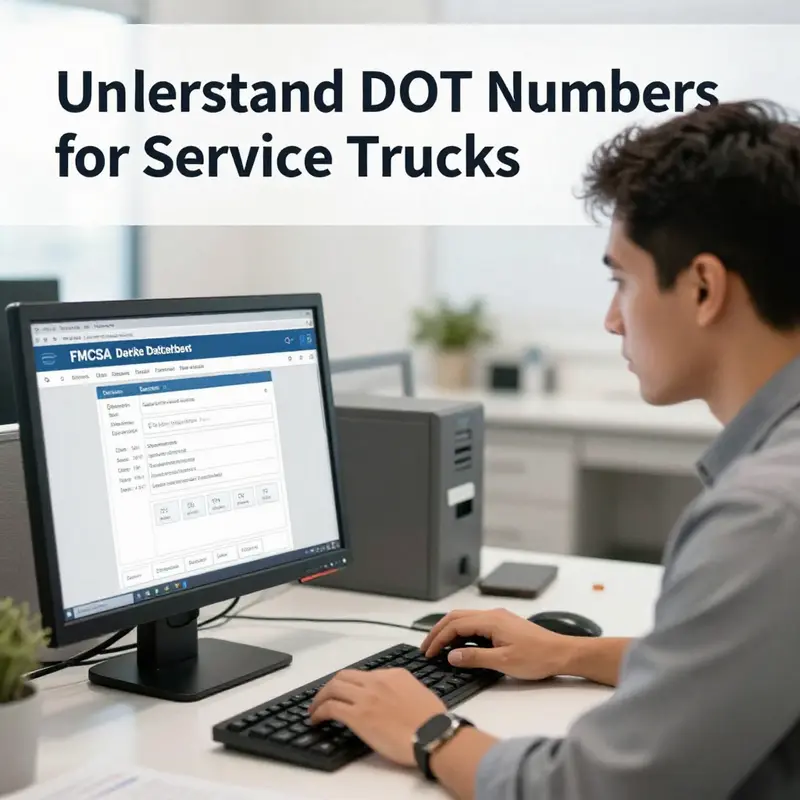
The practical steps to verification are straightforward, even for first-time users. Begin at the FMCSA website, a digital doorway to federal oversight that houses the records and registration data essential for responsible fleet management. The path typically begins with the Compliance, Safety, Accountability (CSA) framework, where operators can access the Safety Management System (SMS) data and the MCSAP Quick Query tool. The Quick Query is designed to provide a fast, transparent snapshot of a motor carrier’s safety record and USDOT identity. It is a resource that fleet managers use not only to verify their own compliance but also to perform due diligence on potential contractors and partners in a supply chain that may cross state lines, involve multiple jurisdictions, or require aligned safety practices.
The steps are practical and explicit. First, navigate to the official FMCSA site. Then, within the CSA or Compliance section, locate the Query tool. This tool allows you to search by USDOT number or company name, returning an overview of the carrier’s status, such as registration validity, safety rating, and any open inspections or enforcement actions. The information retrieved through the Query tool dovetails with the broader Assurance framework that FMCSA uses to monitor carriers. It is a real-time touchpoint that informs risk management, insurance decisions, and the logistics planning that keeps fleets efficient and compliant. The verification process, while technical, is designed to be accessible, ensuring that even smaller fleets can confirm their standing and address any issues before they escalate into violations or costly penalties.
Beyond the mechanics of verification, the chapter’s deeper narrative concerns the lifecycle of compliance. A USDOT number is not a one-time badge; it implicates ongoing duties: regular vehicle inspections, maintenance records, hours-of-service tracking for drivers, insurance coverage that aligns with fleet operations, and the ready availability of documentation during audits. Displaying the DOT number on the vehicle is part of the public-facing compliance posture, but internal systems are equally important. Insurance documents, operating authority papers, and business records should reflect the correct USDOT identity. A mismatch between what the vehicle displays and what the paperwork shows can trigger investigative delays, compliance concerns, and potential penalties. Hence, verification is not a standalone task; it is woven into the fabric of fleet governance, contractual risk management, and the daily practices that keep a service operation running smoothly.
In the broader regulatory landscape, the DOT number is a lens into the regulatory posture of the operation. For fleets operating across borders or within increasingly complex supply chains, it is common to encounter contexts where regulatory emphasis shifts toward cross-border regulatory issues, customs alignment, and shared safety standards. A broader understanding benefits from tying the DOT verification habit to related considerations—something that resonates with readers who manage fleets that may touch multiple jurisdictions. For ongoing context and broader regulatory perspectives, see resources that discuss cross-border regulatory issues in trucking and how federal and state rules intersect with practical fleet management. This cross-cutting perspective helps ensure that the decision to obtain, display, and maintain a USDOT number is not just about a checkbox on a form, but about a strategic posture toward safety, reliability, and legal compliance across the entire operation. For further context on cross-border regulatory issues, you can explore this discussion: Cross-Border Regulatory Issues.
Within the verification discipline, fleets should keep in view that the FMCSA’s tools—the MCSAP Quick Query and the Safety Measurement System (SMS)—reflect a carrier’s safety and compliance performance over time. These systems capture inspections, crashes, violations, and corrective actions, and they provide a basis for decisions about driver training, maintenance investments, and regulatory risk. The SMS, in particular, is designed to present a snapshot of a carrier’s risk profile, not a static verdict. It emphasizes the importance of continuous improvement: keeping vehicles roadworthy, ensuring drivers stay current with required training and hours-of-service compliance, and addressing any areas flagged by inspections or enforcement actions. This is not about chasing perfection but about building a proactive safety culture that translates to fewer delays, lower insurance costs, and smoother operations across routes and seasons. For those looking for the official verification pathways and to understand the exact data FMCSA maintains, the FMCSA portal remains the definitive source, and it is advisable to consult it regularly as operations evolve.
In practice, the journey toward a compliant USDOT identity is not a one-off exercise but a recurring discipline. Fleet leaders who routinely review GVWR classifications, confirm whether hazardous materials are part of any route, and verify passenger transport rules—especially for on-call service vans or shuttles—are better prepared to respond to regulatory changes. They can align maintenance cycles, driver training schedules, and insurance coverage with the current state of regulatory expectations. The result is a more predictable operating environment, where a service truck’s authorization status is in sync with its actual use and the routes it serves. The verification habit also enhances transparency with customers and partners who rely on consistent safety and regulatory practices as a baseline for doing business. In short, verifying a DOT number is not merely a compliance ritual; it is a practical, strategic asset that supports reliability, safety, and professional credibility across the fleet.
As operators reflect on their own fleets, the central question remains: does your service truck really require a USDOT number? The answer, grounded in weight, cargo, passenger use, and interstate operation, is specific to each vehicle and its mission. The decision tree is straightforward, but the implications are substantial. If any one criterion is met, obtain and display the DOT number, maintain accurate documentation across every relevant record, and leverage verification tools to monitor compliance performance. If none of the criteria apply, retain rigorous internal records that demonstrate the intrastate, non-hazardous, non-passenger nature of the operation, ensuring that state-level requirements are still satisfied where applicable. In both paths, the key is proactive governance rather than reactive compliance. The end goal is not simply to avoid penalties; it is to build a fleet that operates with predictable risk, clear accountability, and measurable safety outcomes.
For readers who want a deeper dive into complementary regulatory topics that can shape how DOT registration interfaces with broader operations, consider exploring additional resources that address regulatory environments and cross-border considerations. These perspectives can help clarify how a USDOT number functions within a wider ecosystem of trucking oversight and how to prepare for potential shifts in policy or market conditions. For external reference and official guidance, consult the FMCSA’s hub of information and tools, including the DOT-number verification and safety databases, which provide authoritative detail on current requirements and carrier histories: https://www.fmcsa.dot.gov.
Final thoughts
Understanding when service trucks require a DOT number is vital for ensuring compliance and avoiding potential legal penalties. By familiarizing yourself with the specific qualifications outlined by the U.S. DOT, businesses can optimize their transport operations effectively. Remember to stay informed about your vehicle’s classifications and regulatory requirements, ensuring safe and compliant operations within your industry. Maintaining this awareness fosters a culture of compliance and efficiency that benefits both your operations and your bottom line.