
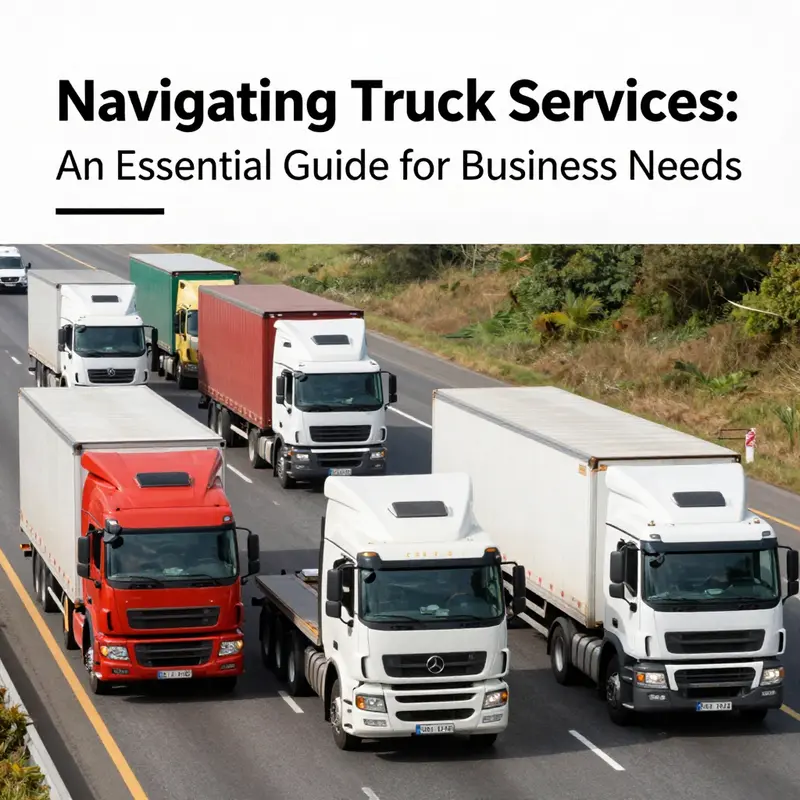
Truck services are essential to the functioning of various sectors, including manufacturing, distribution, and e-commerce. Understanding how to effectively utilize truck services can enhance operational efficiency, ensure timely deliveries, and maintain customer satisfaction. This guide provides insights into the workings, selection criteria, customer feedback, comparative analyses, and future directions of truck services. Each chapter is crafted to build a holistic view of how truck services can meet the diverse needs of businesses, particularly those in sectors reliant on transportation for their goods.
Finding Reliable Truck Service Near You in a Connected, Digital Landscape
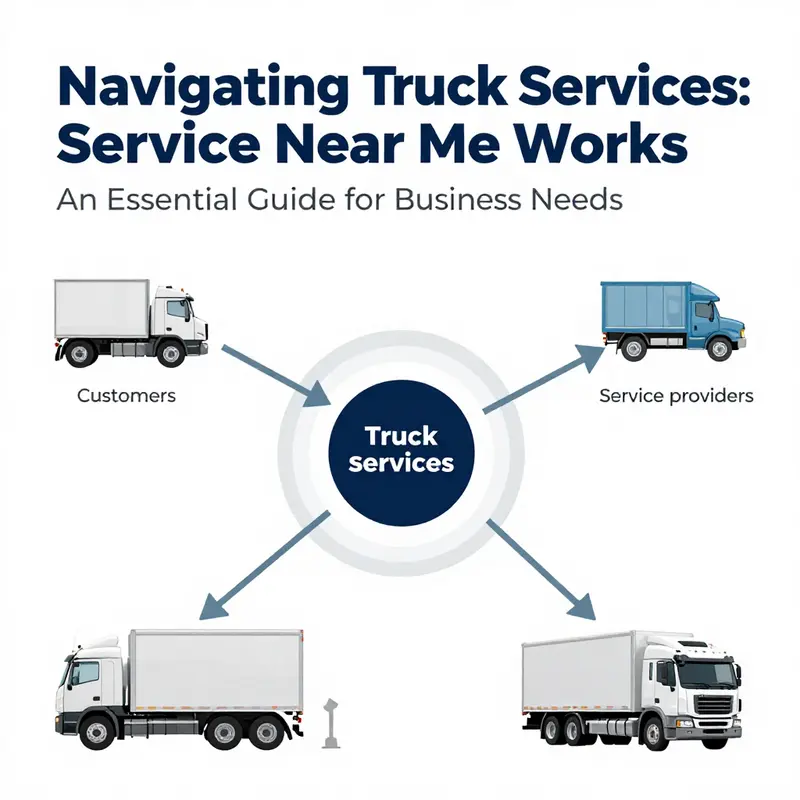
In the realm of heavy-duty transport, a trip to the nearest shop is rarely a simple matter of walking through a door. For truck operators, the phrase truck service near me now conjures a layered workflow where speed, reliability, and transparency intersect with technology, location data, and community feedback. The modern reader is navigating not merely a row of storefronts but a living ecosystem. It is an ecosystem that stitches together real-time recommendations, service availability, and the practical realities of road life. When a tractor-trailer pulls to the shoulder with a warning light blinking on the dashboard, the goal shifts from curiosity to containment: get the truck back on the road with minimal downtime, while ensuring the fix is durable, the pricing fair, and the communication clear. This requires a shift from traditional, phone-number-first approaches to a more holistic, digitally enhanced method of finding and coordinating service near you. This chapter follows that shift, tracing how local repair shops, mobile technicians, and carrier operations can align through a connected network that drivers and fleets increasingly rely on to stay moving.
At the heart of this transformation lies the recognition that many service decisions are time-sensitive. A regional breakdown can ripple through schedules, disrupt freight windows, and strain customer promises. Digital platforms—designed to connect drivers with nearby service providers, to present real-time availability, and to facilitate direct lines of communication—offer a remedy to the frictions of the past. These platforms curate a pool of trusted options, display up-to-date service details, and enable rapid triage of situations that range from tire work to emergency brake repair. The driver does not simply search for a shop; they engage with a system that prioritizes speed, accuracy, and accountability. The result is less wandering in search of a shop and more precision in dispatching the right technician to the right location at the right moment.
One of the most tangible benefits of this digitally connected approach is the way it reframes the information landscape. Instead of relying solely on a printed directory or an on-call recommendation, drivers can access a live feed of service providers that includes proximity, hours of operation, capacity to service large commercial vehicles, and current workload. The real-world implications are meaningful. A driver who recognizes a tire issue can compare nearby mobile tire service capabilities, gauge whether an on-site visit is feasible, and read recent feedback about the shop’s performance under similar conditions. The same logic applies to more complex tasks: coolant or fuel system repair, electrical diagnostics, or hydraulic line replacements. The platform becomes a decision-support tool as much as a dispatcher, presenting options in a way that aligns with the constraints of the trip, the carrier’s risk tolerance, and the driver’s own experience.
Communication, in this setting, is more than a channel; it is a workflow integrator. In-app messaging and direct contact with shop managers shorten the loop between recognizing a problem and initiating a fix. A driver can share diagnostic codes, photos of wear patterns, or videos of a fault indicator, and receive tailored guidance in return. The ability to confirm an ETA, arrange for a tow, or coordinate a mobile technician to a specific mile marker transforms the roadside experience from an anxious scramble into a coordinated operation. This is especially valuable when time windows arise from tight schedules or peak travel periods, where every minute of delay compounds downstream costs. A platform that supports such frictionless communication helps ensure the fix is aligned with the trip plan rather than merely addressing the symptom at hand.
Beyond expediency, the modern truck service ecosystem elevates transparency. Service listings often include estimated labor hours, parts availability, and documented pricing ranges. This visibility does not replace professional judgment but rather complements it, giving drivers and fleet managers a baseline to gauge the reasonableness of quotes and to negotiate with shops from a position of knowledge. When a roadside diagnosis suggests a particular component may be nearing end of life, the ability to request a second opinion, compare alternative repair paths, or schedule preventative maintenance becomes an investment in uptime rather than an impulse decision made in a moment of urgency. Drivers appreciate that the digital layer eliminates much of the guesswork that so often colored past service experiences, turning maintenance from a reactive sprint into a proactive program.
The social fabric of trucking also receives a quiet but powerful upgrade from these platforms. They create a community that extends beyond a single repair event. Drivers can share insights about road-tested shops, note seasonal service patterns, and discuss the reliability of mobile units in different weather conditions or terrains. This network effect matters because maintenance challenges rarely occur in isolation; a well-informed driver generates knowledge that benefits others who will face similar wear and tear, late-night breakdowns, or cross-border regulatory surprises. In this sense, the platform does more than connect supply and demand. It helps cultivate a shared standard for quality, a set of expectations about turnaround, and a sense of reassurance that reliable help is close at hand when a truck breaks down far from a preferred yard.
When a carrier considers local options, several practical criteria naturally come to the fore. Proximity remains essential, but it is not the sole determinant. A nearby shop that can guarantee a same-day diagnostic with a mobile unit may outpace a closer facility that cannot commit to immediate service. The size and capability of the operation matter too. Fleet managers favor shops with experience handling heavy-duty equipment, including long-haul tractors, reefer units, and specialized trailers. The presence of certified technicians, access to necessary parts, and the ability to handle complex electrical or hydraulic systems are non-negotiables in many operations. The digital landscape makes it easier to verify these attributes before a service window opens, reducing the risk of misaligned expectations and wasted downtime.
A subtle but important thread throughout this transformation is the way these digital tools respect the realities of cross-border operations and regulatory compliance. When drivers move between provinces or states, or encounter differing inspection regimes, the ability to track service quality over time becomes a form of compliance support. Shops that demonstrate consistent performance across diverse regulatory environments earn a reputation that travels with the driver or fleet, enabling smoother transitions and fewer road-side debates about legitimacy or eligibility for certain repairs. For carriers that operate private fleets, this continuity can translate into better asset utilization and more predictable maintenance cycles, which in turn support safer operations and more stable operating costs. The road to reliability is built not only on technical prowess but also on a trustworthy, verifiable pattern of service experiences that drivers can rely on regardless of geography.
To navigate this world effectively, readers should approach the local search with a mindset that blends practical checks with informed judgment. Start with the obvious: identify shops within a reasonable distance from the current route and verify hours, especially for after-hours emergencies. Look for shops that advertise experience with commercial fleets and heavy-duty chassis, and check whether they offer mobile services or on-site diagnostics. Read recent feedback that mentions real-world scenarios similar to your current need—be it a tire replacement in rain, a brake system check after a long mountain haul, or an electrical fault that requires careful tracing. The best service near you does not always come from the largest shop; rather, it comes from the one that communicates clearly, provides transparent pricing, and respects the trip’s constraints.
It is also worth recognizing that the digital ecosystem is not just about immediate fixes. It is about forming a plan for ongoing maintenance that can prevent avoidable breakdowns. If a platform highlights a shop’s capability to schedule preventative maintenance visits, perform multi-point inspections, or recommend consumables based on miles driven, drivers gain a companion, not a one-off responder. The concept of uptime becomes a shared objective across the platform’s community: a reliable truck is a safer, more efficient vehicle for delivering goods, and the cost of downtime is a measurable variable that directly affects the bottom line. In practice, drivers will increasingly pair emergency service with scheduled care, using the same digital channel to book routine checks, establish preferred technician assignments, and maintain a rolling calendar of upkeep that aligns with fleet planning.
The practical takeaway for anyone seeking reliable truck service near them is to lean into the digital signals that the ecosystem provides. Use trusted review sources to gauge consistency and professionalism, but also weigh proximity, immediacy, and the shop’s visible capacity to support your vehicle type and workload. When possible, favor partners that offer clear, responsive communication, transparent pricing, and a proven track record with the kind of equipment you operate. In parallel, engage with the community aspects of the platform: fellow drivers’ notes about reliability, turnaround times, and the quality of on-site technicians can be a powerful supplement to formal reviews. The combination of real-world data, direct communication, and collaborative knowledge creates a robust framework for solving today’s maintenance challenges without losing sight of tomorrow’s demands.
For readers who want to explore the broader maintenance landscape of private fleets and how digital tools are shaping upkeep capabilities, consider exploring the trends described in industry discussions on fleet maintenance strategies. These resources illuminate how maintenance practices are evolving in tandem with broader economic and regulatory shifts, and they offer a forward-looking lens on how digital marketplaces will further influence decisions about where and when to service a truck. Private fleets, in particular, are increasingly attentive to the balance between capital expenditure and maintenance planning, recognizing that a reliable service network near the route can multiply uptime and improve service levels for customers. Such insights help fleets anticipate where proximity, speed, and quality will converge as the ecosystem grows.
In summary, finding reliable truck service near you is no longer a matter of choosing from a handful of nearby signs. It is about engaging with a connected system that blends proximity with capability, transparency with speed, and community wisdom with professional judgment. The driver’s task becomes less about improvising a roadside fix and more about orchestrating a well-informed maintenance plan that aligns with route demands, safety standards, and cost considerations. As the digital landscape matures, this approach will continue to refine itself, turning maintenance from a reactive necessity into a strategic, data-driven discipline that keeps the wheels turning and the freight moving. For practitioners who want to go deeper, highlight-worthy resources and industry perspectives provide a broader context, while the day-to-day practice remains anchored in clear communication, diligence, and an unwavering focus on uptime.
Note: For broader context on how private fleets increasingly adapt to maintenance and service considerations within evolving market dynamics, see related discussions on private fleets trends in trucking maintenance. Private Fleets Trends in Trucking Maintenance.
External resource: To explore the digital marketplace aspect further, you can visit the app page on the Apple App Store, which highlights how drivers connect with service opportunities and manage maintenance logistics through mobile technology. https://apps.apple.com/app/truckbook/id1624837509
Closer to the Haul: A Practical Guide to Selecting Local Truck Service That Keeps Your Fleet Moving
Choosing a truck service near you is less about chasing the cheapest fix and more about aligning uptime, safety, and cost with how your operation actually moves. In January 2026, the landscape of local service has shifted toward faster response times, clearer communication, and a broader set of capabilities that can support both single-vehicle journeys and complex fleets. The decision becomes a strategic one: which shop will minimize downtime during a breakdown, offer predictable maintenance that prevents expensive surprises, and keep up with evolving regulatory and environmental standards? The answer rests on a blend of practical proximity, proven expertise, and reliable processes that translate into tangible outcomes for daily operations.
Proximity is the first resistor in the chain. A service center within a workable radius reduces the costs of transport to and from the shop and shortens the window in which a truck sits idle. The closer the center, the faster a technician can respond to a breakdown call, and the shorter the cycle from diagnosis to repair. This matters more for fleets that must maintain strict service intervals to meet delivery commitments or keep routes flowing through peak seasons. But proximity alone is not enough. A nearby shop must also be able to deliver a breadth of services that matches the needs of a diversified fleet.
The range of services matters because trucks are not one-size-fits-all machines. A capable local shop should handle routine maintenance like oil changes, brake inspections, and tire services, but it should also offer deeper diagnostics for engines, fuel systems, transmissions, and cooling. For trucks that rely on refrigeration units or electric drivetrains, the ability to diagnose electrical faults, manage battery health, and maintain specialized equipment becomes a necessity, not a luxury. When you operate a mixed fleet—diesel, gasoline, refrigerated, possibly electric—your service partner must be able to switch seamlessly between these domains, using test protocols and compatible tools that reduce guesswork and rework. In many cases, a single provider that covers a broad spectrum of maintenance will keep your trucks moving more consistently than a network of shops that each handle a narrow slice of work.
The expertise behind the service is the hinge on which trust turns. Technicians with ASE certifications or manufacturer-trained backgrounds bring a standardized level of knowledge that translates into durable repairs. Those credentials matter because they are a signal of disciplined problem-solving, adherence to safety practices, and familiarity with warranty requirements or service bulletins. When evaluating a local shop, it pays to ask about the team’s certification mix, ongoing training plans, and the ability to document workmanship with detailed notes and part-traceability data. A shop that can share references from other operators, including maintenance managers who oversee multi-vehicle programs, provides a window into the reliability of its workmanship and the shop’s ability to keep vehicles compliant with safety and emissions regulations. In practice, this means asking for a history of repairs, a rough sketch of typical turnaround times for common failure modes, and a transparent explanation of how recommendations are prioritized when a diagnostic reveals multiple issues.
Part availability and parts quality sit at the heart of uptime. A dependable local partner maintains ready access to both OEM parts and high-quality aftermarket equivalents. Real-time access to parts reduces downtime when components fail or wear beyond safe thresholds. It also matters that the shop can source specialized parts for refrigeration units, air systems, or corrosion-prone components in harsh winter climates. A well-stocked inventory or an efficient parts-lookup system means a repair can progress without waiting days for a back-ordered component. For fleet operators, this translates into a predictable maintenance cadence and a more precise budgeting process. The right shop will be able to explain which parts are covered under warranty, what constitutes a quality aftermarket option, and how the choice affects long-term reliability and resale value.
Clear communication is the thread that weaves all these factors into a reliable experience. A trustworthy service provider will set expectations upfront, offer transparent, itemized estimates, and keep you informed as the work progresses. You should receive a clear diagnosis, a prioritized plan for repair or service, and a realistic timeline that accommodates your operating schedule. Good communication also means timely updates when delays arise—whether due to supply chain fluctuations or additional findings during a repair. When a fleet manager hears, in plain terms, what is happening and why, the decision process becomes faster and more accurate. This kind of transparency reduces the risk of scope creep and helps you manage not only the vehicle but the entire workflow around it.
Pricing and transparency are the practical anchors in the decision. Service centers often use different models, from hourly rates to fixed-price packages for common maintenance tasks. The critical requirement is a clearly explained estimate that distinguishes labor, parts, and shop supplies, with all potential contingencies listed before work begins. Hidden fees are not merely an annoyance; they disrupt budgeting and erode trust. A reputable shop will present revisions in a structured way, preferably with a work order that mirrors the final invoice so you can compare expectations with the actual results. For operators managing a day-to-day schedule, a predictable pricing framework supports cost control and performance analyses that matter in competitive markets.
Reputation matters as a downstream signal of consistent delivery. Online reviews, while not perfect, offer a compass for punctuality, reliability, and overall customer satisfaction. When scanning feedback, look for patterns rather than outliers: repeated notes about on-time starts, accurate estimates, and the quality of repairs tend to reflect the shop’s operating discipline. In regulated industries and among fleets that rely on tight maintenance windows, a track record of steady performance is often more valuable than a single standout experience. The most trustworthy local partners are those that invite performance metrics—average repair times, first-time fix rates, and repeat-visit frequencies—and prove they use these numbers to improve service quality over time.
Emergencies happen, and for businesses that run around the clock, 24/7 roadside assistance or mobile repair capabilities can be a lifeline. A local shop with on-site mobile teams or partnerships with mobile servicers may be your best option for high-availability operations. The benefit is clear: when a trailer breaks at a remote location or a cold-storage unit fails in the middle of a busy night, the capability to respond quickly can prevent cascading delays in delivery schedules and avoid the cost of towing. It is reasonable to ask about response times, geographic coverage, and the fees associated with after-hours service, ensuring that you understand the true cost of rapid support.
For those operating multiple vehicles, fleet maintenance programs and digital tracking tools become a strategic advantage. A service partner that can support preventive scheduling, routine inspections, and diagnostic data accumulation helps you optimize uptime across the entire fleet. Modern maintenance isn’t just about fixing problems; it’s about preventing them, and doing so with a data-informed approach that aligns with the company’s operational calendar. If a shop can offer a simple, transparent way to view upcoming service needs, track parts consumption, and report on the health of critical systems, it reduces administrative friction and makes it easier to plan hoists, roars, and road-ready hours for the week.
Finally, environmental stewardship and compliance cannot be an afterthought. An informed service partner will follow proper fluid disposal protocols, maintain up-to-date emissions compliance practices, and document adherence to safety standards. In the current regulatory climate, the ability to demonstrate responsible practices is as important as the mechanical skills under the hood. A shop that integrates environmental considerations into its daily operations signals a broader commitment to sustainable trucking, which resonates with operators seeking to minimize risk and align with evolving industry norms.
The nuance of choosing a truck service near you lies in balancing these dimensions against the realities of your operations. When a local provider offers breadth of capability, certified expertise, reliable parts access, transparent pricing, steady communication, and responsive service, the decision becomes less about chasing a single fix and more about building a durable maintenance ecosystem. It is this ecosystem that ultimately translates into fewer unexpected outages, lower life-cycle costs, and more predictable schedules for customers and drivers alike. In practice, the best fit is often the partner that can meet you where you are—understanding your routes, your peak times, and your safety standards—and then grow with you as your network expands or your maintenance needs evolve.
For operators who want to explore trends affecting how local service centers are chosen, consider the broader picture of private fleets and maintenance strategies. The dynamic of owning and operating a private fleet adds another layer to the calculation: you may require more structured preventive programs, digital reporting, and a predictable maintenance cadence that aligns with internal fleet policies. If this is your situation, you may find value in exploring private fleets trends in trucking maintenance to understand how peers are balancing cost, uptime, and regulatory compliance in a more centralized maintenance workflow. As with any strategic decision, the goal is to select a local partner who can scale with your operations while keeping your trucks in service and your customers satisfied.
The practical takeaway is straightforward. Start with proximity, test for breadth of capability, verify the credentials of the technicians, confirm access to parts, insist on transparent pricing, and listen for clear, proactive communication. Add the reliability of emergency support and fleet-management capabilities, and you have a robust framework for selecting a truck service that will not only fix problems but also prevent them. The result is a smoother operation, a more predictable cash flow, and a fleet that spends more time on the road than in a shop. As the industry continues to evolve, a well-chosen local partner becomes more than a service provider; they become a collaborator in keeping your entire operation resilient and competitive. When you move from searching for a “near me” option to cultivating a trusted local partner, you gain a sustainable advantage that travels with every mile.
External reference: For further context on industry standards and the value of local, certified service centers, see the American Trucking Associations resource: https://www.trucking.org
Reading Roads and Ratings: How Customer Reviews Guide Your Search for the Best Truck Service Near Me

When a driver searches for truck service near me, the first instinct is often to compare prices or proximity. Yet the most practical compass in a vast landscape of shops is not a brochure or a flashy ad, but the collective voice of fellow truckers who have already walked the road you’re about to travel. Customer reviews and ratings aren’t just sentiment; they are a map of reliability, transparency, and the ability to get you back on the road without surprises. In January 2026, local directories and review platforms have grown into essential tools for navigating this specificity—service scope, technician expertise, diagnostics honesty, and the speed with which a shop can turn a tow into a triumph rather than a long, frustrating delay. When you are choosing a truck service near you, the stories behind the stars often tell you more than the stars themselves.
The most reliable reviews tend to be issued by drivers who are clear about what they needed and what the shop delivered. A high rating anchored by a handful of recent, detailed notes can indicate a shop that is responsive to current demands—think improved turnaround times, real-time communication, and an ability to explain complex diagnostics in plain language. Yet a perfect score is not a guarantee of perfection. The best readers of reviews balance the numbers with the texture of the accounts: Do the comments mention a straightforward diagnostic process? Is the pricing described as transparent, with an itemized bill that reflects what was promised? Were delays explained, and was there a proactive effort to keep the customer informed? These are the subtleties that separate good experiences from great ones, especially when a driver is managing tight schedules or urgent freight commitments.
The landscape of truck maintenance is not one-size-fits-all. A shop that specializes in tires, for instance, can deliver value through speed and precise guidance on tread wear, balance, and seasonal adaptations. A general repair shop may excel in diagnostics and multi-system repairs, handling engine, transmission, or electrical issues with a coordinated plan. A dedicated accessories and modifications shop often brings a depth of technical knowledge for wiring, mounting, and integration that can avert compatibility problems later. The common thread across these profiles, as reflected in ratings, is a consistent approach to problem-solving: honesty about what can be done today, what requires parts on order, and what might be best planned for a future maintenance window. When a driver reads a review that mentions a diagnosis described with care and backed by an itemized quote, that is a signal that the shop stands by its recommendations without pressuring the customer toward unnecessary work.
The practical value of reviews extends beyond the immediate repair. They often reveal a shop’s approach to preventative maintenance, a crucial factor in reducing unplanned downtime. A fleet-minded perspective appears in feedback praising reminders about tire rotation, brake inspections, and fluid level checks, along with a clear plan for follow-up visits. The emphasis on preventative maintenance helps a driver see how a local service provider can become a partner rather than a one-off fix. If a shop offers readable maintenance schedules, plain-language explanations of why a part wears out, and proactive alerts for next steps, that is a pattern that tends to recur in positive feedback. This is not merely about avoiding breakdowns; it is about building predictability into a highly variable line of work where every mile counts.
In this context, the most useful reviews also illuminate how a shop handles challenges. How, for instance, does a provider respond when a vehicle arrives late on a Friday with an urgent need? Does there exist a clear escalation path, with a dedicated contact and a realistic estimate of time, parts, and labor? The responsive shop earns trust through candor about constraints and a demonstrated ability to mobilize resources quickly—whether that means prioritizing a critical repair, arranging a loaner vehicle when feasible, or coordinating with a parts network to minimize downtime. Real-world feedback often highlights these moments of dependability: a technician who explains a fault in simple terms, a receptionist who follows through with reminders, or a service writer who updates the customer as the work evolves. When a review notes that the shop did not upsell unnecessary services, the customer learns that integrity is the foundation upon which the relationship is built.
It is important to read reviews with the right lens. The trucking industry operates on schedules, and time is a resource as valuable as the parts themselves. A high rating is meaningful when it reflects consistent performance across a spectrum of scenarios—from routine tire services and brake inspections to more complex electrical diagnostics or transmission concerns. Look for patterns: repeated comments about punctuality, transparency in pricing, or the quality of the diagnostic process. A cluster of recent reviews mentioning a specific technician or a consistent front-desk experience can signal a stable team that communicates well with customers. Conversely, a string of isolated, highly technical complaints without accessible explanations may indicate a shop that struggles to translate expertise into customer-friendly guidance. Wise readers recognize that a single glowing review or a couple of negative notes do not determine the truth; it is the aggregated narrative, with a careful look at recency and context, that guides decisions.
For someone navigating a local market, it helps to combine online impressions with a grounded sense of the types of service required. A tire center might score highly for quick turnarounds and warranty support, but if a truck needs a more comprehensive repair, a general repair shop with a strong diagnostic track record could be the better choice. The converse also holds: a specialty shop with deep knowledge in tires may not possess the breadth to handle a multi-system electrical fault without coordinating with other specialists. The best strategy is to converge on a shortlist built from credible reviews of comparable service needs and then verify direct capabilities through a quick call or a site visit. In the end, the idea is not to chase perfection but to identify a shop that consistently aligns with your priorities: honest diagnostics, transparent pricing, clear communication, and a realistic plan to keep you moving.
As you interpret these voices, you may also consider how the broader industry is evolving and what it means for your choices. The trucking ecosystem is increasingly influenced by data-driven maintenance, smarter fleet operations, and tighter regulatory expectations. Keeping abreast of these trends helps you evaluate whether a shop can grow with your needs. For example, the trend toward preventive maintenance and predictive services, often highlighted in industry discourse, aligns well with reviews that praise proactive reminders and long-term planning. When you read a testimonial about a shop that helps a driver avoid a roadside breakdown through early diagnostics and a well-timed service window, you’re hearing the practical impact of that broader shift.
If you want to explore a frame of reference that situates maintenance within ongoing fleet and industry dynamics, you can consult broader discussions on private fleets and maintenance strategies, such as the piece on Private Fleets Trends in Trucking Maintenance. This context helps translate the reliability you seek in a local shop into a long-term partnership that supports your operations, not just a single repair. Private Fleets Trends in Trucking Maintenance offers a lens on how fleets think about maintenance scheduling, technician training, and the integration of new technologies into daily practice. In practice, this means the review-reading habit becomes a habit of listening for consistency, reliability, and a forward-looking mindset in a service provider.
Ultimately, the journey to the right truck service near you is less about chasing a flawless reputation and more about finding a partner who earns your trust through performance you can verify. Take your time with the top few options, cross-check with real-time maps and ratings, and reach out to the shop with a clear description of your current issue and your next maintenance target. Ask for a transparent diagnostic path and a written estimate that stays valid for a reasonable window. If the shop can provide a straightforward plan, a fair price, and a credible timeline, your confidence grows. The reviews you study are the trail markers, guiding you toward a decision that minimizes risk and maximizes the chance that your truck is ready when you need it, not days later.
External resources can help you see what others experience on the ground. For real-time, location-based feedback, you can consult the top-rated truck repair listings on Google Maps. This resource offers up-to-date customer experiences and details about each shop’s service scope, hours, and accessibility, making it easier to compare options in your immediate vicinity: https://www.google.com/maps/search/truck+repair+near+me
null
null
The Next Horizon for Local Truck Services: A Proactive, Data-Driven Ecosystem

Local truck service is evolving from a repair shop to a connected, data driven part of a broader logistics network. In the near term diagnostics will be remote, scheduling smarter, and parts pre stocked to speed turnarounds. Fleets will benefit from proactive maintenance, reduced downtime, and better total cost of ownership. Shops will integrate with telematics, smart infrastructure, and customer systems to translate usage patterns into timely service rather than reactive fixes. For operators of all sizes this means a service near you that anticipates needs, minimizes disruptions, and aligns with the cadence of daily operations. The result is higher uptime, lower costs, and a service ecosystem that speaks the same digital language as the fleets it serves. To explore macro context, readers can consult economic trucking trends and related industry analyses.
Final thoughts
In summary, understanding truck services is imperative for businesses in manufacturing, ecommerce, construction, and small shipping service sectors. By evaluating service options carefully and paying attention to customer feedback, companies can optimize their operational efficiency and enhance delivery reliability. Keeping an eye on future trends ensures that businesses remain competitive and responsive to changes in logistics technology. Make informed decisions to help your enterprise thrive in the ever-evolving transportation landscape.