
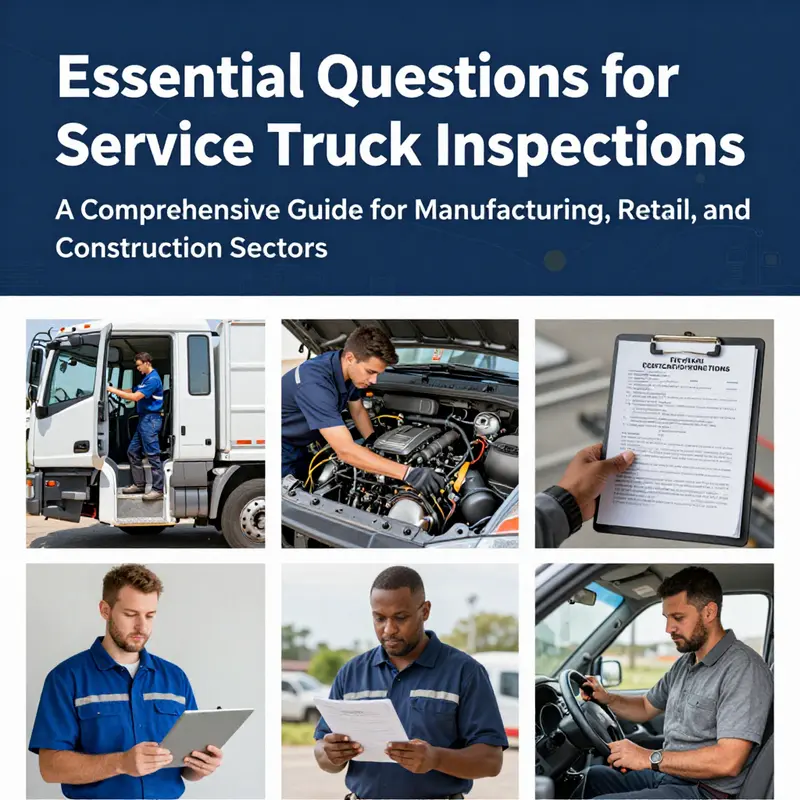
Thorough inspections and maintenance checks are crucial for service truck safety and efficiency across various industries. Manufacturing & distribution companies, retail & e-commerce businesses, construction & heavy industry firms, and small business owners with shipping needs all depend on reliable service trucks for their operations. This guide provides a set of essential questions organized into key themes that emphasize vehicle condition and safety, mechanical systems, documentation and compliance, and driver readiness. By diligently addressing these inquiries, businesses can ensure their service trucks are not only compliant but also ready to meet day-to-day operational demands effectively.
Roadworthy in the Field: A Comprehensive, Narrative Guide to Vehicle Condition and Safety for Service Trucks
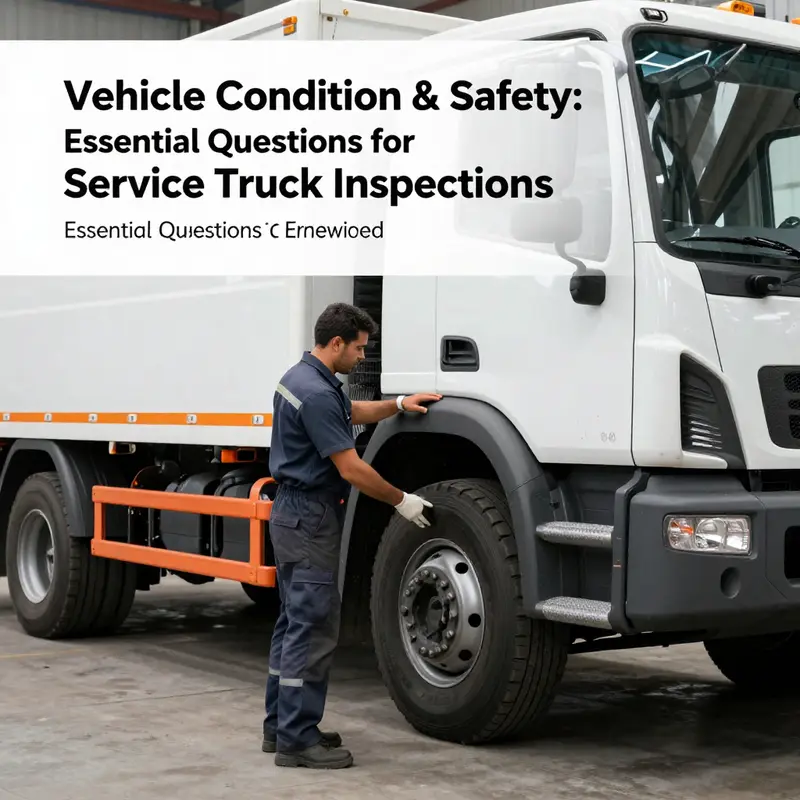
Safety is not a single checkbox on a morning routine. For service trucks—especially the heavy-duty breakdown and support vehicles that keep fleets moving—safety threads through every mile and every task. When a technician or driver steps into the cab, the expectations are clear: the truck must perform predictably, respond promptly, and stay within the bounds of local regulations and industry standards. This chapter offers a cohesive exploration of vehicle condition and safety, weaving together mechanical health, safety features, and documentation into a single, steady stream of considerations. The focus is practical, grounded in the realities of field service work, and attentive to the way a truck’s condition translates into real-world reliability and, crucially, human safety. The questions outlined here and the reasoning behind them are designed to support you in forming a rigorous, repeatable check that minimizes downtime and maximizes uptime. In the broader arc of preparing a service fleet for daily operations, these queries act as a bridge between the shop floor and the road—between what the machine is telling you and what the driver needs to see to work confidently and safely.
In evaluating condition, it helps to start with the mechanical system itself. On heavy-duty service trucks, the mechanical foundation is not limited to the engine. It includes the hydraulic towing mechanism, the suspension system that handles heavy loads, and the drivetrain that must deliver consistent power even under load and on uneven terrain. A vehicle as substantial as a 30- to 50-ton breakdown truck relies on a cascade of subsystems that must work in harmony. The engine may be a robust Cummins or another high-torque unit, but without clean lubrication, proper cooling, and steady oil pressure, the engine configuration cannot sustain long shifts in service duty. The driver’s first impression—whether the engine starts smoothly, whether it runs with a steady cadence, and whether it emits unusual noises or vibrations—often foretells the health of the broader mechanical complex. A truck that misfires, chuffs, or exhibits erratic idle can signal issues ranging from fuel delivery to idle control to longer-term wear on the exhaust or turbo systems. In practical terms, a clean, stable engine start and a quiet, consistent running condition are among the most reliable early indicators of overall readiness for field work.
Beyond the engine, visibility of the health indicators comes through the dashboard. Operational trucks will inevitably display warning lights when a sensor detects out-of-range conditions. The presence or absence of illuminated alerts is a simple, objective barometer of readiness. If a warning light persists, the appropriate diagnostic pathway should be engaged without delay. This is where the role of the onboard diagnostic (OBD-II) system becomes essential. An up-to-date, functional scanner can read stored codes, live sensor data, and freeze-frame conditions that occurred during the last drive cycle. In the context of heavy service duty, the value of a current OBD-II scan cannot be overstated. It can reveal a miscommunication between sensors, a failing emissions component, or a developing fault in a subsystem that might not yet trip a warning light but could compromise performance under load.
Oil, coolant, and other fluids are the lifeblood of reliability. The oil must be clean enough to provide adequate film strength under high shear and heavy torque demands. A vehicle operating under load in remote or hazardous environments requires clean, correctly rated oil with the right viscosity. The coolant must be at the correct level and free of contamination to protect the engine from overheating or corrosion; the same is true for brake fluid, power steering fluid, and, where applicable, transmission fluid. Fluid checks should extend to the hydraulic towing mechanism, whose performance can be sensitive to fluid quality and level. A towing unit that is not properly lubricated, or one that runs with low hydraulic fluid pressure, may fail to perform critical tasks in the field or, worse, create dangerous situations for the operator and bystanders. The discipline here is simple but exacting: confirm the levels, confirm the condition of the fluids (color, contamination, glittery metal particles, emulsions), and confirm that fluid reservoirs are intact and leak-free.
The topic of safety features extends from the vehicle’s electronic systems to its physical signaling and visibility. In a service truck, safety features are not optional accessories; they are the core of risk management. Emergency braking systems, braking assist features, and warning lights must function correctly. Reflective signage, conspicuous hazard markings, and properly functioning amber or strobe lights enhance visibility for on-site work and on public roads. The operator must be able to rely on these cues during high-risk operations in traffic, at worksites, or on narrow city streets where space is limited and the margin for error is small. The driver’s PPE, the presence of emergency supplies, and the vehicle’s accessibility to those tools contribute to a safer working environment. Safety checks should extend to the physical condition of the tires as well: proper inflation, tread depth, absence of cuts, bulges, or cracks, and even wear patterns that could indicate misalignment or suspension concerns. Small issues in tire condition can quickly become dangerous if a service truck must maneuver in tight spaces, carry heavy loads, or operate on uneven surfaces.
A crucial but sometimes overlooked thread in this safety fabric is the inspection history. A well-maintained vehicle is only as reliable as the recordkeeping that documents its care. A verified history shows when inspections occurred, what was found, what corrective actions were taken, and whether the truck remains in compliance with local transportation regulations. When a trucking operation can demonstrate a persistent pattern of proactive maintenance and timely fixes, it reinforces confidence in the fleet’s readiness. Conversely, gaps in records can obscure latent issues and undermine safety and reliability. The importance of documentation extends to compliance with licensing, registration, and insurance requirements. A vehicle that is current on inspections but has lapses in other certifications or documentation still presents a risk because it undermines accountability and traceability. The practical consequence is straightforward: robust inspection histories support smoother operations, faster maintenance turnarounds, and fewer surprises on the road.
This approach to vehicle condition and safety naturally leads to a larger conversation about the broader landscape of service trucks in today’s industry. Heavy-duty breakdown and service vehicles operate in an environment where demand for reliability is high and downtime translates directly into lost productivity and, potentially, unsafe outcomes for field crews. As the fleet management ecosystem evolves, so too do the expectations around what constitutes “roadworthy.” The shift toward electrification in some corners of the industry adds new layers to this discussion. While many fleets still rely on diesel or fuel-based powertrains, electrified service trucks promise reduced emissions, potentially lower maintenance costs in some systems, and different maintenance profiles. The integration of electric drivetrains introduces new considerations for battery health, thermal management, and charging infrastructure, but it also foregrounds the same core vigilance: the vehicle must be reliable, safe, and compliant with regulations and internal standards. In the longer view, the questions that guide inspection—Are key mechanical systems in good order? Are the engine and fluids healthy? Are safety features operational? Is the inspection history complete and compliant?—remain the anchor for decision-making, even as the technology and operating environment shift around them.
To ground this discussion in a practical frame, consider a representative heavy-duty service truck such as a large breakdown vehicle in the field. While modern fleets vary in configuration, the essential truth remains: a truck’s condition is inseparable from its mission. These machines are asked to move, lift, tow, and support critical operations in sometimes hostile environments. The mechanical integrity of the hydraulic towing mechanism must be verified in a way that mirrors its usage, including tests of its responsiveness, stroke, and load-handling ability. The suspension must maintain stability when transporting heavy loads or when the vehicle is extended to operate the tow apparatus. The engine’s readiness is judged not only by cold starts but by sustained performance under load in varying temperatures and terrains. The signaling and safety apparatus must perform in concert with the driver’s awareness and on-site risks. Documentation must be current, accessible, and auditable. All of these elements converge on one goal: ensuring the truck is ready to support the day’s work without introducing unnecessary risk to the driver or to other road users.
In the spirit of continuous improvement, it is helpful to recognize the practical resources that inform vehicle condition checks. The official product page for a heavy-duty breakdown service truck offers detailed specifications and current availability, illustrating how the vehicle is designed to meet demanding service scenarios. The page highlights core dimensions, engine performance, and load capacity, which are crucial for assessing whether a given truck aligns with the specific service tasks it will perform. This kind of reference helps maintenance teams calibrate their expectations for component wear, service intervals, and inspection criteria. It is one thing to know that a truck is capable of handling a certain load; it is another to understand how that capability translates into predictable maintenance demands and a measurable safety profile over time. The point is not to fixate on ownership of a single model, but to adopt a disciplined approach to evaluation that can be adapted to different makes and configurations while keeping safety and reliability at the forefront.
As the industry continues to evolve, companies increasingly access insights about broader economic and operational trends that affect maintenance strategies and safety protocols. One relevant pathway is to consult resources that outline how macro-level factors influence fleet health and service expectations. For example, a resource focusing on key economic trends impacting the trucking industry can provide context for the way maintenance budgets, spare-parts availability, and regulatory scrutiny shift over time. This broader view reinforces the idea that a well-constructed, safety-forward inspection program is not only about preventing immediate failures but also about aligning with longer-term fleet resilience. Such alignment requires that inspectors and drivers approach checks as an integrated practice, not a checklist that ends at the last line.
In closing, the questions you ask about vehicle condition and safety should be precise, repeatable, and grounded in the realities of field operation. They should address mechanical health, fluid integrity, braking and steering performance, safety features, and the thoroughness of recordkeeping. They should also acknowledge evolving technologies while preserving the foundational standards that keep people safe and operations efficient. The result is a robust framework for ensuring that service trucks are not merely compliant on paper but truly reliable on the road. For readers seeking a broader view of trends shaping truck operations and maintenance, the article on key economic trends provides a useful companion perspective, and you can explore it here: Key Economic Trends Impacting the Trucking Industry. For a tangible sense of how heavy-duty service trucks are positioned in current markets, and how product specifications guide maintenance planning, refer to the external listing on the Chinese supplier platform, which offers detailed technical data and capacity figures: https://www.alibaba.com/product-detail/Shacman-30-Tons-50-Tons-Breakdown-Service_1600487491292.html.
Under the Hood of the Mobile Workshop: Essential Mechanical Inquiries for Service-Truck Maintenance
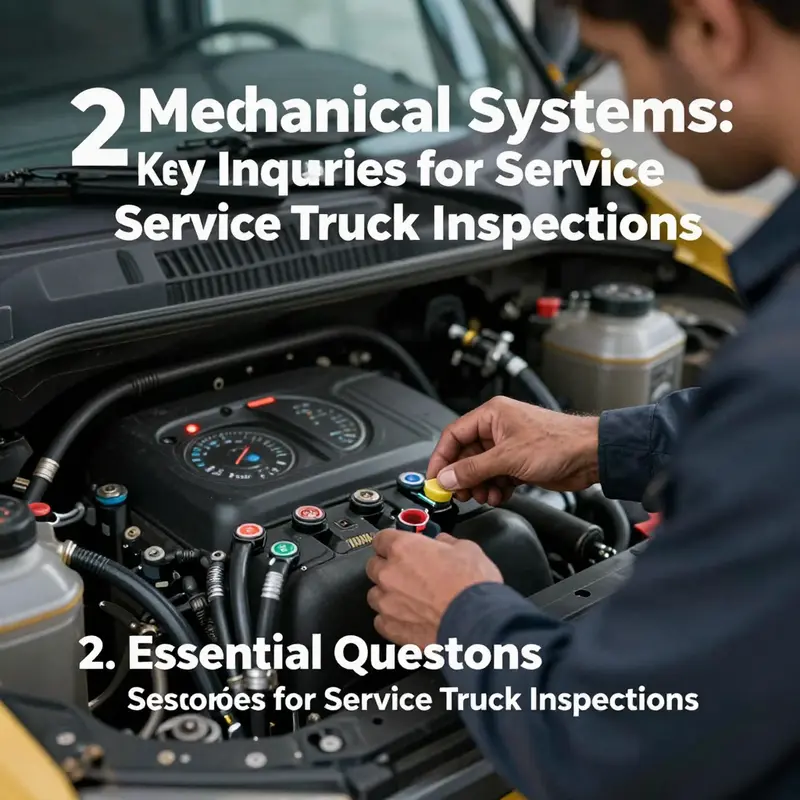
A service truck operates at the intersection of rugged field work and precise mechanical performance. When a fleet relies on quick, on-site repairs, the mechanical systems beneath the panels—engine, transmission, brakes, suspension, electrical networks, and the specialized equipment that turns a truck into a mobile workshop—become the quiet backbone of every successful job. This chapter examines the core inquiries that maintenance teams, supervisors, and operators should marshal when evaluating a service truck’s mechanical health. The aim is not merely to flag failures but to understand whether the vehicle’s design, build quality, and ongoing upkeep align with the specific tasks it is asked to perform. By weaving together material properties, technical standards, functional purpose, and disciplined servicing, the discussion resonates with the practical realities of daily field service while anchoring decisions in safety and long-term reliability.
At the heart of any service truck is a balance between toughness and precision. The body and frame must endure harsh environments, resist corrosion, and support heavy tool loads while still allowing access for routine maintenance. In real-world terms, that means the inquiry starts with material properties. A typical mobile workshop configuration may feature a body with a defined thickness profile—think of a 3 millimeter thick body side and an overall thickness around 1.5 millimeters in certain sections. These specifications are not incidental. They reflect a design choice that weighs durability against weight and fuel efficiency. The choice of material—whether high-grade steel or aluminum alloys—directly influences load capacity, stiffness, and resilience to environmental wear. In field conditions, where trucks operate in rain, mud, snow, and dusty job sites, the material properties become a practical matter of how long the compartments stay rigid, how smoothly doors align after repeated use, and how well fasteners resist loosening under vibration. The dimensions cited in the literature, such as a truck with overall footprint around 8500 by 2550 by 3200 millimeters, capture a snapshot of form that must harmonize with cargo space, tool organization, and maneuverability. These numbers aren’t just about size; they signal a deliberate approach to distributing weight, enabling access to equipment, and maintaining center-of-gravity control when heavy gear is loaded onto the chassis. In essence, material properties govern not only static strength but the dynamic behavior of the truck during acceleration, braking, cornering, and on-site operations.
Beyond raw materials, technical standards shape how the truck can be used safely and legally. Structural integrity standards, fire safety protocols, and electrical system certifications coalesce into a framework that keeps workers protected and equipment compliant. When a maintenance team asks about standards, they are seeking assurances that the vehicle holds up under the most demanding work environments while meeting the regulatory benchmarks that govern road use and public-sector engagement. Structural standards matter for the welds, joints, and load-bearing features that must resist fatigue over thousands of cycles. Fire safety protocols—especially on units with integrated generators, fuel lines, or hot-work areas—are not optional add-ons but mandatory guardrails that reduce ignition risk during field repairs. Electrical system certifications come into play when a mobile workshop includes power generation, diagnostic tools, and lighting networks. In practice, these standards translate into checklists that inspectors use during consecutive maintenance visits, ensuring that the truck retains its eligibility for contracts, insurance coverage, and safe operation. A vehicle that adheres to these standards is more likely to deliver consistent performance, minimize downtime, and invite fewer operational surprises as crews move from site to site.
The functional purpose of a service truck is a guiding lens for all mechanical inquiries. The truck is not a generic carrier; it is a mobile workshop, a compact lab on wheels, a line-repair platform that must support on-site diagnostics, component replacement, lubrications, and sometimes refrigeration, hydraulics, or emergency response tasks. This functional orientation elevates questions about how the body and systems support specific activities. Do the tool storages provide rapid access to commonly used wrenches, meters, and consumables without sacrificing structural integrity? Is there a reliable lube system that can dispense oils and lubricants without contamination or cross-mix issues? Are there integrated power supplies or generators that can run diagnostic equipment without overwhelming the electrical system or exhausting fuel reserves? These considerations drive design choices and maintenance priorities. For example, a well-configured mobile workshop might include built-in lube lines, a dedicated coolant circuit for on-site refrigeration or hydraulic diagnostics, and a robust electrical backbone capable of powering diagnostic laptops, air compressors, and lighting. When assessing mechanical health, technicians should evaluate whether the truck’s current configuration continues to meet the operational expectations set by the fleet and by the job types it routinely handles. A unit that was perfectly adequate for a set of routine tasks can become insufficient if the fleet adds new service lines or expands the scope of on-site repairs. In such cases, the questions extend from the engine compartment to the tool bays and the electrical panel, exploring whether the mechanical systems can sustain expanded duties or whether upgrades are warranted.
Ongoing servicing and maintenance practices are where the abstract design questions crystallize into predictable, cost-effective actions. Regular servicing is more than a calendar ritual; it is a purposeful discipline that preserves engine performance, transmission health, braking reliability, suspension integrity, and the reliability of auxiliary equipment that makes the truck a mobile workshop. The maintenance concept hinges on several pillars. First, there is monitoring of service life: components have expected lifespans, and preventive maintenance schedules should reflect those expectations rather than waiting for a fault to appear. Second, scheduling is essential. Too little attention to servicing leads to avoidable breakdowns and extended downtime, while overly aggressive servicing can inflate costs without proportional returns. Third, skilled technicians are indispensable for complex repairs. A service truck carries systems—engine control networks, power management for tools, and custom body hardware—that require technicians with the right training and diagnostic capabilities. Proactive maintenance indeed mitigates risk; it catches issues such as wearing brake components, creeping fluid leaks, or a failing OBD (onboard diagnostic) interface before they derail a critical service call.
In practical terms, the inquiries begin with a diagnostic mindset and extend into the daily rituals that keep the truck ready for action. A careful mechanical check would confirm that the engine starts smoothly and runs without unusual noises or vibrations, that dashboard warning lights are addressed promptly, and that essential fluids are within proper levels and free of contamination. The cooling system, brake fluid, power steering fluid, and transmission fluid must all be evaluated for level, clarity, and condition. Brakes deserve particular attention: are the pads and rotors within acceptable limits, and is there any steering play that could compromise control? Fluid leaks—whether oil, coolant, or hydraulic fluid—should be traced and resolved, because even small drips over time can create larger safety or reliability issues. The health of the brakes and the steering system directly influences the ability to perform on-site repairs safely, especially when the truck operates on uneven terrain or near traffic.
The mechanical narrative also invites a broader view of the truck’s role within a fleet’s maintenance ecosystem. There is value in recognizing trends that shape how service trucks are managed over time. For instance, private fleets have been evolving in their maintenance practices, and examining those shifts can provide useful context for a shop that wants to optimize downtime and asset utilization. For context on how private fleets are adapting maintenance practices, see Private Fleets Trends in Trucking Maintenance. This reference helps connect the specifics of body material and standard compliance with the daily realities of scheduling, parts availability, and technician training. It also underscores how a disciplined approach to mechanical inquiries translates into predictable service delivery, fewer emergency calls, and better uptime for critical infrastructure work. As fleets scale their operations, the questions about materials, standards, functionality, and upkeep become part of a broader operational discipline, where data from each maintenance event informs decisions about spares, training, and equipment upgrades.
The chapter’s mechanical lens also invites a careful look at the interfaces between the truck and the tools it carries. A 4×4 mobile workshop design emphasizes cross-functional capability: the ability to support refrigeration system repair, hydraulic diagnostics, electrical work, and general mechanical tasks on site. The body’s thickness, the choice of corrosion-resistant materials, and the structural integration of tool storage all have tangible consequences for daily practice. If the chassis is lightened to improve fuel economy but the body loses rigidity under heavy tool loads, field reliability may suffer. Likewise, if electrical systems are underpowered or poorly shielded from vibration and moisture, diagnostic devices can fail when the truck is most needed. In these situations, the fundamental questions about material properties and standards become practical, actionable steps: do the materials and joints meet the tolerances required for rapid, tool-heavy work? Do electrical systems remain within safe operating thresholds when connected to heavy equipment? Does the shop diligently verify compliance with safety codes during every service interval? The aim is not to chase perfection in ideal conditions but to maintain a robust, predictable system that performs consistently under the diverse stressors of field service.
As the discussion threads through durability, standardization, function, and maintenance, one overarching idea emerges: the mechanical health of a service truck is inseparable from its ability to fulfill its mission as a mobile workshop. When maintenance teams ask the right questions, they learn not only the present condition but the trajectory of the vehicle’s usefulness. They understand how the body thickness, material choice, and joint design influence not just current performance but future repairability and upgrade potential. They appreciate how compliance with structural and safety standards reduces risk and extends the vehicle’s life cycle. And they recognize that ongoing servicing—built around clear lifecycles, skilled technicians, and timely interventions—transforms potential failures into manageable events that do not derail a fleet’s service schedule. The result is a more dependable, safer, and versatile asset that can adapt to evolving service demands while delivering consistent on-site performance.
In closing, the mechanical inquiries that guide service-truck maintenance are more than checklists. They are a framework for aligning the truck’s physical build with the fleet’s operational realities. They connect material choices to real-world wear and tear, bridge standards with daily practice, and tie the vehicle’s intended function to a disciplined maintenance cadence. When teams integrate these threads—material properties, technical standards, functional capability, and proactive servicing—the outcome is a service truck that remains ready for action, even as job scopes shift and environments grow more demanding. For readers seeking a broader perspective on how such practices fit within contemporary maintenance strategies and fleet management, a deeper dive into industry trends can illuminate opportunities to optimize spares, training, and integration with diagnostic and power-provision systems. This holistic view helps ensure that the mobile workshop not only survives in harsh field conditions but thrives as a reliable, efficient instrument of service delivery. Understanding these interconnected factors also supports the broader aim of sustaining safety, regulatory compliance, and operational uptime across the fleet. For a deeper dive into construction and specifications of modern service trucks, see Understanding Service Truck Bodies: Material Properties, Technical Standards, and Uses in Engineering.
Keys to Compliance: Documentation That Keeps Your Service Truck Moving Safely
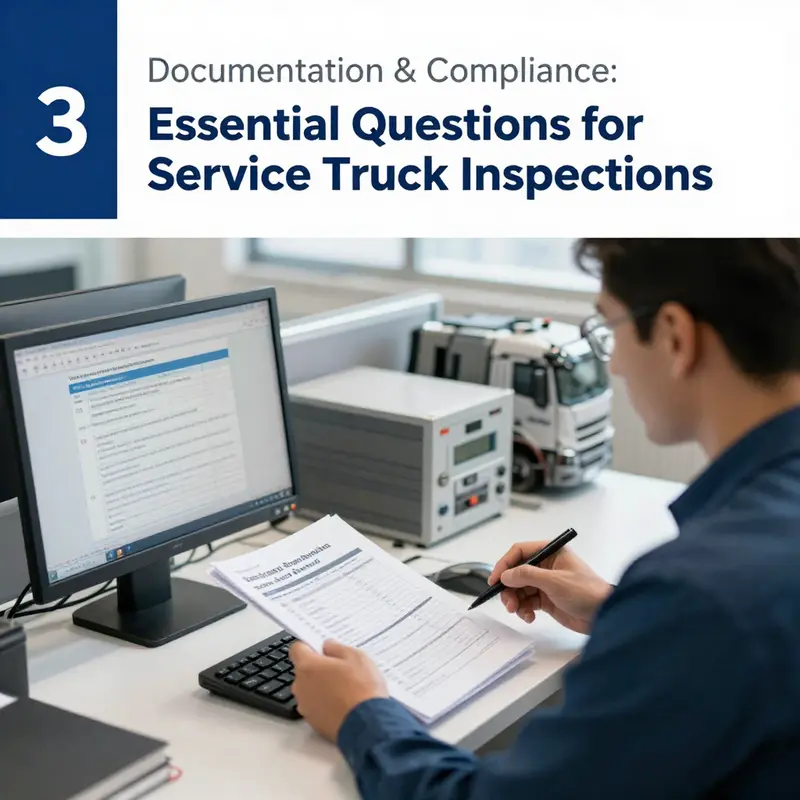
In the world of field service, every mile traveled carries a responsibility not only to customers but to crew, the public, and the business itself. Documentation and compliance aren’t dry formalities; they are the living system that ensures safety, legality, and reliability on every job. A service truck that operates with robust records is a truck that can be trusted to perform, to protect its operators, and to minimize downtime when the next work order comes in. This chapter unfolds how documentation functions as a strategic asset, guiding decisions, guarding against risk, and shaping the daily rhythms of maintenance, inspection, and route execution.
At the core is the realization that service-truck operations run on a chain of records that must be current, accessible, and audit-ready. A centralized, digital system that holds essential data—registration, insurance, emissions status, and maintenance history—serves as the backbone for compliance and operational clarity. When a supervisor or a technician can summon the truck’s file in seconds, rather than hunting through folders or inboxes, maintenance planning becomes proactive instead of reactive. This level of visibility helps fleets respond to regulatory inquiries with confidence and minimizes the chance of roadside delays, fines, or vehicle impoundment. The practical upshot is a more predictable, dependable service schedule, a safer work environment, and a stronger reputation with customers who rely on timely, compliant service.
The most tangible starting point is to ask whether all required vehicle records are up to date and easily accessible. A truly modern service operation maintains these items in a single, searchable digital ledger that tracks the truck’s registration, current insurance, emissions testing status, and the full maintenance history of every component from the engine to the body hardware that houses diagnostic tools. When those records are comprehensive and current, they support faster onboarding of new drivers, quicker inspections by regulators, and a clear line of sight for executives assessing fleet risk. Importantly, this is not a task for the back office alone; it requires a culture where frontline teams understand that updating records is part of daily care, not a quarterly chore.
Maintenance and repair documentation is the next linchpin. The most capable fleets keep a complete, audit-ready trail of every scheduled and unscheduled activity—dates, parts used, labor hours, technician signatures, and the disposition of each issue. The aim is a record that can stand up to scrutiny years after the fact, because FMCSA rules around maintenance records emphasize accountability and traceability. Having records securely stored, with role-based access and tamper-evident audit trails, reduces ambiguity during an inspection or an insurance claim and demonstrates that safety is being actively managed rather than assumed. In practice, this means that a technician who changes a brake pad logs the part number, batch, and installation time, and the supervisor signs off, with the entry synchronized to the central system for real-time visibility across the fleet.
Driver qualification and hours of service form a second, equally critical pillar. Driver Qualification Files must be kept up to date, and hours-of-service logs—whether through electronic logging devices (ELD) or paper records—must be accurate and retained for the regulatory minimum. This is not merely about compliance for compliance’s sake; it’s about protecting drivers and the company from fatigue-related risk and the penalties that follow misaligned scheduling. A well-calibrated ELD system that integrates with maintenance data creates a feedback loop: fatigue management informs trip planning, which in turn informs preventive maintenance and vehicle readiness, ensuring that a truck is not assigned routes it cannot safely complete.
Equally important are the pre-trip and post-trip inspection reports. The FMCSA explicitly requires drivers to inspect their vehicles before operation and after each trip. When these checks are filed and reviewed in a consistent format, they become a powerful early-warning system. A missing or falsified inspection record can invalidate insurance coverage and expose the company to liability. The practical effect is that each inspection becomes both a safety checkpoint and a documented commitment to operational discipline. The discipline pays off when a fleet can demonstrate that no essential system was overlooked, from brakes and tires to coolant levels and electrical wiring.
Hazardous materials considerations, while not universal for every service truck, must be addressed with equal rigor when applicable. If a truck transports hazardous substances or batteries, the fleet needs to prove that all permits, placards, shipping papers, and emergency response information are present and current. The penalties for noncompliance are severe, but the real stakes go beyond fines. Proper HazMat documentation protects workers and the public and ensures that emergencies are managed with the highest level of care. Even for trucks that rarely carry HazMat, a clear policy and a simple, repeatable process for handling such materials when they arise builds resilience into the operation.
A formal, formalized compliance program with regular internal audits helps translate these requirements into everyday practice. When a fleet schedules quarterly internal audits of documentation and compliance procedures, it moves from a firefighting posture to preventive governance. Deficiencies are identified early, corrective actions are tracked, and the organization gains a mature safety culture. This approach aligns with broader Safety Management Systems, which many fleets adopt to coordinate safety activities, training, incident reporting, and performance metrics. The objective is not perfection but persistent reduction of risk through disciplined processes and clear accountability.
Beyond the specific categories, the environmental and regulatory checks play a distinct role in modern service-truck operations. Local emissions standards, recall notices, and manufacturer advisories require proactive monitoring. A robust documentation system does not merely store records; it surfaces critical alerts—the moment a recall affects a specific vehicle, for example, or when a maintenance interval becomes overdue due to parts shortage or service delays. Operators who integrate these checks into routine workflows avoid last-minute scrambles and minimize service downtime, which in turn supports on-time appointments for customers.
To bring these ideas to life, many fleets have embraced a practical mindset: documentation is a living component of daily operations, not a separate administrative burden. This mindset shifts how teams plan routes, schedule services, and communicate with customers. It also reframes the relationship between technicians and drivers. When a technician records a maintenance action, the driver receives a near-real-time notification that the vehicle is ready or flagged for the next service window. When a driver completes a pre-trip inspection, the dispatcher gains a clear signal about the truck’s readiness to depart. The communication flow remains succinct and actionable, yet it is anchored in a dependable paper trail of records that ensures safety and compliance are built into the workflow rather than bolted on after the fact.
The strategic value of good documentation extends beyond compliance. It supports cost control by identifying recurring maintenance hotspots, tracking the lifecycle of critical components, and guiding procurement decisions for spare parts. It also strengthens the organization’s reputation with customers and regulators alike, conveying a credible commitment to safety, reliability, and accountability. In practice, this means not only collecting data but analyzing it—looking for patterns in failure modes, adjusting maintenance intervals, and validating that the fleet remains aligned with evolving regulatory expectations. For operators who want to stay ahead of changes, a culture that treats documentation as a central operating metric yields tangible returns: fewer unscheduled repairs, shorter dwell times at client sites, and smoother audits.
A note on accessibility is essential. Documentation should be organized in a way that supports all authorized users, from fleet managers to shop technicians and field supervisors. A well-designed digital system uses intuitive dashboards, searchability, and standardized entry formats to reduce errors and omissions. It also integrates with other core systems, such as routing and scheduling, to provide context—showing not only that a maintenance task occurred, but how it affects upcoming jobs, fuel efficiency, and service readiness. The goal is to make documentation not a separate task but an integrated, automated part of day-to-day operations.
For leaders aiming to create a durable compliance habit, the practical steps are straightforward but require discipline. Start with a single source of truth for all vehicle records. Define clear retention policies so that maintenance records, inspection reports, and driver files are stored securely for the required periods. Establish a quarterly audit cadence and assign ownership to specific roles so that accountability is explicit. Train drivers and technicians on the importance of timely, accurate entries and provide simple templates that minimize friction. Finally, embed compliance into performance metrics and incentives so that safe practices, not just quick turnarounds, are rewarded. When teams view documentation as an ongoing value-add—part of safety, reliability, and customer service—the administrative burden becomes a predictable, manageable part of the job rather than an afterthought.
Those who study industry trends often see that private fleets, in particular, benefit from tight documentation and robust compliance programs. The discipline translates into smoother operations, better maintenance alignment with service windows, and a more resilient service capability overall. For readers who want to see how such practices play out in real-world contexts, the principle is straightforward: invest in the records, and the fleet gains clarity, speed, and credibility. See discussion of private fleets and maintenance trends for deeper context: Private Fleets Trends in Trucking Maintenance.
The overarching theme is that documentation is not a static archive but a dynamic driver of safety, legality, and service quality. It enables the fleet to answer hard questions quickly and accurately when regulators ask for proof, when customers push for timely delivery, or when unexpected maintenance issues arise on the road. The organization that treats records as a day-to-day operational instrument—integrated into inspections, planning, and service execution—becomes better at predicting problems, allocating resources, and maintaining the highest standards of professional conduct. In that sense, the chain of documentation is not merely about compliance; it is about building trust with clients and communities served by service trucks every day.
For operators seeking a definitive external reference to ground their practices, official guidance from regulatory authorities provides a reliable baseline. Keeping records up to date and readily accessible, ensuring maintenance documentation is complete and audit-ready, and maintaining accurate driver qualification and hours-of-service logs are not optional steps but core requirements that shape the entire service operation. This alignment between daily practices and formal standards is what enables a fleet to perform reliably under pressure, maintain safety as a first principle, and sustain long-term viability.
External resource: https://www.fmcsa.dot.gov/regulations/vehicle-registration-and-insurance
Engine of Readiness: Essential Driver and Operational Questions for Safe Service Truck Deployment
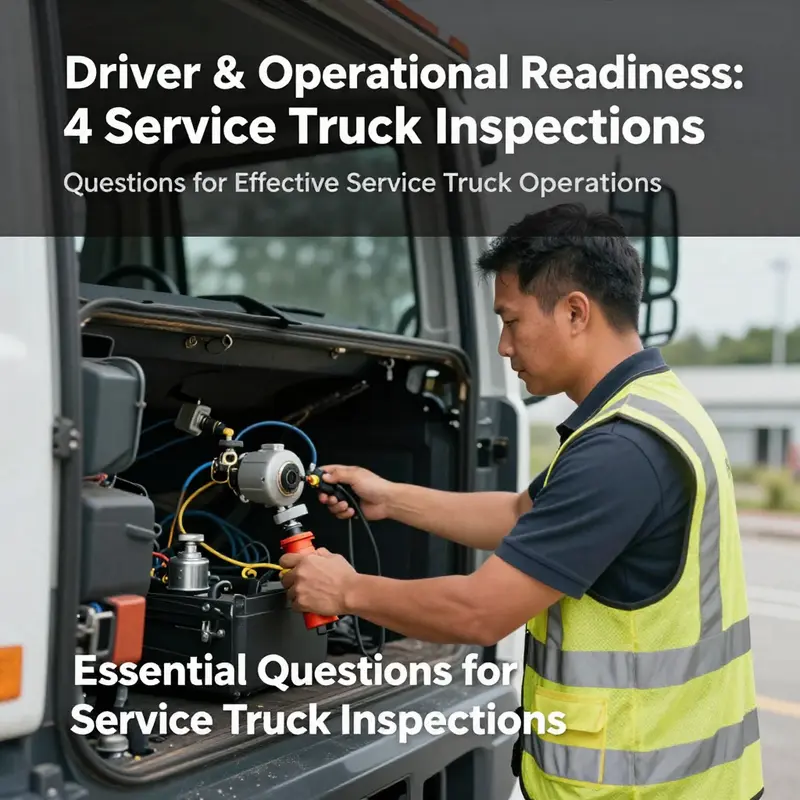
Driver and operator readiness forms the quiet backbone of every successful service call. A truck, no matter how well maintained, can stall if the driver is unprepared or if the plan to execute the work is unclear. The questions that guide predeployment are not mere checklists; they are a framework for safety, efficiency, and regulatory compliance that anchors every service task from the moment the route is loaded to the final tool is stowed. In fleets that count on rapid service turns and dependable on site performance, readiness is the currency that buys predictable outcomes. This chapter threads together the essential questions that keep a service truck fleet capable, compliant, and prepared for whatever the day may demand, from routine maintenance calls to emergency repairs under pressure. It is about aligning human capability with mechanical reliability and procedural discipline to minimize downtime and maximize safe, professional service.
Boldly focusing on the driver’s readiness, the very person who transforms a heavy machine into a capable service vessel, we begin with the layers that determine whether the crew can operate with the care and precision safety requires. Medical and fitness for duty are not abstract concerns but practical baselines. Is the driver medically cleared and free from conditions that could impair safe operation? Vision, hearing, cardiovascular health, and mental well-being are not peripheral. They influence reaction times, decision-making under stress, and the margin for error on busy job sites. When a fleet errs on the side of caution here, it reduces the likelihood of avoidable incidents and protects both the individual and the public. The goal is not merely to pass a medical check but to sustain a level of alertness and physical capability that supports consistent, safe driving over long shifts and across varied terrain.
Training and certification follow closely as the second pillar. A driver may hold a license, but the specific service truck in use often requires specialized competencies. Aerial lift certification, hazardous materials handling, crane or lift operation where applicable, and even basic confined space awareness may be part of the standard remit. Are all required trainings completed and current for the truck, the equipment on board, and the work to be performed? The density of rules and the breadth of potential tasks mean a well-trained driver is a safer driver, more adaptable in the field, and less likely to require on-site handholding that slows progress or creates risk.
Fatigue management stands as a critical performance parameter that is sometimes overlooked until a long day becomes a costly incident. What is the driver’s duty status for the shift? Have mandated rest periods and hours-of-service regulations been observed, and is a fatigue management plan actively monitored? The practical reality is that tired drivers are slower to recognize hazards, slower to respond to equipment alerts, and more prone to missing subtle cues that precede a fault or mishap. A disciplined approach to rest, shift spacing, and break scheduling can actually improve throughput by reducing unplanned downtime caused by a single fatigued driver.
Pre-operational inspection is the tangible moment when readiness becomes visible. Has the driver completed a thorough walk-around and functional check of the vehicle? Are brakes responsive, lights working, tires in good condition, and the truck body free of structural concerns? A robust pre-trip process includes testing the brakes, headlights, turning signals, and hazard lights, along with a check of fluid levels and the integrity of the body and any specialized equipment on board. This is not a formality but the frontline defense against field failures that could strand a crew or compromise safety. The driver’s vigilance here is a direct predictor of reliability on the road and at the job site.
Beyond the person, the readiness portfolio extends to the crew’s supportive framework and the cultural emphasis on safety and continuous improvement. A strong program recognizes that people are the most variable and valuable resource. It seeks to empower drivers with the knowledge and tools to perform with confidence, while also ensuring that the operation itself supports safe, compliant practice. A robust program hinges on investing in people in trucking, a commitment reflected in ongoing training, mentoring, and access to the resources that keep drivers current and capable. Investing in people in trucking is not mere rhetoric; it is the mechanism by which readiness becomes a sustainable habit rather than a one-off event.
But readiness is not only about the driver. Vehicle and equipment readiness, as well as clear operational procedures, are equally essential. The mechanical integrity of the service truck must align with the demands of the day’s work. Is the truck mechanically sound, with routine maintenance completed and outstanding issues tracked and resolved? Any warning on the diagnostic system, unusual engine noises, or abnormal vibrations must be addressed before embarking on a route. The slope between readiness and reliability is narrow, and proactive maintenance keeps that slope from dipping into downtime. A vehicle that leaves the lot with unresolved faults becomes a moving risk that can snowball into a roadside delay or a failed service call.
Specialized equipment on service trucks—lifts, booms, winches, or stabilizers—demands rigorous scrutiny as well. Are these devices fully functional, properly calibrated, and within their service life? Safety interlocks must work as designed, interlocks that prevent accidental engagement and that enforce safe operating envelopes. The line between routine use and hazardous operation is crossed only when the equipment is trusted to perform without surprises. This is not the moment to test a lift’s reliability under load for the first time in the field; it is the time to verify calibration, test interlocks in controlled conditions, and confirm that the equipment has been maintained according to the manufacturer and the fleet’s internal standards. Tool and material readiness follows. Are all necessary tools, spare parts, and consumables loaded and organized within the truck body? A well-organized cab and toolbox translate to faster, safer service delivery and reduce the chance of misplacing critical components in the field. Shelving, labels, and a logical layout for the most common tasks help crews work with confidence, not hesitation, when time is of the essence.
Environmental suitability matters as well. The truck and its equipment must be appropriate for the job site’s conditions. Is the vehicle equipped to operate safely in low-light or adverse weather? Adequate lighting for night operations, rugged tires for rough terrain, and protective measures against site-specific hazards help the crew maintain control of the operation even as conditions shift. Readiness is not about a single moment of inspection but about a continuous alignment of capability with the environment in which the job will occur.
Operational and procedural readiness threads these capabilities into an actionable workflow. Task and route planning should be precise and clear. Is the work order well defined, and has the route been planned and approved? The driver should possess all necessary maps, GPS data, and site-specific information so that the day’s work unfolds with minimal backtracking and confusion. Communication protocols are the connective tissue of safe operations. Are the communication channels—radio, phone, or app—functioning, and does the driver know who to contact in an emergency or when an unexpected issue arises? In the dense environment of field service, a prompt and reliable line of communication prevents small problems from becoming major delays.
Emergency preparedness is another core piece of readiness. Are the driver and crew familiar with emergency response procedures, and are first aid kits, fire extinguishers, and other safety equipment readily accessible and up to date? The best plans assume that the unexpected will occur and prepare accordingly, with drills, clear checklists, and a culture that treats safety as non negotiable rather than a discretionary add-on.
All of these elements come together to form a coherent readiness posture. The driver’s readiness is not just about the operator; it is about the alignment of person, procedure, and vehicle so that each service call proceeds smoothly, safely, and on schedule. Ready drivers bring a truck to life in the field, not just by starting the engine but by reading the terrain, anticipating needs, and communicating with dispatch and site personnel in ways that preempt delays. Ready vehicles carry out the job with fewer stops for troubleshooting, fewer returns to the shop, and a lower probability of safety incidents. Ready procedures ensure that every task is anchored to the documented processes that have proven successful in similar conditions, while remaining flexible enough to adapt to unique site constraints.
This integrated approach—driver readiness, vehicle and equipment readiness, and operational discipline—underpins the overarching goal of what questions should you use for a service truck. The right questions do more than verify compliance; they build a shared mental model of how the day will unfold, what risks exist, and how best to mitigate them. In practice, they translate into fewer surprises, better service quality, and a workday that ends with the crew knowing they performed at a high standard. The path from a service ticket to a completed job is paved by the quality of these questions, each one reinforcing a culture of safety, reliability, and professional accountability across the fleet. In that sense, readiness is not a singular moment but a continuous practice, a way of thinking that travels with the truck as it moves from depot to site and back again.
For those seeking to strengthen this readiness culture, the most effective moves are consistent, accessible, and tied to tangible outcomes. Establish standard pre-trip and pre-task checklists that are reviewed with the driver, and pair them with hands-on refreshers that address the specific equipment on each truck in the fleet. Reinforce the importance of rest and fatigue management with schedule designs that respect human limits while meeting customer expectations. Ensure that specialized equipment is included in routine maintenance planning and that calibration checks are performed on a regular cadence. Finally, foster a learning environment where drivers can share what worked in the field, what did not, and how processes might be tightened, because collaborative improvement is one of the surest ways to keep readiness current as equipment ages and job demands evolve.
As the chapters unfold, the thread connecting these themes to the broader article topic becomes clear. The questions you use for a service truck are not static phrases but a dynamic framework that translates safety and compliance into practical day-to-day performance. The driver’s health and readiness, the vehicle’s mechanical and equipment integrity, and the clarity of operational procedures together determine how quickly and safely a service truck can move from one site to the next, delivering value while preserving life and limb. In the next section, we will look more closely at how this readiness framework translates into actionable practices on the shop floor, in the cab, and at the roadside, so that the questions you ask—and the answers you expect—become a shared standard that guides every operation without becoming a burden on schedule or morale. The aim is to keep the fleet not only compliant but resilient, capable of absorbing the shocks of a demanding service environment and returning to duty faster when a problem arises.
External resource for further reading on fatigue management and hours of service: https://www.fmcsa.dot.gov/regulations/hours-service
Final thoughts
The maintenance of service trucks is not just about keeping the vehicles running; it’s about ensuring the safety and efficiency of operations critical to your business. By asking the right questions related to vehicle condition and safety, mechanical systems, documentation, compliance, and driver readiness, companies can significantly reduce risks and costs associated with breakdowns and legal issues. Emphasizing these inquiries empowers organizations to maintain a proactive approach to fleet management and operational excellence — enhancing overall productivity and client satisfaction.