
Maintaining pallet trucks, especially those from ULINE, is crucial for ensuring optimal performance and safety in manufacturing, distribution, retail, and construction environments. Regular servicing not only extends the lifespan of these vital pieces of equipment but also ensures safe operations, thereby minimizing workplace accidents and downtime. This comprehensive guide will delve into three critical aspects of ULINE pallet truck maintenance: Regular Inspection, Battery Maintenance for electric models, and effective Lubrication and Cleaning techniques. By understanding and applying these practices, companies can safeguard their investments and maintain operational efficiency.
Sight, Sound, and Safety: Mastering the Regular Inspection Routine for ULINE Pallet Trucks
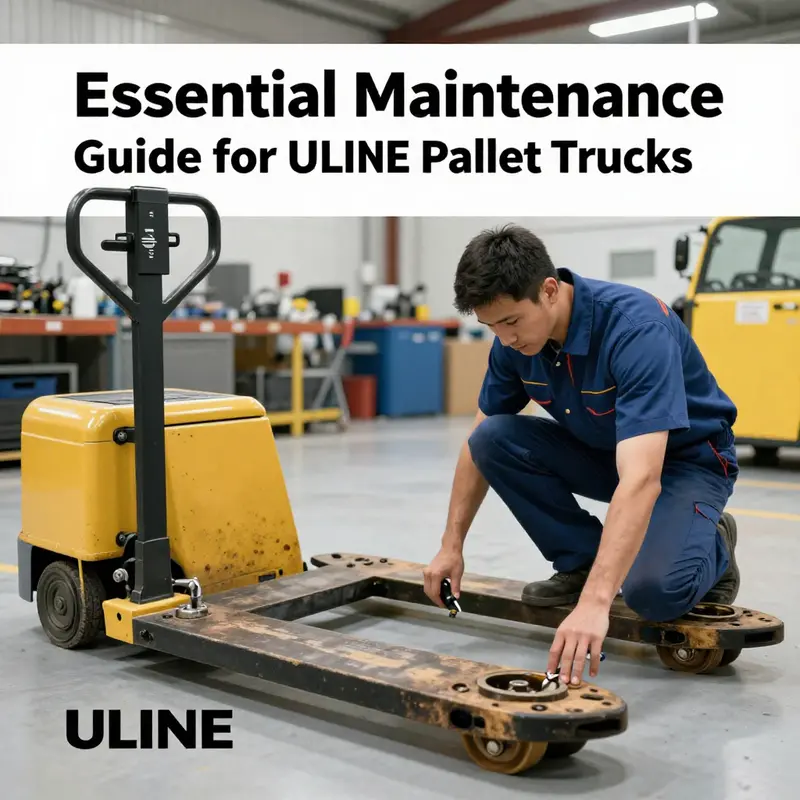
A pallet truck moves work from one station to the next, but it does not move the work without careful oversight. In warehouses, loading docks, and backroom corridors, the regular inspection of a ULINE pallet truck is not a maintenance chore tucked away on a shelf of duties; it is a daily safeguard that protects people, products, and productivity. The truck becomes a dependable partner only when its condition is revealed through a vigilant routine, one that anticipates problems before they stop the line. This chapter weaves together the practical steps of a thorough pre-use check, the key wear points to watch, and the small, steady habits that keep a pallet truck reliable across weeks, months, and shifts. The aim is not to memorize a long manual but to cultivate a mindset: to look, listen, and log what you find, and to translate those observations into timely action that preserves performance and safety. When readers picture a maintenance routine, they often imagine complex diagnostics. In truth, the most valuable inspections are simple, repeatable, and tied to the truck’s daily role in the workflow. A well-executed routine reduces the risk of unsafe operation, lowers the chance of costly downtime, and extends the life of the equipment, which, in turn, sustains smooth operations in a busy facility. In many private fleets, maintenance has become a formalized practice with checklists and records guiding daily operations, a trend that reflects the growing importance of reliability in everyday logistics. Private Fleets Trends in Trucking Maintenance This broader context reminds us that a single pallet truck is not an isolated asset but part of a larger system whose efficiency relies on consistent, conscientious care.
The routine begins with a visual sweep that takes less than a minute but pays dividends. Before the truck touches a single pallet, the operator scans the entire chassis for signs of damage: bent frames, cracked welds, or missing fasteners. Dents or flex in the frame can indicate past overloading or improper handling, and those cues should prompt a closer look or removal from service until a technician inspects the structure. The wheels and tires deserve particular attention. A common source of instability is a wheel with flat spots, cracks in the tread, or visible wear on the wheel surface. Worn or damaged wheels can produce jerks, unpredictable steering, and uneven load distribution, which translates into potential tip-overs or drops. Debris in the wheel hubs or on the axles is not merely unsightly; it can alter the wheel’s movement and increase friction, accelerating wear. A quick but deliberate wipe and inspection of each wheel and the axle area helps keep a pallet truck moving smoothly through the day’s tasks.
Where the eye goes, the ear often follows. A pre-use check should include listening for unusual sounds that reveal hidden problems. A creak, a grind, or a subtle rattle during the first push or pull may signal loosened hardware, a dry pivot point, or a misaligned steering mechanism. The lifting mechanism must operate smoothly. In manual models, the hydraulic system is the heart of the lift; if the pump hesitates, lurches, or leaks, it should be flagged. A steady movement of the lift when the handle is pumped up and down is a good baseline. If the hydraulic action feels stiff or inconsistent, it could indicate a low oil level, contaminated hydraulic fluid, or worn seals. Any sign of fluid around the pump or cylinder requires immediate attention, because even a small leak can escalate into a more serious loss of lifting capacity or a safety hazard.
Tires and wheels sit at the intersection of safety and efficiency. Damage there translates quickly into reduced maneuverability, especially when the truck is loaded. The operator should verify tire integrity, looking for cracks, chunks missing from the tread, or abnormal wear that causes the wheel to run unevenly. While a quick visual is useful, a touch of care goes a long way: clean debris from the wheel axles and bearings to prevent accelerated wear and to help reveal hidden defects. A wheel that wobbles or binds is a red flag that deserves a closer inspection by a maintenance technician. In some operations, a routine around wheel health is incorporated into the end-of-shift checks so that any anomalies are captured before the next day’s use.
For electric models, the battery is the engine of the truck’s mobility, and its condition shapes the reliability of every shift. The pre-use check should include a secure fastening of the battery in its compartment and verification that all electrical connections are tight and properly plugged in. Loose cables can create sudden operational failures or, in the worst cases, electrical arcing that jeopardizes safety. The battery level indicator is another critical signal to heed. If the indicator shows a low charge, plan for an immediate recharge rather than waiting until the end of the shift, when the opportunity to recharge may be limited. A battery that is not charged on a regular cycle risks reduced capacity, shorter runtime, and accelerated wear on the charging circuitry. Cleaning the battery terminals is also part of responsible maintenance; wipe them with a dry cloth to prevent corrosion that can interrupt power supply and cause intermittent operation. When the truck is not in use for an extended period, store it in a cool, dry place. Avoid charging in freezing temperatures, as cold charging conditions can degrade battery life and performance. These steps, while straightforward, guard against a surprising number of failures that would otherwise undermine a day’s work.
Lubrication is sometimes treated as a secondary concern, but it is central to the longevity of moving parts and the smooth feel of operation. The steering column, pivot points, and any chain mechanisms, if present, benefit from regular lubrication. In dusty environments, the need is more frequent; the dust acts like an abrasive, accelerating wear on metal surfaces and increasing resistance in motion. A light application of an appropriate lubricant helps maintain the ease of steering and the precision of travel. Excess lubrication can attract dirt and gunk, so a conservative approach is prudent—apply only to the points specified by the manufacturer and wipe away any excess. The goal is a consistent, quiet operation and predictable response when turning or reversing. In practice, a quarterly or every-few-months cadence suffices for many facilities, but the exact interval should reflect usage intensity, the environment, and any manufacturer recommendations for a given model. If the truck sits in a particularly dusty corner, or if it is used continuously on gravel or concrete with fine particles, a more frequent schedule may be warranted. The best guide is the feel of the truck: if the steering begins to feel loose, if the lift feels gritty, or if the movement lacks the smoothness it once had, it is time to inspect the lubrication points more closely.
Cleaning rounds out the core maintenance ritual. A damp cloth—never a soak, never harsh chemicals—removes dust, grime, and spills that can degrade plastics or seals over time. Cleaning is not merely cosmetic; it helps you spot leaks, cracks, or other signs of wear that would otherwise hide in a buildup of dirt. The same care applies to electrical components on electric models: wipe corrosion-prone terminals dry, and avoid the temptation to douse components with water or cleaner that might penetrate seals. A clean truck is a more truthful indicator of its true condition, and a cleaner machine is easier to inspect. It also reduces the risk of dirt-driven abrasion on moving parts, which translates into longer component life and more predictable performance.
If something does not feel right or if a sign of trouble appears, the troubleshooting mindset should be activated promptly. Difficulty lifting a load, an uneven or jerky movement, unfamiliar noises, or the appearance of error codes on an electric model are not symptoms to be ignored. The first step is to consult the ULINE User Guide for troubleshooting steps tailored to the exact model in use. Many issues can be diagnosed with simple checks—tightened connections, fresh oil or fluid, or clarified bleeding of air from a hydraulic system—before escalating to professional service. In the absence of improvement, contacting ULINE Customer Service or the authorized service provider is the prudent next move. Having a record of the truck’s recent inspections, any detected anomalies, and the dates of maintenance actions is invaluable when seeking remote guidance or scheduling a repair. This discipline—documenting what you find, what you did, and the outcome—transforms maintenance from guesswork into a traceable process that supports accountability and continuous improvement. It also helps technicians jump directly to likely culprits when problems recur, reducing downtime and accelerating repair.
An essential nuance of regular inspection is recognizing that servicing practices are not one-size-fits-all. Models differ in their mechanical design, in the integration of safeguards, and in how their electrical systems behave under load. While the overview above captures the core, model-specific servicing procedures are laid out in the manufacturer’s documentation. For readers who operate a ULINE H-3405 Electric Pallet Truck or similar configurations, the precise steps, torque specifications, required lubricants, and replacement part schedules are spelled out in the official manual. Relying on those resources ensures that maintenance aligns with the device’s design intent and safety features, which in turn preserves the warranty and protects staff. In practice, the routine described here should be used as the daily, common-sense frame within which model-specific instructions fit.
The daily ritual of inspection also carries a broader value proposition beyond immediate safety and uptime. It creates a culture of care around equipment that staff are proud to uphold. When teams perform pre-use checks with consistency, they become confidants in the operation rather than passive participants. This mindset translates into fewer injuries, fewer near-misses, and a more predictable flow of goods. The visibility of a clean, well-maintained pallet truck in a busy warehouse sends a signal that safety and reliability are non-negotiable, and it reinforces good habits across the entire workforce. The result is not only reduced risk but also smoother interactions with pallets, racks, and loading docks, where precise control of a wheeled load matters as much as speed. In an environment where time is money, the confidence that a pallet truck will perform as expected helps planners schedule moves with fewer contingency buffers and less unplanned downtime.
For facilities that want to anchor these practices in a structured way, the following practical approach can be adopted without turning the process into a bureaucratic burden. First, designate a routine that mirrors the pre-use checks described here and attach it to the shift start checklist. Second, equip operators with a simple, color-coded reference card that lists the major inspection points and what to do if a fault is found. Third, implement a quick logging system—digital or paper—that captures date, truck serial, observed condition, and action taken. Fourth, schedule periodic deeper inspections and service by a qualified technician, with a clear handoff from the operator to maintenance staff. Finally, periodically review the maintenance data with warehouse leadership to identify persistent issues, track trends, and adjust the inspection cadence as needed. This approach keeps the process lean yet effective and ensures that the regular inspection remains a living part of daily work rather than a static checklist.
The model-specific note remains important. While the general routine applies across ULINE’s manual, hydraulic, and electric pallet trucks, the H-3405 Electric Pallet Truck, for example, benefits from concentrating attention on battery health, charging practices, and the integrity of the electric drive system. The operator’s awareness of how the battery responds to load, how charging cycles influence runtime, and how the display indicators reflect state-of-charge is essential to maintaining consistent performance. In such cases, the regular inspection becomes a bridge between everyday operation and the technical care that a technician provides during planned service windows. The principle endures: a well-inspected tool is a safer, more productive partner, and a consistent inspection routine creates reliability that the entire operation can rely on day after day.
In closing, the regular inspection of a ULINE pallet truck is a straightforward, practical discipline. It revolves around careful observation, informed judgment, and disciplined action. It is not about memorizing an exhaustive catalog of potential failures but about recognizing the telltale signs of wear, damage, or fatigue and responding promptly with appropriate maintenance or escalation. Cultivating this habit—slow, methodical checks followed by timely intervention—delivers tangible returns in safety, efficiency, and equipment life. It also connects to broader industry practices that emphasize preventive maintenance and data-driven reliability, a trend increasingly visible in private fleets and larger operations alike. By embracing a steady routine, operators and maintenance teams help ensure that the pallet truck remains a reliable workmate, ready to move goods with confidence and care. For those who want to deepen their understanding beyond the general framework, the official ULINE Pallet Truck User Guide provides model-specific guidance on inspections, safety warnings, and operational instructions tailored to ULINE’s product line. This resource serves as the authoritative companion to the everyday routine described here and helps align practice with the manufacturer’s design and safety standards. For readers seeking a broader industry perspective on maintenance and fleet reliability, the related discussion of maintenance trends in trucking offers additional context and insight into how organizations are formalizing preventive care as part of operational excellence.
External reference: For detailed, model-specific servicing procedures, consult the ULINE Pallet Truck User Guide. https://www.uline.com/Item/Detail?ItemNumber=27521
Power Under Control: Battery Care for ULINE Electric Pallet Trucks
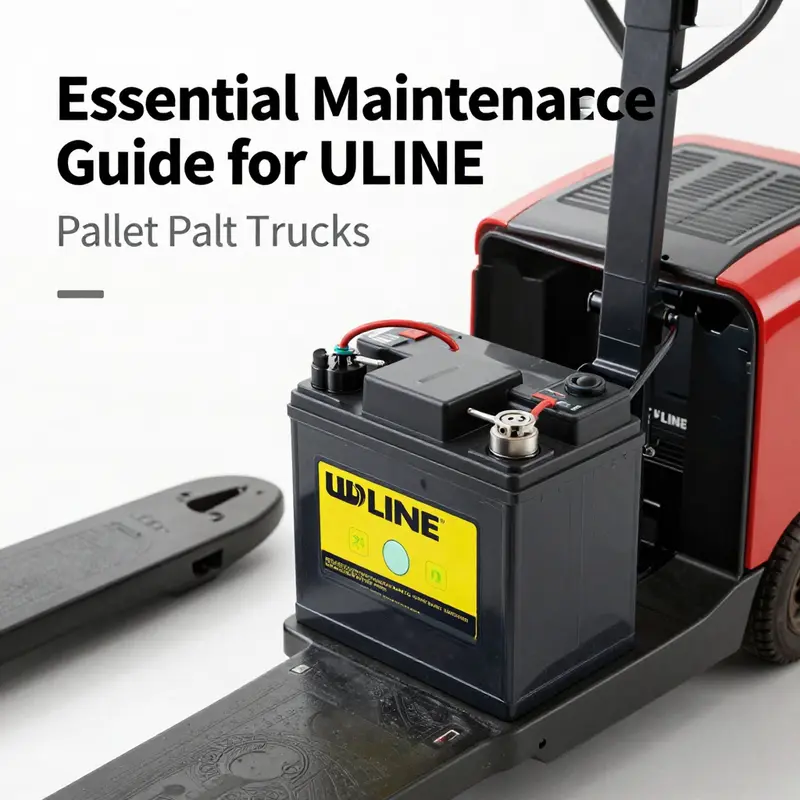
In the fast-moving world of warehouse operations, reliable battery performance is essential for ULINE electric pallet trucks. This chapter offers practical, model-agnostic guidance to help maintenance teams, supervisors, and operators keep batteries healthy, maximize uptime, and maintain safe operation on the dock.
Charging discipline is the heart of battery care. Keep batteries near full capacity with regular charging and avoid deep discharges. Establish a routine such as charging after each shift or between busy periods. Use the vehicle’s capacity indicator and any alarms as the primary cues to act. If a Capacity Insufficient warning flashes, stop the task, connect the charger, and let the system recover. Do not ignore this signal, as it is an early indicator of reduced performance or aging cells.
Battery handling and inspection. Periodically inspect terminals for corrosion or looseness and clean with a dry cloth. Check cables and housing for signs of wear. When removing or repositioning packs, wear personal protective equipment and avoid tipping the battery. Inspect the charging cable and connectors for damage, and replace faulty components promptly.
Temperature and environment. Batteries perform best in stable, moderate temperatures. Avoid charging in freezing conditions or in environments with excessive heat. If your facility has a controlled charging area, use it to minimize heat buildup and ensure consistent charging times across the fleet.
Maintenance plan. Keep a simple, repeatable checklist: verify charge level, listen for abnormal noises, inspect terminals, review any alarms, and log charging times and faults. Use this data to inform preventive maintenance and replacement planning. For model-specific charging voltages and rest periods, refer to the official ULINE User Guide for your truck model and contact ULINE Customer Service at 1-800-295-5510 when in doubt.
Lubrication, Cleaning, and the Quiet Liftoff: A Cohesive Guide to Servicing ULINE Pallet Trucks
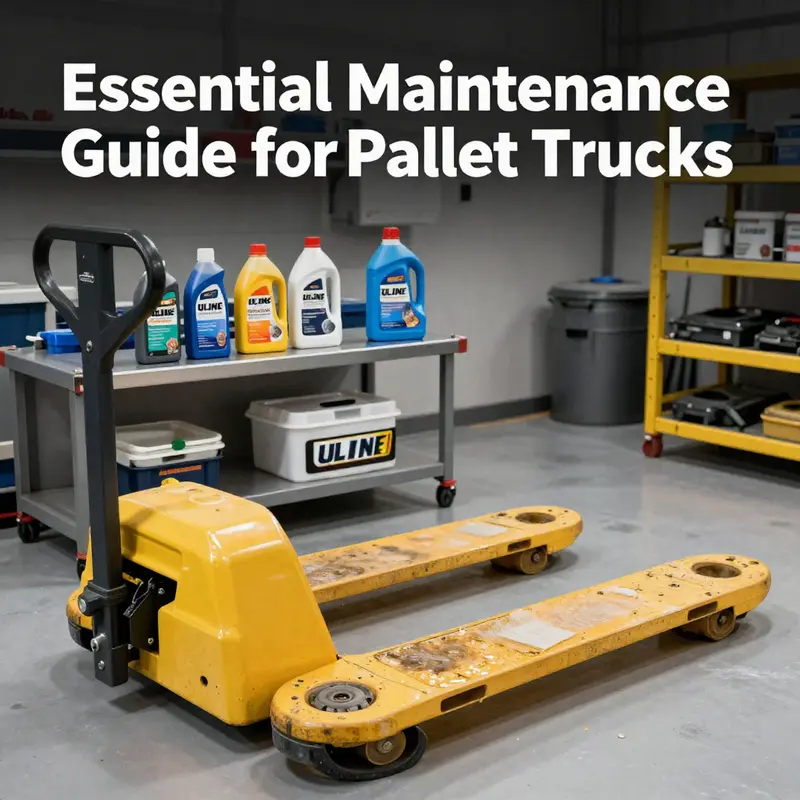
Lubrication and cleaning are not mere cosmetic touches on a ULINE pallet truck; they are foundational practices that determine how smoothly the lift moves, how reliably it responds to steering, and how long its components last in demanding warehouse conditions. In the world of material handling, where a single snag can disrupt a line, a methodical approach to maintenance becomes a core part of safe operation. The guidance below threads together practical steps with a broader sense of responsibility that comes from understanding the machine as a system. While models vary—manual, electric, or with additional features—the central premise holds: keep moving parts well-lubricated, protect sensitive components from the elements, and treat lubrication and cleaning as ongoing tasks rather than occasional chores. This approach not only extends service life but also reduces the risk of sudden failures that could endanger operators or damage goods.
Lubrication acts as a buffer against wear. On a pallet truck, the moving parts that most benefit from regular oil or grease are the steering column and its pivot points, the wheel axles and bearings, and, where applicable, any chain mechanisms that translate wheel motion into lift or steer control. The guidance here emphasizes using lubricants that are compatible with the materials in contact and the environment in which the truck operates. For most scenarios, a light motor oil or a mid-grade grease provides adequate film to minimize metal-to-metal contact without attracting excessive dust or grit. The key is to apply film, not to flood the joints. A small amount applied with a clean cloth or a narrow nozzle lets the lubricant reach the intended surface without dripping onto electrical or hydraulic seals. In dusty or dirty environments, the frequency of lubrication rises; in cleaner settings, you may space it out a bit longer, always validating by inspection of play, smoothness, and any creaking or resistance in movement.
When performing lubrication, the technician should first ensure that the truck is in a stable position. For electric models, this means following lockout or power-down procedures so the controller cannot move unexpectedly during servicing. The same caution applies to hydraulic manual trucks, where the lifting mechanism should be secured before any work on the mechanism begins. With safety in mind, wipe away any old lubricants that have mixed with dirt or debris before reapplying new lubricant. A clean surface ensures that the lubricant adheres properly and does not hold grit against moving parts. It’s also wise to inspect seals and gaskets during lubrication. If a seal shows cracking or signs of seepage, address it promptly; a degraded seal can let dirt in and oil out, defeating the purpose of lubrication.
The scope of lubrication extends beyond isolated joints. The wheel bearings, although often rugged, should receive periodic attention. Clean each wheel axle to remove embedded grit that can accelerate wear. If the wheels feel rough or if there are flat spots, the issue may be more than lubrication and could indicate bearing wear or tire damage that warrants attention. In electric models, where the motor and control electronics interplay with mechanical motion, lubrication should not compromise electrical components. Do not spray or pour lubricant near exposed terminals or control boards. If exposure to lubricant is possible, ensure prompt wipe-down and drying of any surfaces that might trap moisture or attract dust. In short, lubrication is about reducing friction and guarding against contamination, not about coating everything indiscriminately.
Cleaning is the companion discipline that preserves both performance and safety. A clean pallet truck resists the corrosion that can stem from humidity, chemical spills, and dirt buildup. For most surfaces, a damp cloth with a mild detergent is sufficient. Harsh solvents should be avoided, especially on plastic housings and seals, as they can degrade materials over time. After each shift, a quick wipedown helps prevent dust and grime from migrating into crevices. In the case of electric components, cleaning takes a careful turn. Electric assemblies and electronic circuitry should be cleaned with methods that avoid liquids making direct contact with sensitive elements. Compressed air is a preferred tool to dislodge dust from panels, connectors, and vents. If liquids must be used around any non-susceptible area, they should be applied only to non-electrical surfaces and allowed to dry completely before reconnecting power. In all cases, disconnecting the battery prior to any cleaning procedure is a prudent safety step, reducing the risk of short circuits and accidental activation.
The maintenance routine benefits from a simple rhythm: a quick pre-use inspection, a light lubrication cadence, a careful cleaning, and a model-specific follow-up as dictated by the manufacturer. Before use, inspect tires or wheels for cracks or flat spots, check hydraulic lines where applicable for leaks, and ensure the lifting mechanism operates smoothly. For electric models, confirm the battery is charged or charging and that the battery indicator shows a healthy level. The idea is to catch wear patterns early—minor surface wear that is monitored and tended to now is far easier to address than major component failure later. A practical cadence is to perform lubrication and a wipe-down every few months in moderate environments, with more frequent attention in dusty or damp locations. If your operation experiences heavy dust, you might pair lubrication with a mid-shift inspection to ensure no grit has accumulated in critical joints.
To truly internalize these practices, operators must be trained and authorized to perform lubrication and cleaning tasks. A well-trained operator understands not only how to apply oil but when to stop. Over-lubrication can attract dust, which can turn into grinding compounds, accelerating wear rather than preventing it. Likewise, the cleaning procedure must respect the boundaries between mechanical and electronic systems. This is where model-specific guidance matters. The manufacturer’s manual provides the precise grease types, lubrication points, and cleaning limitations for each pallet truck variant. In practice, the blend of general principles and model-specific instructions forms the backbone of a reliable servicing program. When in doubt, consult the manual and verify the steps against the stated maintenance intervals. This disciplined approach makes a tangible difference in the field, lowering the risk of hydraulic leaks, bearing failures, or electrical shorts that would otherwise interrupt a warehouse workflow.
An extended dimension of maintenance is the integration of maintenance practices into a broader operational strategy. Fleet managers who treat preventive care as a core competency tend to see fewer downtime events, more predictable maintenance costs, and higher operator confidence. In this light, lubrication and cleaning are not single-task activities but components of a disciplined maintenance culture. To connect this practice to broader industry perspectives, many fleets are examining how maintenance trends shape reliability and cost efficiency. For broader industry context on how maintenance fits into fleet operations, see Private Fleets Trends in Trucking Maintenance.
When approaching model-specific procedures, it is essential to acknowledge that certain pallets trucks—especially those with electric drive or additional lifting features—will have particular lubrication points and cleaning cautions. The official ULINE Pallet Truck User Guide and related maintenance manuals provide the exact instructions for each model. These documents delineate which components require lubrication, the recommended lubricant type, and the precise frequency. For instance, a given electric model may require periodic lubrication of pivot pins and drive linkages, while a manual version may emphasize the lubrication of the hydraulic pump linkage and the steering mechanism. The guidance stresses aligning with the manufacturer’s recommendations to preserve the integrity of seals, gaskets, and motor windings. In the event of an ambiguous condition—such as unusual resistance when lifting or creeping movement along a wheel path—operators should halt use and consult the manual or a technical service representative. When problems persist, reaching out to the manufacturer’s technical support line helps ensure that the troubleshooting steps are aligned with the design intent of the device.
In day-to-day practice, a cohesive servicing routine also includes careful attention to safety. Always use appropriate PPE when handling lubricants or cleaning agents, and ensure that work areas are well-ventilated. When working around batteries, follow proper handling procedures to prevent exposure to acid and avoid short circuits. If a battery is removed for cleaning or maintenance, keep it on a non-conductive surface and avoid contact with metal tools that could bridge circuits. After any cleaning or lubrication operation, verify that no tools or rags remain lodged in moving parts. A lingering rag can slip into wheels or poles and cause operational hazards. The goal is not only to finish a task but to confirm through a quick functional test that the truck moves smoothly, the lift raises cleanly, and there are no unexpected noises or resistance. A successful servicing cycle is one where the pallet truck returns to the floor with the same poise it had when it was new, or better, thanks to the removal of accumulated grit and the restoration of lubrication film.
To anchor this practice in a concrete sequence, imagine a standard servicing session for a mid-range pallet truck. Begin with a visual inspection and a functional test; note any irregular noises, leaks, or abnormal play in the steering column. Proceed to clean surfaces with a damp cloth, taking care to shield electrical components. Next, disconnect the battery and perform lubrication on the identified joints, applying a modest film of oil or grease and wiping away excess. Reconnect power where appropriate, recheck the movement and lift operation, and observe for any signs of binding or hesitation. Finally, conduct a final wipe-down, ensuring that all exterior surfaces are free of grime and that the wheels rotate freely with minimal resistance. Logging these steps in a maintenance record reinforces accountability and helps identify patterns over time. The combination of careful cleaning and methodical lubrication thus becomes a practical, repeatable process that underpins safe operation and prolongs the life of the equipment.
For operators seeking further detail on model-specific cleaning and lubrication protocols, refer to the official maintenance resources provided by the manufacturer. These documents can offer precise lubricant types, re-lubrication intervals, and any model-specific cautions that help prevent damage to seals or electrical assemblies. If in doubt, do not improvise a repair; the manufacturer’s guidance is designed to preserve safety and reliability across operating conditions. When issues exceed routine maintenance, or if the lift fails to respond to lubrication or cleaning adjustments, seek professional service or reach out to the manufacturer’s support team. This careful approach protects workers, maintains productivity, and safeguards the warehouse’s workflow from avoidable interruptions.
In summary, lubrication and cleaning are not ancillary tasks but core elements of operating integrity for ULINE pallet trucks. The moving parts that enable a smooth lift and easy steering rely on correct lubrication to minimize wear, while cleaning prevents the accumulation of dust and contaminants that can abrade seals and degrade electrical components. Together, these practices form a simple, repeatable routine that can be embedded into daily operations, supported by model-specific manuals, and reinforced by a culture of safety and accountability. The payoff is measurable in reduced downtime, fewer repair calls, and safer, more reliable handling of goods from dock to rack. For readers who want to connect these ideas to broader maintenance trends in trucking and warehousing, the linked resource offers a wider industry perspective that complements the hands-on guidance provided here. And for model-specific steps, always refer to the official ULINE Pallet Truck Maintenance Manual, which details the exact lubrication points, product recommendations, and cleaning cautions tailored to your equipment. External resources are a helpful adjunct, but the core of effective servicing remains a disciplined routine grounded in clean surfaces, proper lubrication, and careful adherence to safety protocols. External resource: https://www.uline.com/ShowItem/169789
Final thoughts
Proper servicing of ULINE pallet trucks through regular inspections, diligent battery maintenance, and effective lubrication and cleaning techniques significantly enhances their performance and durability. This not only ensures safety in operations but also mitigates costly repairs and interruptions in workflow. By adhering to these maintenance practices, companies can improve the efficiency of their material handling processes and protect their investment in equipment. Prioritizing these tasks will lead to a safer and more productive work environment.