
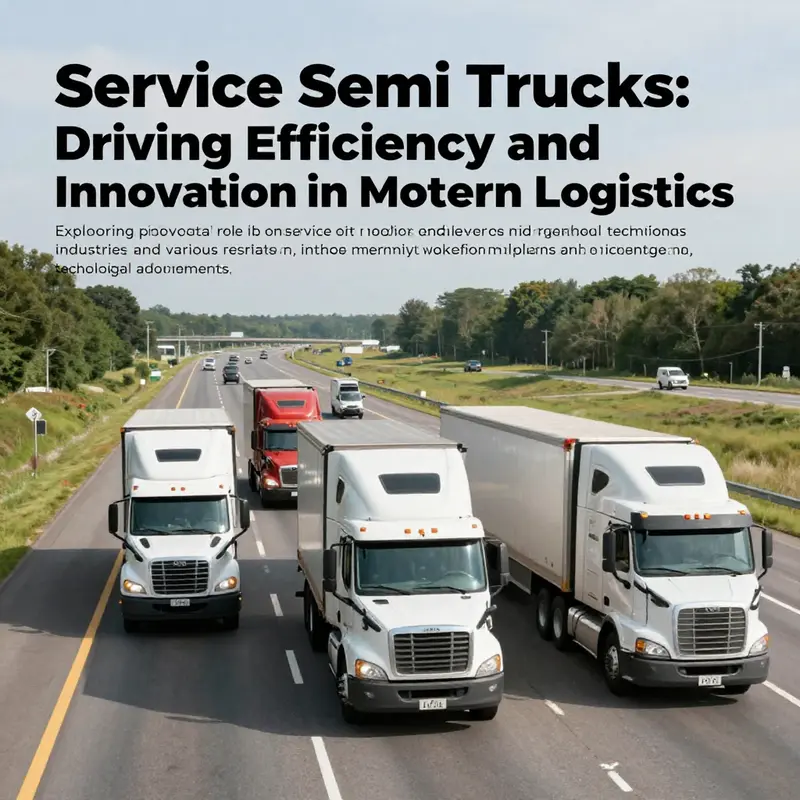
Service semi trucks are more than just vehicles; they are the backbone of logistics, construction, and heavy industries, designed to execute specific tasks efficiently. This article delves into different aspects of service semi trucks, including their definitions, technological features, market applications, and the economic impact they have on various sectors. By understanding these elements, businesses can harness the potential of service semi trucks to enhance their operational performance and sustainability.
Purpose-Built Power: The Service Semi Truck and the New Era of Freight Mobility
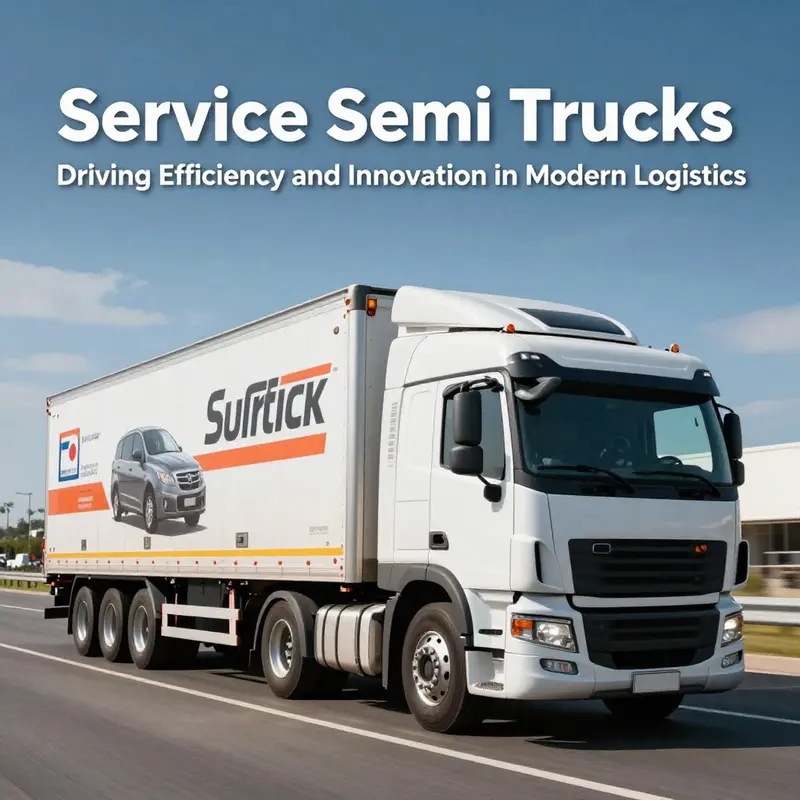
Across the vast networks that keep goods moving, the service semi truck stands as a purpose-built instrument. It is far more than a mode of transport; it is a platform engineered to meet the demands of specialized tasks within logistics, construction, healthcare supply chains, and emergency response where space, power, and resilience are non-negotiable. When people think of a truck, they often picture a simple, generic vehicle. In the world of service dedicated freight, the image shifts. The emphasis is on configuration, adaptability, and the ability to perform a mission. A service semi truck, at its core, combines a tractor unit with one or more semi-trailers, a layout designed to carry the heaviest loads over long distances while maintaining control, safety, and efficiency. This arrangement, classified in the heaviest segment of commercial vehicles, enables high-volume transport that underpins modern commerce and serves as the backbone of regional economies. Yet the definition is not about a single model or a fixed template. The term captures a family of trucks configured to solve particular problems: refrigeration for perishables, open-bed platforms for oversized equipment, spray-on coatings for specialized materials, or ruggedized bodies for construction debris. The same chassis that delivers strength for a long haul can be adapted to meet precise operational needs, turning a generic freight vehicle into a mission-critical service tool. This functional versatility is what makes the service semi truck a central figure in the unfolding story of freight mobility. To situate this shift within a broader economic frame, consider the discussion of key economic trends impacting the trucking industry. The chapter that follows does not simply catalog configurations; it examines how technology, regulation, and evolving customer expectations push these machines to be more than transporters. They become platforms for service, propulsion, and data—an integrated solution that can be tailored to the day’s assignment and adjusted for the next one. The core design is deceptively simple: a tractor unit that tows a trailer via a fifth wheel, with the power and control concentrated in the front, and the payload supported by the rear. This arrangement has stood the test of time because it balances efficiency with flexibility. The tractor provides the propulsion and the steering, while the trailer absorbs the cargo’s weight and dimensions. When the operation demands rapid deployment of bulky materials, a service semi truck can swap out a trailer for a different configuration, turning a single chassis into a family of specialized vehicles. The GVWR, a measure used to classify heavy vehicles in the United States, is a yardstick for capability. A value above 33,000 pounds signals Class 8, the top tier of commercial vehicle classification. In practice, operators and fleets rely on this standard to determine licensing requirements, safety rules, and insurance considerations. For those who intend to drive, a commercial driver’s license with a combination vehicle endorsement is typically required. These regulatory anchors help ensure that the work gets done safely, efficiently, and in a way that protects road users and cargo alike. Yet even within the parameters of regulation, the service semi truck thrives on customization. A fleet that serves perishable goods, for example, will lean into refrigerated equipment and thermal management systems that can sustain quality from dock to shelf. A construction-focused configuration, on the other hand, might be equipped with open decks or specialized racks designed to carry heavy machinery or building materials. The ability to reconfigure is not a luxury; it is an operational necessity in markets that prize reliability and speed. The vehicle’s core strength lies in its capacity to adapt without sacrificing endurance. The design embraces a modular mindset: a robust tractor that can pull a range of trailer types, each tailored to a distinct task. This modular approach extends beyond mere cargo handling. It shapes how fleets plan routes, schedule maintenance, and deploy workers. Because the same base platform can support multiple mission profiles, fleets can compress procurement cycles, simplify maintenance ecosystems, and accelerate the adoption of new capabilities across a single line of equipment. The service semi truck also embodies a broader shift toward efficiency through system integration. If the job demands cold chain integrity, the vehicle can be outfitted with temperature control technologies that monitor and regulate cargo to preserve freshness. If the job requires secure transport, specialized locking mechanisms and tamper-evident seals can be incorporated. If the mission emphasizes speed, aerodynamics and weight management are tuned to reduce energy use and maximize payload. This is not merely about pushing more freight per mile; it is about delivering dependable outcomes under diverse conditions. The performance frontier for service semi trucks has expanded as manufacturers explore electrification and automation within the same chassis family. A growing segment of electric heavy-duty tractors promises to reduce fuel costs, lower emissions, and soften the impact of urban air quality concerns. The reported ranges under real-world conditions push toward five hundred miles per charge when the vehicle operates near its maximum gross combination weight. Achieving that range requires advances in drivetrains, energy efficiency, and fast charging, all designed to minimize downtime on long hauls. The aerodynamics of the vehicle plays a decisive role here. A drag coefficient around 0.36 reduces energy loss to air resistance, which translates into meaningful savings over thousands of miles. In such a system, the battery or energy storage becomes the heartbeat of operation, and the charging strategy becomes the lifeline. The ability to recover time at rest through fast charging is a critical piece of the service semi truck’s value proposition. When a fleet can restore a substantial portion of range within minutes, the cost of downtime drops and the logistical math becomes more favorable. The trend toward automation adds another layer of capability. Modern driving assistance systems can support a driver with automatic braking, adaptive cruise control, and features that enable tighter platooning on highways. These technologies reduce fatigue and enhance safety while enabling fleets to sustain higher utilization of each asset. The human element remains essential, but the driving task can be shared with intelligent systems that help manage speed, spacing, and hazard detection. For operators, this combination of electrification and automation translates into a compelling equation: fewer moving parts in the propulsion and powertrain, reduced emissions, and a more predictable maintenance profile. A service semi truck is not a symbol of a single breakthrough but a platform through which several converging technologies deliver tangible business improvements. It enables fleets to reimagine route design and service models, shifting from purely cost-driven decisions to solutions that emphasize reliability, environmental stewardship, and data-driven operations. The economic rationale grows stronger each year as fuel prices shift, maintenance costs rise with age, and capital costs for new equipment come under closer scrutiny. In this environment, the service semi truck becomes a vehicle for strategic advantage. The drive toward electrification is not a standalone trend; it intersects with infrastructure development, fleet management software, and the evolving expectations of customers who demand faster, more predictable delivery windows. This convergence fosters a broader ecosystem in which the truck is a node of a connected network. Fleets can collect data on load dynamics, route efficiency, battery health, and coolant temperatures in real time, allowing proactive maintenance and more accurate scheduling. The value of such data is not abstract. It translates into lower breakdown risk, reduced idle time, and more consistent service levels for businesses relying on timely arrivals. The service semi truck’s journey is guided by the interplay of policy, market demand, and technology maturation. Governments and industry groups push for cleaner freight solutions, while customers increasingly seek carriers that can demonstrate sustainable practices alongside performance. In many regions, such pressures align with incentives, grants, and regulatory pathways that accelerate the deployment of electric and autonomous capabilities. As a result, the service semi truck emerges not merely as a transport asset but as a strategic instrument capable of reshaping how supply chains are planned and executed. The broader implication is clear: these vehicles are reshaping expectations about what a distribution network can deliver. They force a rethinking of where and how goods move, and they challenge traditional distinctions between long-haul, regional, and last-mile operations. A single chassis, with an array of modular cargo solutions, can perform a spectrum of tasks that previously required multiple specialized vehicles. In practice, this means fleets can design more resilient supply chains that are better suited to handling variability in demand, weather disruptions, or sudden surges in throughput. The service semi truck also invites consideration of the workforce that sustains it. Drivers, fleet managers, and maintenance technicians must adapt to new tools, new standards, and new operating rhythms. Training programs become more sophisticated as the vehicle technologies evolve. Yet the payoff is substantial. With clearer maintenance routines, better asset utilization, and more predictable delivery performance, fleets can reduce total cost of ownership and improve service levels over time. The result is a freight landscape that rewards both innovation and discipline. It is a landscape where the service semi truck is less a single product and more a platform that evolves with the tasks at hand. The next steps involve continued investment in charging infrastructure, improved battery technology, and smarter automation that respects human judgment while enhancing safety. As fleets explore these capabilities, they will also need to navigate the practical realities of scale, such as reliability across varying climates, service coverage for rural routes, and interoperability with different trailer types and docking standards. The practical implementation of these innovations must be grounded in real-world operation, where every mile traveled is a balance of time, cost, and risk. In that sense, the service semi truck stands as a testament to how transportation technology is moving from a simple tool to a strategic partner in supply chain excellence. It embodies a shift toward adaptable, networked, and low-emission freight that can meet the demands of contemporary commerce while preserving the environment for future generations. As this chapter closes on the current moment, the broader arc remains evident: service-focused configurations will continue to proliferate, electrification will extend its reach, and intelligent systems will increasingly guide decisions that touch every link in the chain. The truck that carries goods will increasingly carry responsibility as well—responsibility for efficiency, safety, and sustainable mobility that aligns with a changing world. External resource: for technical specifications and up-to-date details on the all electric heavy-duty model discussed in industry discourse, see the official specifications page at https://www.tesla.com/trucks/semi/specs
Beyond the Cabin: The Technical Fabric and Real-World Performance of a Service Semi Truck
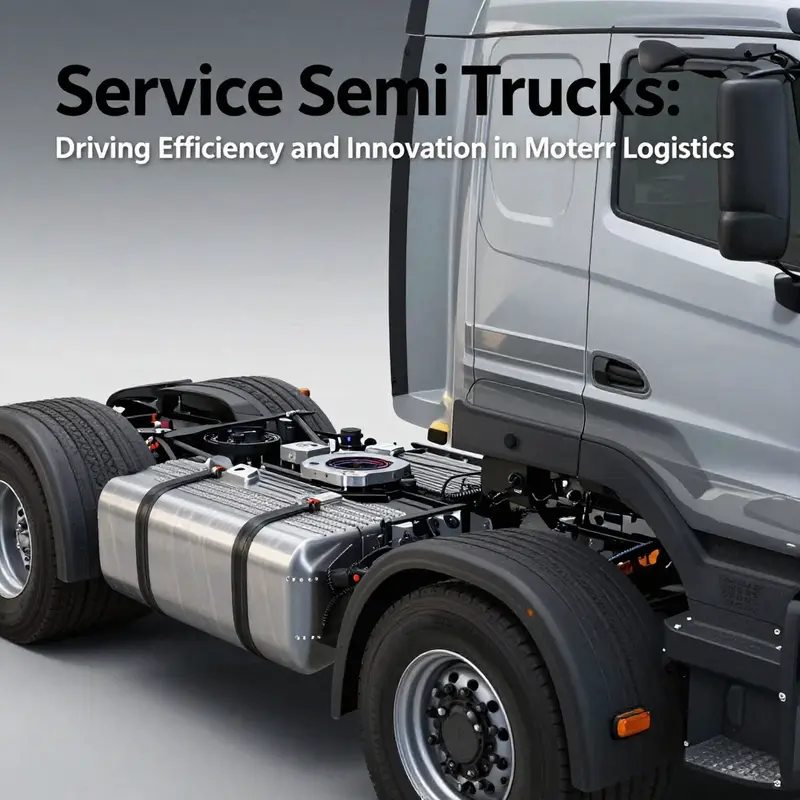
On the shoulder of a highway at 2 a.m., a service semi truck becomes more than a transport rig. It is a rolling workshop, a compact command center, and a lifeline for fleets that must repair, restore, and sustain critical infrastructure with minimal downtime. In the field, where road hazards meet equipment downtime, the vehicle’s true value emerges not just from how far it can haul, but from how reliably it can deliver a complex bundle of tools, platforms, and expertise to the problem site. A service semi truck is designed to bridge the gap between a static shop and an unpredictable work zone. Its chassis and frame are engineered to withstand heavy-duty tools, extra payloads, and the occasional jolt from uneven surfaces. This is not a mere transportation platform; it is a mobile unit that carries the capability to lift, stabilize, power, and repair in places where a conventional service van would quickly run out of space or stamina. The quality of the build matters as much as the magnitude of the tasks it is asked to perform, because every bolt, every bracket, and every rigging point must endure repeated use under demanding conditions. The durable frame and reinforced rails form the backbone of an operation that must respond quickly to roadside emergencies, towing requests, or routine maintenance for critical systems. In practice, the best service semi trucks are designed around the needs of the technicians who live in them. They accommodate large and heavy tools, spare parts, and diagnostic equipment. The ability to welcome a crew’s full toolbox into a mobile workspace reduces the time spent shuttling back and forth to a distant shop. It also keeps technicians near the problem, which improves diagnosis, accuracy, and safety on the job. The balance between strength and efficiency is the core of the design philosophy here, a balance that translates into a vehicle capable of performing high-demand roles without compromising reliability or fuel efficiency when idle in a far-from-ideal environment.
When we consider performance, the first metric is often towing capacity. A service semi truck is frequently asked to move or immobilize heavy, damaged equipment, or to tow disabled vehicles away from hazardous zones. In that context, towing capabilities—often exceeding 15,000 pounds—are not merely a bragging point; they determine whether a technician can clear a site with a single trip or must return multiple times. This capability is paired with torque-rich engines that keep the truck moving under load, especially on grades or when the terrain is unforgiving. The emphasis on low-end torque means a driver can maintain steady acceleration and control even as the load increases, which is essential for missions that require careful handling of delicate or dangerous payloads. The engine’s design reflects a broader principle: in field operations, power is not measured only in top speed or peak horsepower, but in how the machine behaves at the lower end of the rev range when it matters most. This translates into smoother starts, more predictable climbs, and better control in tight or obstructed spaces where precision matters as much as brute force.
The technical core of a service semi truck goes beyond the engine and frame. A precise air brake system, for instance, is a fundamental element of reliability in any heavy vehicle, but it takes on added importance when the truck operates in hazardous or time-sensitive environments. The system relies on careful air fittings and tubing routing, including frequent 90-degree bends and compact conduits that navigate tight engine compartments and crowded tool bays. Such routing is not cosmetic; it ensures that braking remains predictable and responsive under varying loads. The integrity of the air system is tested every day by shifting weights, heat cycles, dirt, and vibration. A single misfit, a poorly routed line, or a tarnished seal can introduce delay and risk, so attention to the routing and the fit of each component is a constant discipline in maintenance and operation.
Electrical systems in a service truck perform more than lighting and basic power. They support high-capacity operations for tool operation, diagnostic equipment, and the powering of auxiliary platforms. The electrical distribution layout must be robust, with redundant circuits and clean separation of high-draw electrical demands from essential driving systems. A well-designed setup keeps the vehicle prepared for immediate field service, reducing the chance that a sudden spike in load disrupts core functions and forces a dangerous detour to a shop or a roadside charger station. In addition to power, the electrical system provides a stable control environment for the vehicle’s many integrated devices. This kind of reliability is the quiet workhorse behind effective field service, allowing technicians to perform complex tasks with confidence rather than ad hoc improvisation.
Hydraulic lifts and associated tooling are another defining feature of service semis. A hydraulic lift or a compact crane can dramatically expand what a crew can do away from a fixed facility. Deploying a service platform enables technicians to access elevated components, load heavy spares, or position equipment with careful, controlled motion. The ability to lift, extend, and maneuver with precision is particularly valuable when working on roadside infrastructure or in crowded work zones where space is limited. The hydraulic system, with its cylinders and pumps, is designed for reliability in dirty, dusty environments and for minimal maintenance demands between deployments. Proper protection against contamination, seals that resist wear, and thoughtful placement of controls all contribute to a workflow where field service remains swift and safe rather than bogged down by mechanical reluctance.
The technological horizon for service semis is shaped by emerging propulsion and energy-management solutions. Electric heavy-haul drive systems, while still evolving to meet all the demands of long-haul and field operations, present compelling advantages for service use. A fully electric powertrain can yield ranges that suit regional or multi-site work, combined with rapid charging capabilities that minimize downtime between jobs. The economics of electrification for service work hinge on several factors: the cost per mile, the ability to recharge quickly at or near job sites, and the long-term savings from reduced fuel use and maintenance of traditional internal-combustion components. Early demonstrations show a credible case for electric configurations, especially in fleets that operate within a constrained radius or that can align charging opportunities with downtime windows at depots or repair yards. These developments suggest a future where the field service truck can reduce operating costs while also contributing to lower emissions and quieter workshops, which is particularly valuable in urban or noise-sensitive zones.
The practical implications of these advances are best understood when we connect them to real-world fleet operations. In a typical service fleet, the economics of ownership and operation hinge on uptime, maintenance cycles, and the effective lifetime of components. The rugged chassis and reinforced frames may endure a longer service life than lighter-duty vehicles, but they also endure higher maintenance demands because the vehicle remains in near-constant contact with heavy payloads and dynamic work sites. The need to regularly inspect the air brake lines, seals, and fittings becomes a core maintenance ritual. A single trip to replace a worn gasket or worn piping can prevent more serious brake issues in the field, where reaction time matters for safety and for keeping a schedule intact. The electrical system is similarly scrutinized on a routine basis, with attention to connector integrity, corrosion resistance, and the durability of harnesses that must tolerate exposure to dust, rain, and road spray. The hydraulic equipment demands periodic seal replacement, fluid checks, and an evaluation of the lifting mechanisms’ mechanical advantage. In a well-run operation, preventive maintenance is not a distant luxury but a daily discipline that connects the work performed in the shop to the service delivered on the road. When these systems work in concert, the truck becomes a flexible platform for a range of field tasks, from on-site part swapping to the temporary stabilization of damaged infrastructure and the positioning of heavy spares or tools for quicker access.
As conversations about the future of service trucks broaden, industry observers look to electrification and modular configurations as pathways to greater efficiency. Electric propulsion promises cleaner operation, while modular tool and platform options offer operators the chance to tailor the vehicle to distinct service contexts, from highway maintenance to on-site machinery repair. The most compelling cases for electrification emphasize not just a lower energy bill, but a strategic reshaping of the service workflow. Fewer stops for fuel translate into more time at or near job sites, and smarter energy management—such as energy recovery during braking or optimized power allocation for tools—can further shave downtime. In the long run, these capabilities may allow fleets to reimagine depot layouts, charging schedules, and technician rosters to maximize coverage with the fewest possible idle periods. The net result is a service model that is more resilient to labor market fluctuations, more adaptable to shifting demand patterns, and more compatible with stringent environmental targets that many operators are now under pressure to meet.
To illustrate how market dynamics are evolving, consider how cross-border operations add another layer of complexity and opportunity. When fleets extend service coverage across regions or countries, the logistical calculus expands to include regulatory alignment, compatible charging or fueling infrastructure, and the availability of skilled technicians who can service advanced systems wherever the truck travels. The cross-border dimension also underscores the importance of data, diagnostics, and remote support networks that can keep a vehicle productive even when it is far from a traditional shop. In this context, insights from early adopters and pilots reveal a pattern: reliability, interoperability, and support ecosystems become as important as the vehicle’s own hardware. A service semi with strong fault-tolerant design, robust diagnostic connectivity, and reliable field-service partnerships is more likely to deliver consistent performance across geographies and jobs.
In the broader arc of service operations, the shift toward electric and smarter field equipment is already reshaping fleet strategy. Companies are rethinking procurement around lifecycle costs rather than upfront price, prioritizing vehicles that can sustain high uptime with predictable maintenance. They are also aligning training programs to ensure technicians can install, operate, and repair more sophisticated platforms in diverse environments. The result is a service ecosystem that treats the vehicle not merely as a means of hauling tools, but as a dynamic, adaptable workspace that can contour itself to the task at hand. As markets continue to evolve, the best practitioners will balance proven mechanical reliability with flexible powertrains and modular capabilities. The objective is consistent: keep the technician in motion, minimize downtime, and maximize the value delivered to clients who depend on rapid, effective field service.
For readers curious about how this trend unfolds in different regions, consider how cross-border market entry and regional fleet strategies shape what owners demand from service semis. Insights from ongoing regional experiments show that operators prioritize equipment longevity, uptime, and interoperability with local infrastructure. In North America and beyond, fleets are increasingly looking at how a vehicle’s electrical architecture can support not just tools, but connected diagnostic dashboards, automated lane and safety features, and remote monitoring capabilities that anticipate maintenance needs before a component fails. These considerations go hand in hand with the vehicle’s core strengths—its rugged build, strong low-end performance, and the ability to deploy a full toolkit quickly and safely on site. The ultimate aim is a synergistic system in which the vehicle, the technicians, and the supporting infrastructure function as an integrated network. When that happens, service work becomes a smoother, faster, and safer discipline, capable of meeting tight deadlines and demanding environments with equal poise.
As the community of operators continues to experiment with electric powertrains and modular configurations, it is worth noting a specific example from the field: cross-border market entry in neighboring regions signals both challenges and opportunities for service operations. The experience across jurisdictions highlights how important it is for fleets to have flexible charging and maintenance arrangements that can travel with them. For readers seeking a concrete point of reference on this topic, see Harbinger electric trucks in Canada market entry. Harbinger electric trucks in Canada market entry. This example underscores how regional realities—grid capacity, incentive programs, and maintenance networks—shape the practical deployment of service semis in new markets. It also hints at a broader lesson: innovations that work in one context can be adapted to others through thoughtful planning, partner ecosystems, and an emphasis on uptime rather than novelty.
Ultimately, the chapter on the technical and performance features of a service semi truck should leave readers with a clear sense of why these vehicles matter in the daily rhythm of maintenance, repair, and logistical support. They are not just big trucks with powerful engines; they are mobile service platforms that expand what’s possible in the field. The combination of durable construction, precise braking and electrical systems, and field-ready hydraulic capabilities makes them uniquely suited to bridging the gap between a shop and a site where time and safety are critical. As technology evolves, this class of vehicle may increasingly blend the resilience of traditional heavy-duty platforms with the efficiency and flexibility of electric powertrains, delivering the best of both worlds to fleets that must deliver service, day after day, across a landscape that never stops moving.
External reference: For formal specifications on electric heavy-haul trucks, see https://www.tesla.com/semi/specs.
From Fleet Strategy to Field Realignments: The Market Applications and Development Trajectory of the Modern Service Semi Truck
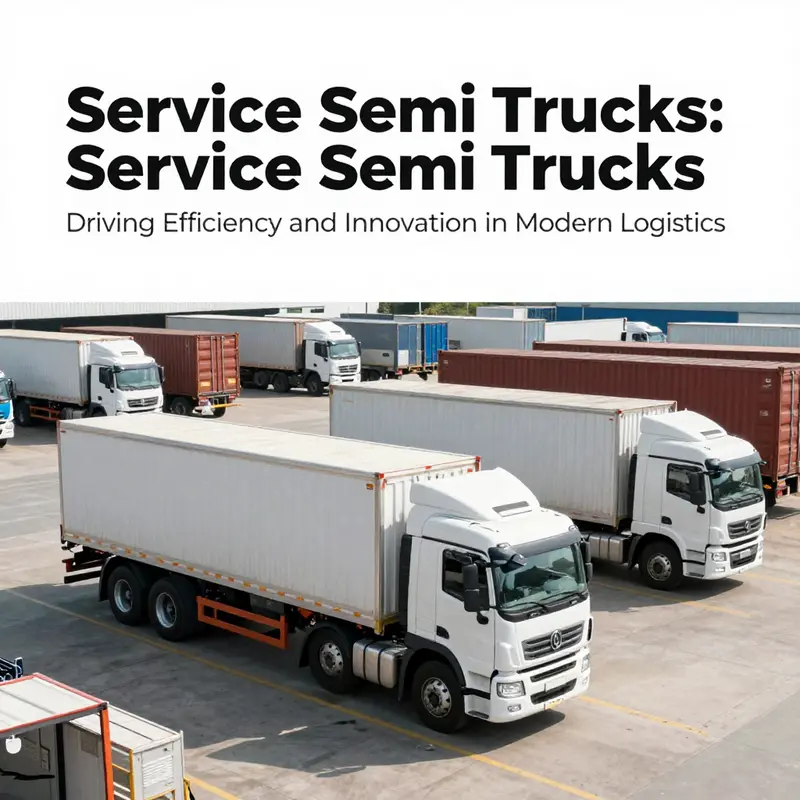
The service semi truck sits at the intersection of rugged hardware and digital capability. It is not only a heavy vehicle for moving goods, but a modular platform that can be retooled and reconfigured to meet evolving logistics needs. As markets demand speed, reliability, and resilience, fleets seek services that reduce risk, streamline operations, and unlock new revenue streams. In this sense, the service semi truck embodies a broader shift in trucking from asset ownership to service oriented models where cost aligns with usage and uptime dictates value. This is a fundamental transformation in how fleets acquire, deploy, and manage vehicles, people, and routes.\n\nA central thread is Truck-as-a-Service, or TaaS, which blends leasing, telematics, insurance, and maintenance into a single offering. Rather than buying a truck and assembling third party services, a business can access a vehicle with a built in digital spine. The truck becomes a platform around which services orbit. Predictive maintenance reduces unexpected downtime; real time telematics illuminate performance and cargo conditions; and the platform translates data into actionable decisions across the operation. The appeal is clear: upfront capital reduces, operating costs become predictable, and downtime risk declines as teams gain visibility and control.\n\nMarket analyses show this model gaining momentum. The TaaS market is projected to grow over the next decade as fleets shift from capex heavy ownership to opex based services that cover procurement, operation, and end of life management. The approach is particularly potent for long haul operators where downtime is costly. Digital platforms enable close to real time visibility into vehicle health, route performance, and cargo conditions, allowing dispatch to optimize plans, improve on time delivery, and maintain cargo quality. This integration matters as much as the hardware itself because software, data, and services determine the reliability and total cost of operation.\n\nThe move toward modular configurations and interoperable data platforms is accelerating. A service semi can be configured for cold chain, general freight, or heavy equipment transport, with standardized interfaces that ease cross fleet deployment. This modularity supports faster innovation, safer operations, and more flexible pricing. The business case for TaaS rests on the promise of uptime gains, better route fidelity, and predictable expenses for customers, while providers build durable relationships through recurring revenue and stronger data governance.\n\nUltimately the fleet becomes a living ecosystem rather than a collection of individual vehicles. When trucks are integrated with digital platforms, energy networks, insurance, and fleet management, resilience improves and supply chain volatility is better absorbed. The vehicle is still the core asset, but its value is enhanced by software, services, and data that help optimize performance, reduce risk, and unlock new verticals. As the industry matures, interoperability, standardized data schemas, and deeper metrics will translate into more actionable decisions at the dispatch level and for strategic planning across the network.
Power, Payback, and a Greener Horizon: Reshaping Freight Economics with Service Electric Heavy-Duty Trucks
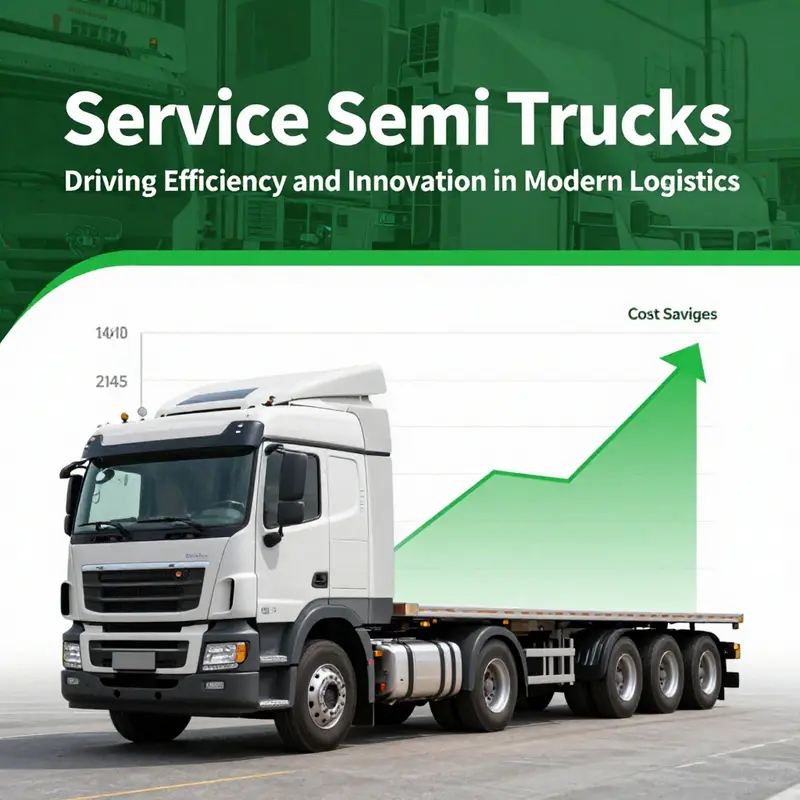
The service-oriented semi truck stands as more than a means to move goods. In the modern freight arena, it is a platform for specialized tasks that extend beyond simple transport. Think of mobile cold-chain operations that preserve perishables on long hauls, or on-site construction logistics that bring heavy equipment directly to a site without multiple handoffs. Even emergency-response services, which require rapid deployment of equipment and reserves, rely on a vehicle that can be reconfigured on demand. From the perspective of cost and efficiency, these trucks are becoming the nexus where operational capability and economic calculus meet. They are not just tools for delivery; they are rolling service units that adapt to the job at hand. This reframing matters because it shifts the discussion from a single product’s performance to how a serviceable vehicle changes the economics of entire operations. In that broader view, the electric service semi truck emerges as a potential disruptor and a facilitator of new business models within the trucking ecosystem.
Technically, the electric service semi offers a compelling blend of power, efficiency, and reliability that directly affects fleet economics. Energy consumption is markedly lower per mile than conventional diesels, with figures hovering around two kilowatt-hours per mile on average. The typical range on a single charge—up to about 500 miles for a loaded tractor-trailer—positions these trucks to cover many daily routes without refueling stops that puncture productivity. For heavy loads, where payload and range often pull in opposite directions, this balance is particularly meaningful. The ability to sustain road speeds while carrying near 82,000 pounds gross combined weight is a reminder that electrification does not require sacrificing capability. Acceleration remains robust; even under heavy load, the vehicle can accelerate quickly enough to meet the tempo of highway traffic. The engineering logic is straightforward: fewer moving parts, and a drivetrain designed for smooth torque curves, translates into a drivetrain that requires less maintenance over time.
From an owner-operator or fleet perspective, the economics of ownership begin with fuel and maintenance costs. Electric drive systems reduce routine maintenance because there are fewer consumables and no multi-disk diesel exhaust treatment systems to service. The absence of oil changes and many friction points translates into lower maintenance budgets and less downtime. When these savings are projected across a fleet and multiplied by the number of miles driven, the savings compound. Industry analyses consistently show that fuel costs dominate the operating budget for long-haul fleets. Reducing per-mile energy costs by a meaningful margin can dramatically shift the bottom line. Fleet managers are particularly attentive to the fact that a substantial portion of a driver’s time is consumed by fueling and related downtime. Electricity, delivered through a network of high-capacity chargers along major corridors, can compress turnaround times and yield more predictable schedules. In other words, the vehicle’s energy profile aligns with the cadence of modern logistics, where reliability and time-on-the-road are precious assets. For those seeking reference points on the broader economic implications, industry studies synthesize the key trends in trucking economics and present a compelling picture of how energy efficiency translates into cash flow. See more in Economic Trends in Trucking.
The cost savings story is not limited to fuel and maintenance. The ability to charge rapidly at strategically located facilities means fleets can recover a substantial portion of range in tight time windows. In practical terms, a heavy-haul operation can gain back a large share of a day’s miles after a relatively short charging stop, which translates into more productive driving hours and fewer delays. The savings accrue not only from lower fuel spend but also from optimized utilization of trucks and drivers. The total cost of ownership (TCO) calculation for a service electric semi is therefore a blend of upfront capital, operating expenditure, and the value of uptime. In many scenarios, fleets report that the three-year fuel savings alone can approach or exceed substantial six-figure sums. When combined with reduced maintenance and longer asset life, the case for electrified service trucks grows stronger. This is particularly true for fleets that operate frequent, predictable routes and can leverage advanced route planning to maximize charging opportunities without compromising service levels.
Another dimension of the economic impact lies in maintenance costs and asset longevity. Electric drivetrains simplify the mechanical landscape. Fewer moving parts mean fewer potential failure points and fewer service visits. Over time, this translates into predictable maintenance budgets and better budgeting discipline for fleets. For the operator tasked with servicing a dispersed network of customers, the reduced maintenance footprint improves fleet reliability and, crucially, reduces the risk of service setbacks that can ripple through the supply chain. The maintenance advantage also supports a broader workforce transformation. Technicians with electric drivetrain expertise can perform more preventive maintenance with a higher degree of efficiency, helping to stabilize maintenance lead times and reduce downtime. This dynamic helps fleets reallocate resources toward predictive maintenance strategies and more proactive asset management.
The charging and infrastructure piece deserves particular attention because it links energy economics to operations. A growing network of high-capacity charging stations along major freight corridors is crucial to realizing the full potential of electric service trucks. When a fleet can count on charging availability during layovers or planned stops, the probability of missed opportunities declines. The ability to restore a large portion of range within a short window becomes a driver of reliability, not a constraint. Industry observers emphasize that the economics of charging infrastructure—its capital cost, utilization rate, and grid interactions—will shape the pace of electrification as much as the price of electricity itself. Efficient charging reduces cycle times and keeps trucks moving, which, in turn, improves fleet utilization, lowers per-mile costs, and enhances service quality.
Market adoption of service electric heavy-haul trucks is closely tied to the evolution of the supply chain and the maturation of charging ecosystems. Early deployments by leading shippers and logistics providers have demonstrated the practicality of long-haul, high-capacity operation in real-world settings. While individual experiences vary by route structure, climate, and duty cycle, the aggregate signal is clear: electric heavy-duty trucks can perform at scale without compromising service levels. This progress has a cascading effect on financial planning, procurement strategies, and risk management. As freight operators weigh capital expenditures, they increasingly factor in the price stability of electricity against volatile diesel markets and the potential emissions costs embedded in regulatory frameworks. The decarbonization impulse is not merely a regulatory or reputational concern; it translates into tangible long-term cost trajectories that favor electrification under a wide array of operating models.
In this context, the future looks less like a single technology shift and more like a broader transformation of the trucking ecosystem. A robust electrified service truck program can unlock new business models that rely on modular configurations. Imagine a fleet that can convert a vehicle from high-volume cold-chain transport to a mobile maintenance unit or a disaster-response platform with minimal downtime. The flexibility of the vehicle as a service platform supports on-demand capabilities and reduces the need for specialized, single-task equipment rentals. Such versatility is a critical driver of profitability in diversified fleets, where the cost of idle assets and underutilized capacity can erode margins. The strategic value lies in the ability to redeploy assets quickly, adapt to shifts in demand, and maintain a service-first posture for customers who rely on on-time, temperature-controlled, or urgent-response logistics.
As adoption grows, the interplay between policy, financing, and technology will sculpt the pace and profile of electrification. Policy signals that encourage lower emissions and cleaner freight operations can tilt capital-aware buyers toward electrified options. Financing structures that recognize the lower maintenance burden, hardware longevity, and revenue stability of electrified service fleets will further accelerate uptake. In turn, this creates a virtuous cycle: more trucks on the road, more data on performance, and more refined maintenance and charging solutions. The ripple effects extend to the broader economy. Reduced fuel demand, cleaner air in freight corridors, and new green jobs in maintenance and system integration contribute to a more resilient logistics sector. The growing emphasis on data-driven operations also enables fleets to optimize usage patterns, forecast maintenance needs, and plan charging windows that align with grid capacities and energy prices.
The broader trajectory points toward a decarbonized, digitized, and more resilient freight ecosystem. Electrification does not erase the need for efficiency improvements or for smarter routing; it complements them. Route optimization remains essential, but it is now paired with energy-aware planning. Fleets that can orchestrate charging, driver hours, and load planning in concert stand to gain the most. In practice, this means integrating telematics, predictive maintenance, and real-time energy pricing into a seamless decision framework. The result is a fleet that is not only cost-competitive with conventional equipment but also better aligned with corporate sustainability targets and regulatory expectations. This alignment is increasingly attractive to investors, customers, and regulators who want to see tangible progress toward lower freight emissions without sacrificing reliability or service levels. The service electric heavy-haul truck thus represents a pragmatic bridge between today’s logistical needs and tomorrow’s environmental commitments.
In thinking about the future, it is important to acknowledge the workforce implications. The electrification wave will require new skills, training, and safety protocols. Maintenance technicians will need to understand battery systems, electric drivetrains, thermal management, and charging interfaces. Drivers will benefit from enhanced vehicle systems that support safer operation and more predictable duty cycles, yet they will also require training on charging schedules and energy-efficient driving practices. Employers who invest in people alongside hardware will find themselves with a more capable, adaptable workforce. This human capital dimension matters because technology alone cannot unlock the full value of electrified service trucks. The people who operate, maintain, and repair these vehicles are the linchpin of the transformation.
The economic imprint of the service electric heavy-haul truck, therefore, extends beyond the balance sheet. It reshapes business models, influences fleet composition, and redefines what is possible in specialized service segments. The payoff comes through cost discipline, uptime, and the ability to offer differentiated service offerings that capitalize on the vehicle’s unique flexibility. For fleets pursuing a more resilient supply chain, electrified service trucks deliver a practical path to decarbonization, improved reliability, and sustained profitability. The chain of effects—from energy efficiency to maintenance savings, from charging infrastructure to workforce training—converges on a single insight: the service semi truck is not just a cleaner truck; it is a more capable service platform that changes how freight is planned, priced, and delivered.
As with any transformative technology, the path forward will feature challenges as well as opportunities. The economics depend on balancing upfront capital with long-run fuel and maintenance savings, and on building out the charging and service network to support predictable operations. Yet the convergence of favorable energy economics, improved uptime, and the strategic value of service versatility makes a compelling case for considering electrified service trucks as a core asset for forward-looking fleets. The narrative is not about a single breakthrough but about a broader alignment of technology, finance, and operating discipline that together drive a more efficient, sustainable, and resilient freight industry. For readers who want to explore the broader trends in trucking economics and how they influence fleet decisions, consult industry analyses such as the documented economic trends in trucking.
External resource: https://www.energy.gov/eere/vehicles/articles/electric-trucks
Final thoughts
In summary, service semi trucks are pivotal in shaping the future of logistics, construction, and distribution industries. Their specialized designs, advanced technologies, and efficiency not only reduce operational costs but also contribute to environmental sustainability. As more companies recognize the benefits of incorporating service semi trucks into their fleets, the landscape of transportation will continue to evolve, paving the way for innovative solutions in logistics and supply chain management.