
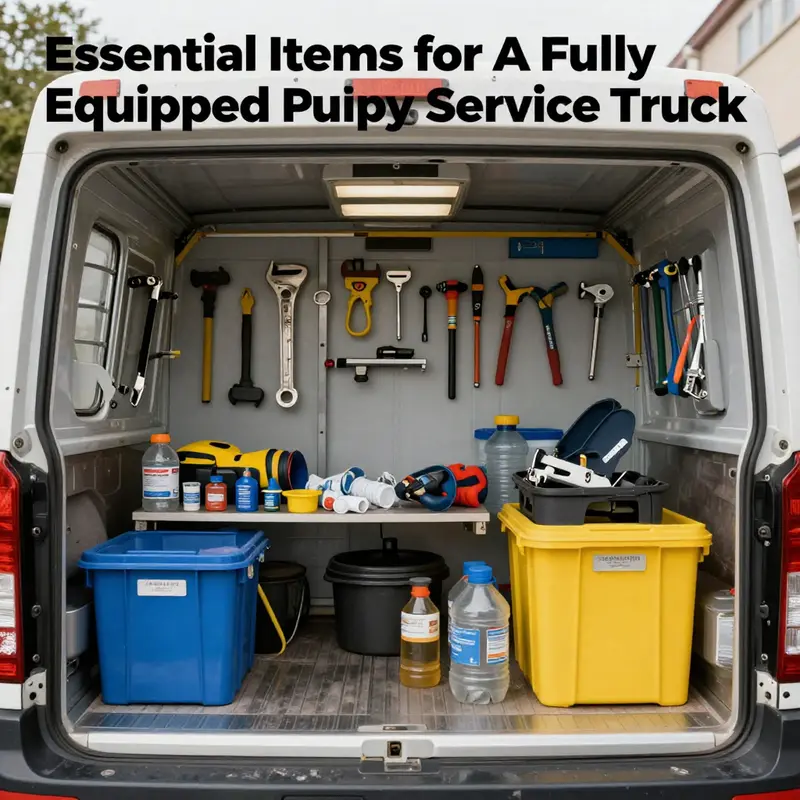
In the plumbing industry, the efficiency of a plumbing service truck is paramount for effectively addressing the diverse needs of clients across residential, commercial, and industrial sectors. The tools, materials, and safety equipment stocked in the truck reflect the operational capabilities of the plumbing business. A well-stocked service truck enables plumbers to tackle a variety of tasks on-site, decreasing downtime and enhancing service delivery. This article unpacks the critical categories of items that should be included in a plumber service truck, ensuring that plumbing professionals are well-equipped to manage both routine and emergency demands. Each chapter will detail essential tools, fixtures, diagnostic equipment, and additional helpers to maintain a high standard of service quality.
null
null
Stocking the Core: Essential Fixtures & Materials for a Plumber’s Service Truck
A plumber’s service truck is more than a mobile workshop; it is a portable depot from which calm, precise problem solving can unfold in the most cramped spaces or on the most challenging sites. The core idea behind stocking the truck is simple, yet powerful: be ready for the most common failures, and be prepared for the rare, higher-stakes repairs that demand the right material at the right moment. When a truck arrives at a residence, a small business, or a larger facility, the first impression is not the speed of the call but the confidence that the technician radiates—because the truck itself speaks of preparation. The inventory of fixtures and materials is the practical expression of that preparation. It is what allows a professional to complete a job in one visit, to minimize callbacks, and to maintain clean surfaces, steady water flows, and durable seals. The essence of this chapter rests in how a well-thought-out mix of items translates into reliability on site and satisfaction for customers who depend on the plumber to restore peace of mind, not to create another problem to solve.
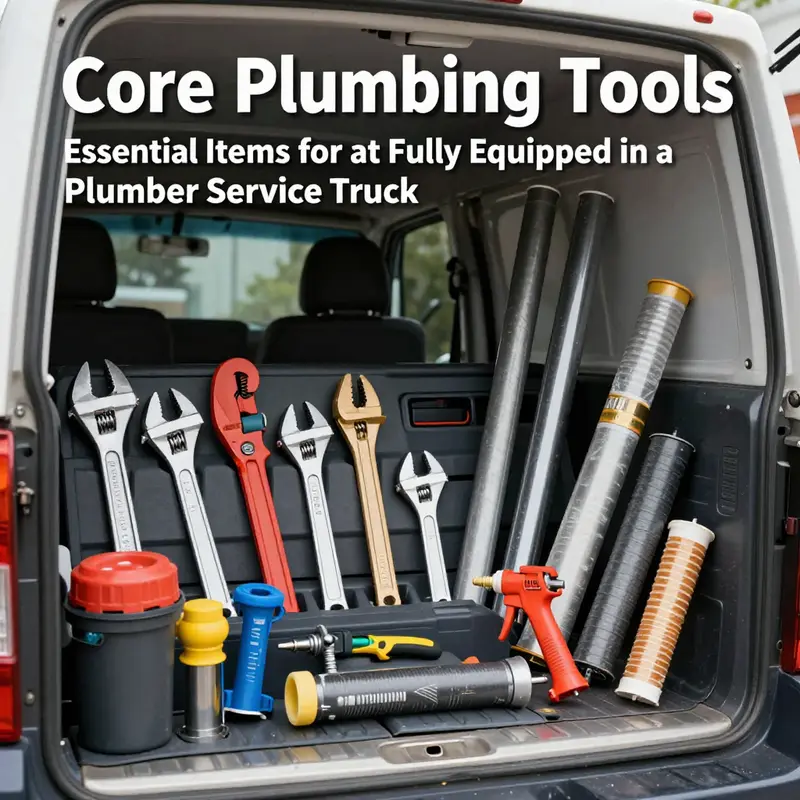
The backbone of any well-stocked service truck begins with the basics that sit at the kneecap of every repair. Basic hand tools may seem obvious, but their thoughtful selection matters just as much as their presence. An adjustable wrench, a channel-lock or groove-jro plier, slip-joint pliers, and a sturdy pipe wrench form a quartet of grip and leverage that spans countless sizes and configurations of pipe and fitting. A hammer, a variety of screwdrivers, a tape measure, and a level might appear mundane, yet they are the quiet workhorses that keep a job progressing with accuracy. When a technician reaches for a tool and feels the weight and balance in the hand, confidence follows. It is also important to consider redundancy—having spare handles, extra bits, and a second tape measure ensures the work does not stall when a single tool slips from the pocket or is misplaced in the foam-lined compartments of the truck.
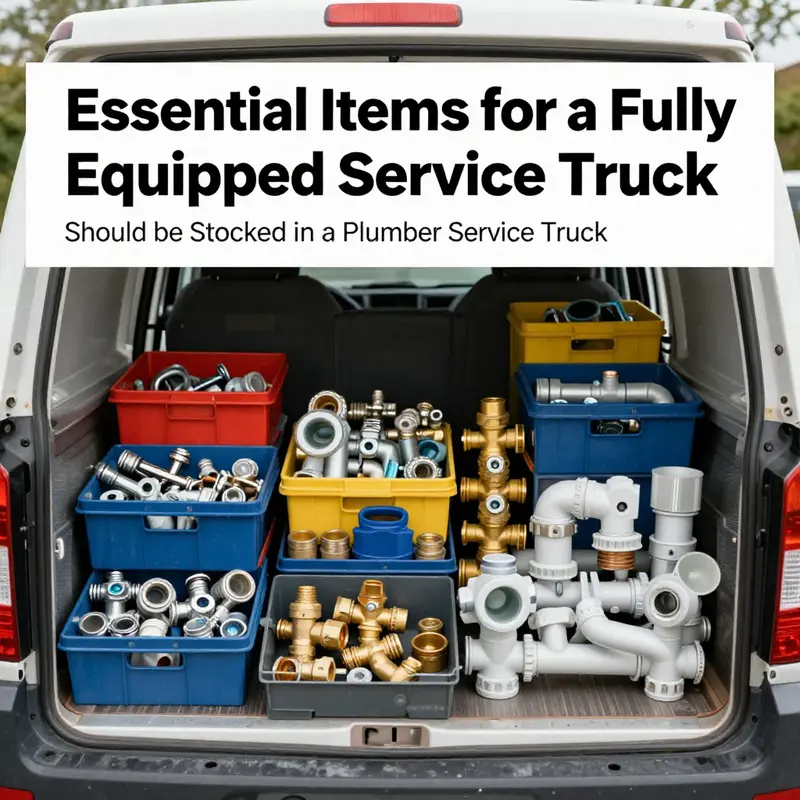
Stocking pipe repair and replacement materials requires thinking in terms of both common demands and reasonable contingencies. The everyday plumbing system runs on a mix of materials: PVC, CPVC, PEX, and copper tubing cover the most frequent installations and repairs. It is prudent to carry short lengths of each material in several standard diameters, with corresponding fittings to bridge gaps and gaps to other materials. Elbows, tees, couplings, reducers, and adapters in copper, PVC, and PEX provide the versatility needed to assemble or repair a section on the fly. A practical rule of thumb is to maintain a spectrum of sizes that covers the majority of residential and commercial needs, while keeping a smaller assortment of more specialized fittings for less common applications. Teflon tape and pipe dope are essential for threaded connections—the kind that emerge when joining new valves, adapters, or pipe sections. The goal is to prevent leaks through meticulous, thorough sealing without resorting to excessive torque that could strip threads.
Fixtures and fittings are the heart of the repair ecosystem in a service truck. A well-rounded stock includes commonly replaced fixtures such as sink faucets, showerheads, bathtub spouts, and toilet components like flappers. This category also embraces the consumables that ensure the longevity of a repair: wax rings for toilets, toilet bolts, and overflow tubes. Supplying basic supply lines for sinks and faucets, along with washers, O-rings, and cartridge replacements, reduces the need for a follow-up trip. The emphasis is on versatility rather than depth in any single product. For example, a single trip might involve replacing a cartridge in one fixture and sealing a neighboring joint with a different material—so the inventory should be organized with thoughtful, cross-functional components that can be swapped quickly without scavenging from a shelf elsewhere. The array of piping materials also supports this approach: a handful of copper tubing lengths, PVC and CPVC pipe segments, and PEX tubing can handle most mid-range service tasks before the job calls for a broader selection from a supplier back at the shop.
Drain cleaning equipment is perhaps the most frequent reason for a service call. A well-equipped truck has options for tackling clogs with different approaches, from mechanical clearing to high-pressure jetting for stubborn blockages. A hand-crank or electric drain snake, a handheld auger, and a high-pressure water jetter form a scalable toolkit for clearing lines of varying diameters and degrees of complexity. While chemical drain cleaners do exist in the toolbox, their use should be deliberate and limited due to environmental concerns and the potential for pipe damage. A balanced inventory acknowledges this by providing safe, effective alternatives first and preserving chemicals for truly difficult cases or for use under guidance from company policy and local regulations. This approach also aligns with best practices for customer safety and environmental stewardship, reinforcing a plumber’s role as a responsible problem solver.
Sealing and waterproofing supplies are the quiet guarantors of long-term reliability. Plumber’s putty, silicone caulk, epoxy putty, and waterproof sealants make the difference between a temporary fix and a durable repair. These materials are applied around sinks, showers, tubs, and toilet bases to prevent leaks at the seams where different materials meet. The durability of a seal depends not only on the material itself but on the cleanliness of surfaces and the careful preparation that precedes application. Therefore, drills, scrapers, and cloths designed for surface preparation should accompany sealing products in the truck’s layout. By integrating sealing supplies with the rest of the materials, a technician can address both the mechanical and the cosmetic aspects of a repair, reducing the probability of future leaks that could trigger callbacks and customer dissatisfaction.
Diagnostic and safety equipment round out the core portfolio by enhancing visibility, accuracy, and protection. A flashlight or headlamp is a non-negotiable tool for working in dark corners, under sinks, and in basements. The value of a modern flashlight goes beyond brightness; it includes battery reliability and the ability to illuminate high-contrast joints without creating glare. A moisture meter becomes a small but powerful device for identifying hidden leaks and dampness behind walls or under floors, enabling the technician to locate the source of a problem without invasive exploration. A camera-equipped inspection light or a compact bore camera can extend the same advantage into more challenging spaces, such as sewer lines or long runs of pipe hidden in ceilings or voids. Safety gear—gloves that are cut-resistant and chemical-resistant, safety glasses, dust masks, hard hats, and steel-toed boots—protect a team on every project while signaling professionalism to customers. A well-stocked first aid kit remains a fundamental element of any service vehicle, equipped with items appropriate for minor injuries or incidents that can occur mid-job.
Beyond the basics, emergency and backup supplies deserve careful attention because they reduce downtime and reassure customers that a plumber can handle surprises. A few spare shut-off valves can prevent a simple fix from becoming a drawn-out replacement task. Emergency pipe clamps, temporary pipe sleeves, and a portable pump for removing standing water are prudent inclusions for dealing with sudden leaks or floors saturated with water. Modern fixtures sometimes require electrical work to support sensors, power, or lighting. A compact toolkit for minor electrical issues can be valuable in such scenarios, provided technicians remain within their scope of practice and adhere to safe electrical practices. Each item in this category carries a rationale: it is not to meet every possible contingency but to cover the most likely, time-sensitive challenges that would otherwise force a return trip or a costly delay.
The organization of this inventory also matters as much as the items themselves. A truck that enables rapid retrieval of materials reduces job time and elevates the customer experience. Color-coded bins, labeled drawers, and clearly separated sections help a technician locate fittings, seals, and tools with minimal disruption to the workflow. For instance, a dedicated zone for drain components can hold a snake in one shelf, a handheld auger in another, and the jetter hose and nozzles within easy reach. A separate, well-protected cabinet for sealing compounds ensures that silicone and epoxy do not contaminate other materials. The goal is to minimize rummaging, which can lead to accidental damage to fixtures or surfaces as a job progresses. Regular audits of the truck’s inventory—daily checks before heading out, weekly counts, and monthly restocks—create a predictable rhythm that aligns with the technician’s day-to-day reality and with the needs of customers who depend on dependable service.
Seasonal trends also influence what gets stocked and how it is organized. The winter months bring a higher incidence of frozen pipes and heating system issues, which might demand more copper and certain valves, along with heat-resistant sealants and coverage for scalding risks. Spring and summer typically increase the rate of outdoor faucet repairs, irrigation, and sewer-related inspections, which in turn justify a larger stock of hoses, drain-cleaning accessories, and inspection tools like video cameras. The service truck must be agile enough to adapt; this means preplanning and a structured re-stocking protocol that allows for rapid expansion or contraction of certain categories based on historical call data and the local customer base. The goal is not a static catalog but a living, responsive inventory that grows with experience and reacts to the realities of the community it serves.
The literature on logistics and field maintenance underlines a simple truth: readiness plus speed equals lower costs and higher customer satisfaction. When a truck arrives fully provisioned for the common array of tasks, the technician can diagnose faster, select the correct materials with confidence, and execute repairs cleanly and efficiently. Fast work also translates into fewer callbacks and reduced emergency travel, both of which lower overhead and improve the service’s reputation. In practical terms, this means thinking ahead about what is likely to be needed on the most frequent service calls and ensuring those items are always within arm’s reach. It also means recognizing that the most valuable items are not the most expensive or specialized but those that enable quick, durable fixes and allow the customer to continue using their facilities with minimal interruption.
The narrative of stocking, of course, cannot exist in isolation from how a service team learns and adapts. A well-run operation keeps notes on what is actually used on the job: the frequency of specific fittings, the typical sizes of pipe runs, or the most common flush mechanisms. These data points become the backbone of restocking decisions, guiding the procurement cycle and reducing waste. They also help in delivering consistent outcomes. When a customer sees that a technician has taken the time to bring the exact component needed for a fix, trust in the service grows. Trust, in turn, yields repeat business and better word-of-mouth referrals, which are the lifeblood of a mobile trade. The truck then becomes not merely a tool but a trusted partner in a broader ecosystem of home and business maintenance, where reliability is as valuable as the repair itself.
To connect this practical approach with a broader context, consider how fleets manage maintenance and readiness as part of their daily operations. Some of the enduring lessons come from observing how large and small operators plan, execute, and review maintenance tasks. For instance, private fleets have embraced structured approaches to upkeep, tool organization, and spares management to enhance uptime and reduce unexpected downtime. This kind of framework can inform the way a plumber’s service truck is stocked and prioritized, translating fleet-level discipline into better on-site performance. Private Fleets Trends in Trucking Maintenance provides a lens into how disciplined maintenance practices shape efficiency, reliability, and customer satisfaction in mobile service operations. While not every plumber operates a fleet of vehicles, the same logic applies: a well-planned inventory, disciplined restocking, and a culture of preventive care on the road produce better outcomes for clients and more sustainable business practices for service teams.
As with any professional service, there is a continuum between readiness and practicality. The most successful technicians balance the breadth of their inventory with the need to keep the truck lean enough to navigate tight spaces, fuel costs, and the realities of day-to-day travel. That balance is achieved through ongoing evaluation—examining which items are most frequently used, which repairs are most time-consuming, and which replacements most often require a back-and-forth with suppliers. The result is a dynamic, purpose-built catalog that aligns with the local demand, the types of buildings commonly serviced, and the typical configurations of plumbing systems encountered. It is a living system, not a fixed shopping list, and the technician who treats inventory as an asset will find that each job is completed with greater speed, accuracy, and confidence.
In this light, the act of stocking a plumber’s service truck becomes an act of responsible practice. It is about ensuring that when the call comes in, the vehicle is not only capable but optimized for the task at hand. It is about anticipating the needs of the client and eliminating avoidable delays. It is about safeguarding spaces, protecting people, and delivering a repair that endures. The chapters that precede and follow this discussion will further illuminate how this inventory interacts with scheduling, response times, and customer communication, but the core principle remains the same: readiness rooted in thoughtful selection, organization, and continual refinement yields the best outcomes for customers, teams, and the business as a whole.
For readers who would like to explore related logistics and maintenance considerations in a broader transportation and operations context, a practical overview of how fleets approach maintenance and readiness can be informative. See the discussion on private fleets maintenance trends linked above for insights that can be translated into the plumbing service environment. And for further practical guidance on the specific materials and methods referenced here, consult external industry resources that compile best practices for maintenance and efficient repair workflows, such as the PlumbingSupply guide on maintenance tips, which provides additional context on the careful management of materials, sealing compounds, and safety protocols that underpin durable plumbing work.
External resource for further reading: https://www.plumbingsupply.com/plumbing-supply-maintenance-tips
Guardians of the Job: Diagnostic and Safety Gear Stocked for a Plumber’s Service Truck
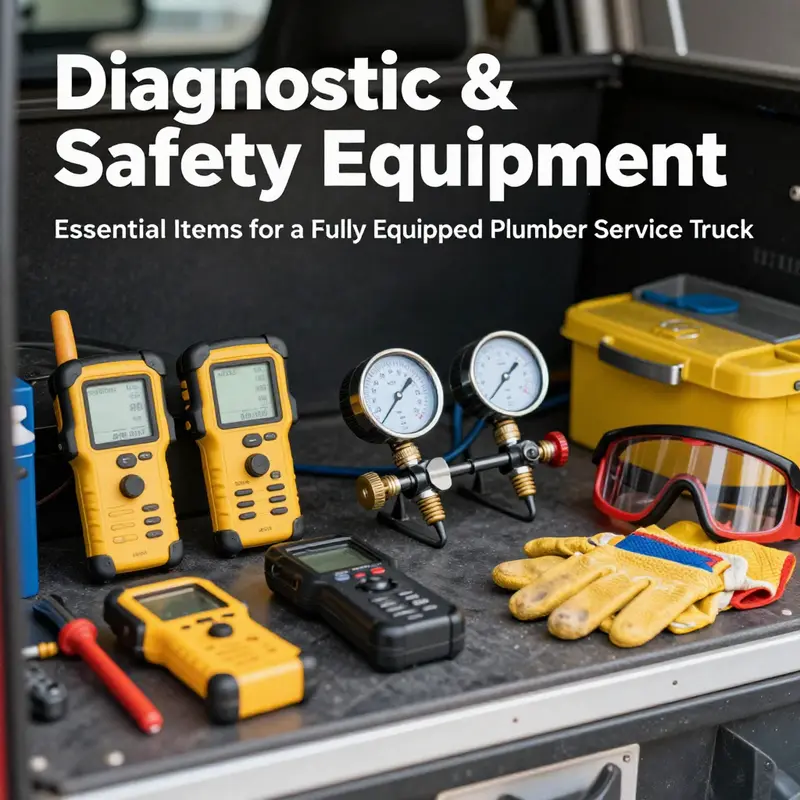
The plumber’s service truck is more than a conveyance of pipes and fittings. It is a rolling workshop, a safety podium, and a portable command center that must be ready for whatever a day on the road throws at it. The gear stored inside—both diagnostic tools and safety equipment—will determine not only how quickly a problem is identified and repaired but also how safely the crew works and how confidently clients can trust the work being done. This chapter focuses on the backbone of that setup: the diagnostic instruments that reveal what is happening beneath walls and floors, and the safety gear that guards technicians as they confront water, electricity, and potentially hazardous substances in varied environments. In many ways, the truck’s cargo of tools and PPE sets the tone for every repair, retrofit, or inspection that follows.
Safety is the first currency of field service. Hard hats and safety glasses are the most visible reminders that the job carries risks beyond the obvious. But the real protection comes from a layered approach that blends personal protective equipment with a disciplined risk-management mindset. Cut-resistant gloves shield hands from sharp edges when bending copper or trimming fiber-reinforced plastics. Chemical-resistant gloves protect against caustic cleaners or sump-pump treatments that might splash during a maintenance visit. Steel-toed boots guard against heavy object drops as parts tumble from overhead storage or as a technician negotiates cluttered basements and crawl spaces. High-visibility vests ensure visibility in dim garages, busy construction sites, or after dusk when street lighting is poor. Each item plays a specific role in a broader safety culture that treats PPE not as a discretionary add-on but as a core component of professional readiness.
Yet PPE alone cannot prevent mishaps or blind spots. The diagnostic toolkit carried on a service truck is what turns a suspected leak into a confirmed diagnosis, and a hasty, improvisational fix into a durable solution. Drain cameras and sewer inspection systems enable technicians to see inside pipes without invasive digging. A flexible drain snake can sometimes clear a stubborn clog that a chemical plunger alone cannot touch; a powered auger, when appropriate, provides the extra oomph to free a line without tearing up a customer’s floors or yard. These devices are not luxuries; they are essential for diagnosing the root cause of a problem, from a minor sink drain to a collapsed sewer line. When the camera rolls through a pipe, the technician gathers evidence not only for the immediate fix but for a clear, professional report that can be shared with the homeowner or facility manager.
The ability to see, hear, and measure is the heartbeat of modern plumbing practice on the move. Drain cameras capture high-resolution footage that can be archived for future reference, simplifying ongoing maintenance for property managers and building owners who want to monitor the health of their systems. Acoustic listening devices, a more venerable technology, remain incredibly effective for locating leaks in underground or concealed lines. They pick up the faint sounds of escaping water, guiding the technician toward the precise section of a pipe that needs attention. When combined with pressure gauges, these acoustic cues become quantitative: the technician can compare measured pressure against expected values, confirming the presence of a leak, a faulty valve, or an obstruction. The result is not guesswork but a data-informed diagnosis that reduces callbacks and fosters trust with clients who appreciate thorough explanations alongside clear documentation.
The diagnostic arsenal on board must also address the realities of job sites that range from tidy residential kitchens to industrial basements with buzzing electrical panels and gas lines running nearby. A compact video inspection system, paired with the ability to record findings, supports transparency with customers and accountability within the crew. The ability to show a homeowner exactly where a pipe is corroded or where tree roots have intruded into a main line becomes a persuasive tool for obtaining authorization to proceed with a more extensive repair, while also serving as a solid basis for warranties and service agreements. With these capabilities, the truck becomes a mobile consultancy: not only fixing problems but also educating clients about the condition of their plumbing and the preventative steps that can reduce further disruption.
All of this diagnostic sophistication must be kept usable and accessible. The best setups are organized around heavy-duty toolboxes with wheels and telescoping handles that can be wheeled to the door or pulled across a driveway without jarring the equipment inside. The storage design matters as much as the tools themselves. A well-organized system minimizes the time spent searching for a specific camera head or a spare battery and lowers the risk of losing small components like O-rings or washers. The layout should also consider the cadence of a typical day: a morning burst of urgent calls may require quick access to safety gear and high-demand diagnostic devices, while afternoon maintenance jobs might involve smaller, routine checks where compact tools and spare parts suffice. The goal is to strike a balance between breadth of capability and ease of access, ensuring that technicians can respond instantly to emergencies while still delivering high-quality routine service.
Of course, a service truck does not exist in a vacuum. The readiness of diagnostic and safety equipment reflects a company’s broader operational discipline. Regular checks become a ritual rather than an exception. Tools and PPE must be inspected for wear, calibration, and cleanliness. Batteries should be charged, cameras tested, and gas detectors replaced or recalibrated as recommended by manufacturers. A simple, recurring checklist can prevent embarrassing delays: confirm that PPE is complete and in good condition, verify that all diagnostic devices power up, inspect hoses for cracks, and confirm that spare parts—such as filters, O-rings, seals, and replacement cartridges—are stocked in the right quantities. When a truck leaves the depot with a full complement of tested gear, it signals a professional posture to customers and a clear commitment to safety.
The human element should not be overlooked. PPE and diagnostic tools are only as effective as the crew’s training and mindset. Technicians must understand not only how to use a camera or a pressure gauge, but when to deploy a particular tool for maximum safety and efficiency. The most successful teams build a shared language around diagnostic results and safety protocols. That means documenting findings in client reports with simple, clear visuals from the inspection system. It means training sessions that cover the practicalities of working in tight crawl spaces, around energized equipment, or near septic systems. It also means empowering technicians to pause a job if conditions deteriorate—if a ladder shifts, if gas readings raise concerns, or if weather makes access dangerous. A truck that can be quiet and patient in the face of risk is equally capable of delivering dependable repairs.
The choice of safety gear and diagnostic instruments inevitably shapes the customer experience. Clients respond to the confidence that comes with a technician who arrives with a comprehensive plan, a transparent diagnostic process, and a clear safety protocol. A homeowner who watches a camera relay a clogged line or a rusted joint in real time is more likely to authorize robust repairs and to schedule preventive maintenance. The same is true in commercial settings, where facility managers value predictable service windows and documented system health. The truck’s inventory, then, is not just a shopping list; it is a statement about reliability, professionalism, and the long-term value the service provider offers.
To connect readiness with broader industry practices, consider how fleets manage maintenance and equipment readiness as part of a larger operational strategy. In that context, the emphasis on scheduled inspections of both safety gear and diagnostic devices becomes a governance issue as well as a practical one. A well-structured readiness program reduces downtime, extends tool life, and lowers the risk of accidents on the job. It also provides a measurable foundation for performance reviews and customer satisfaction metrics. As maintenance and safety culture become more integrated into field operations, the service truck evolves from a mobile toolkit into a symbol of the company’s commitment to doing the job right, every time.
The strategic takeaway is clear: diagnostic capabilities and safety gear are inseparable partners on a plumber’s service truck. The former reveals the truth hidden in walls and pipes; the latter protects the truth-tellers who work there. Together, they enable faster, safer, and more transparent service. They also enable plumbers to expand the scope of work they can responsibly undertake—moving beyond quick fixes to comprehensive solutions that address the root causes and reduce follow-up visits. In practical terms, that means carrying the right mix of cameras, acoustic devices, and powered tools alongside a robust PPE ensemble, with intelligent organization and regular checks that keep everything in top condition. A truck that embodies this balance will not only meet customers’ immediate needs but also build lasting trust through consistent, high-quality outcomes.
As readiness and safety culture become more central to field service, some fleets are formalizing these practices into policy. The integration of maintenance manuals, calibration logs, and safety checklists into the daily routine helps standardize operations across crew members and job sites. The principle is simple: when your truck arrives at a site with a complete, functional toolkit and a well-practiced safety routine, you reduce risk, shorten repair time, and improve reporting quality. It is not merely about having the tools; it is about treating them as an extension of the technician’s expertise. The result is a service experience that feels professional from the moment the door opens and continues through to the final client briefing and the written service report. This level of preparedness also supports referral-based growth, as satisfied customers become champions who advocate for a company that demonstrates measurable competence and unwavering care for safety.
For technicians who want to stay ahead, there is value in learning from broader industry trends. Maintenance and readiness are increasingly emphasized within fleet management discussions, where the goal is to maximize uptime and minimize risk across dispersed teams. This perspective aligns with the functional realities of plumbing service work, where a truck’s toolbox is as critical as its engine. The more consistently technicians apply rigorous safety checks and rely on dependable diagnostic gear, the more resilient the operation becomes. It is a quiet standard of excellence that customers notice in the quality of the work, the clarity of the explanations, and the confidence conveyed when the job is complete. In turn, that confidence reinforces a sustainable business model—one that can weather emergencies, routine maintenance cycles, and the inevitable surprises that come with complex plumbing systems.
To close this exploration, the right diagnostic and safety equipment is not a luxury; it is a practical necessity that underpins every successful service call. It shapes how quickly problems are detected, how safely technicians work, how clearly outcomes are communicated, and how customers perceive value. A well-stocked service truck responds to the realities of residential, commercial, and industrial settings with equal agility. It is the quiet engine behind every confident repair, every accurate diagnosis, and every walk-through of a completed job that leaves a customer with a sense of relief and trust. The best crews treat their truck as a living system—continuous, adaptable, and relentlessly focused on safety, accuracy, and service quality.
For readers seeking a broader perspective on the practical inventory that underpins these capabilities, the following resource offers a detailed guide to the range of tools and materials used in plumbing operations: Plumber Goods Complete Guide: Technical Specifications, Types, and Practical Uses.
Additionally, as part of ongoing readiness, many fleets are adopting formalized maintenance and readiness protocols. These practices emphasize not only the tools themselves but the processes that keep them reliable and ready for action. A highlighted example of this trend can be found in industry discussions on maintenance trends within private fleets, where durability, safety, and efficiency intersect to shape procurement, storage, and routine testing practices: Private Fleets Trends in Trucking Maintenance.
Beyond the Basics: The Essential Extra Gear for a Plumber Service Truck
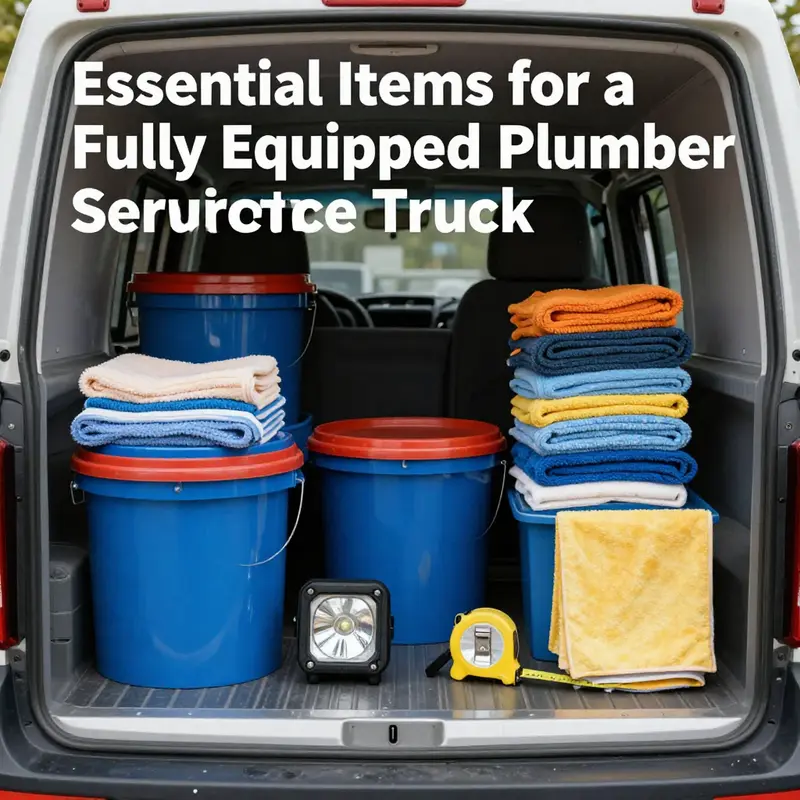
A plumber’s service truck is more than a rolling toolbox; it is a compact, precise workshop on wheels designed to turn calls into completed fixes with minimal return visits. The core tools—wrenches, cutters, pipe and fittings—form the backbone, but the real mark of a seasoned service operation is the prudent inclusion of additional items that anticipate the unexpected. When a technician arrives at a home or business, the first impression is often what is missing, not just what is present. A well-chosen set of extras communicates readiness, efficiency, and respect for the customer’s time. It is this readiness that transforms a simple repair into a smooth experience, reducing callbacks, preserving customer trust, and protecting the technician from a cascade of small delays that can derail an otherwise productive day. The goal is not to overstock but to strike a balance between breadth and depth, ensuring there are appropriate substitutes on hand for a wide range of scenarios without cluttering the workspace or draining the truck’s payload capacity.
The extra gear that travels with a plumber is organized around mission profiles. For emergency repairs, the truck needs to be capable of immediate stabilization and temporary fixes that prevent further damage until permanent parts arrive. For installations, it must supply fittings, sealants, and replacement components that align with standard practice and building codes. For maintenance calls, it should offer diagnostic tools that identify root causes without intrusive inspections. This mindset—anticipating the next step—drives the selection of items beyond the obvious wrenches and pipe cutters. In practice, the inventory expands into a handful of tightly defined categories that work together as a cohesive system. Within each category, the emphasis is on reliability, compatibility, and ease of use in tight spaces where lighting may be poor and customers are watching closely for signs of competence.
First, the realm of sealing and joining is enlarged beyond the bare minimum. Teflon tape remains a staple, but having pipe dope as a complementary sealant can prevent leaks in contexts where tape alone may not deliver the seal required for high-pressure connections. This pairing reduces the risk of leaks that would otherwise escalate into water damage or customer complaints. Having a small assortment of plumbers’ paste or silicone-grade sealants for tougher joints also matters. The point is not to stock every possible variant, but to cover the common materials encountered in the field—copper, PVC, CPVC, PEX—and the typical fittings those materials require. The method is practical: a compact shelf containing a handful of each type of tape, together with a universal pipe dope, allows the technician to adapt on the fly without delaying the job to place a refueling order from a shop or warehouse. In this sense, the extra sealants serve as a bridge between diagnosis and fix, ensuring that the repair stays reliable from the moment it’s completed.
Second, replacement parts complete the circle of responsibility. The most frequently needed components—washers, O-rings, and valve stems—are small, inexpensive, and easy to misplace during complex repairs. Keeping a well-curated assortment of these parts in a service truck reduces the risk of a return, especially when a customer faces limited access to a traditional supply store due to time constraints or building access issues. A thoughtful approach is to maintain standardized sizing databases within the truck, including common faucet, toilet, and shower valves, so that a technician can quickly identify the probable part and confirm compatibility before removing a housing or cartridge. This practice minimizes guesswork and creates a smoother workflow that feels almost seamless to the client. It is not about stocking every obscure item; it is about ensuring that the most likely failure points have ready-made replacements on hand, with clear labeling and a quick path to reassembly.
Third, clog management tools deserve a dedicated home in the truck. A robust drain snake or auger is indispensable for sinks, tubs, showers, and toilets. The reality of clog emergencies is that they rarely arrive alone; they often come with water damage or compromised seals. Having a reliable auger within easy reach enables the technician to address a blockage quickly and quantify the severity of the clog. In some cases, a motorized unit or a compact electric auger can save significant time during a visit, especially when faced with stubborn obstructions in tight spaces. The ability to perform a thorough clearance without tearing apart walls is a competitive advantage, and it reduces the likelihood of a torqued-up repair that leads to leaks later on. The presence of a solid clog-removal kit signals to customers that the service provider is equipped to handle the full spectrum of drain-related issues.
The fourth category—lighting—transforms dark, cramped work sites into clear, navigable spaces. A reliable flashlight with hands-free capability, or a headlamp with a lightweight battery, keeps the technician’s hands free for precise operations. In many residential calls, lighting is as critical as the tools themselves; a well-lit view of pipe joints can prevent mistakes that result in leaks or faulty assemblies. Magnetic-tipped flashlights or compact LED floodlights mounted on the truck can help in situations where a fixed light source is unavailable. The goal is not to overwhelm with hardware but to ensure that the technician can work confidently, even in the most cramped crawl spaces or dim basements. This emphasis on visibility can reduce errors, protect the operator from strain, and build a positive impression with customers who may be standing nearby.
Fifth, water removal capacity is essential for dealing with the aftermath of a leak or flood. A portable water pump and a wet/dry vacuum are not luxuries but practical necessities. Standing water can threaten flooring, create slip hazards, and complicate a repair by saturating insulation or surrounding materials. A job site that can be dried promptly becomes much more manageable, and it helps ensure that subsequent repairs, such as sealing or connecting new fixtures, can proceed without delay. The equipment does not have to be large; even compact pumps and vacuums designed for confined spaces can make the difference between a successful repair and a callback. In some markets, the ability to manage temporary water removal elevates a service truck from a basic toolkit to a comprehensive response unit, capable of handling both the initial fix and the clean-up in a single trip.
Sixth, diagnostic tools broaden the technician’s capability without requiring a second trip. A video inspection camera, in particular, stands out for its efficiency. It allows the plumber to verify pipe integrity, locate blockages, and document the problem before proceeding with demolition or excavation. This capability is especially valuable for sewer line repairs, where the diagnostic step can prevent unnecessary damage to walls, floors, or landscaping. Coupled with a pressure tester, which can quantify system integrity and verify a repair under load, the diagnostic toolkit becomes a powerful companion to the physical hardware. The camera provides a visual narrative that supports the repair plan and gives customers a clear explanation of what must be done next. The combination of imaging and pressure testing reduces ambiguity and builds confidence in the customer’s decision to proceed with the service in a single visit.
Seventh, safety gear and personal protective equipment are not optional add-ons but foundational elements of responsible field work. Gloves, safety glasses, and protective footwear are standard, but the extra items can be tailored to the job’s risk profile. For example, chemical-resistant gloves may be essential when handling primer and glue, while cut-resistant gloves might be needed for sharp metal edges during pipe removal. Beyond PPE, a well-stocked first aid kit and a small fire-retardant or spill-containment kit can prevent minor incidents from escalating. A truck that visibly carries complete safety gear reinforces a culture of care and professionalism and reduces the risk of workplace accidents that could complicate a repair or trigger insurance concerns. Each item signals to customers that their well-being is a primary concern and that the technician adheres to best practices in field safety.
Easing the friction of inventory management is as important as selecting the items themselves. The practical reality is that a service truck has finite space, weight limits, and the need to stay compliant with local regulations. The best approach is to curate a compact, well-labeled assortment that standardizes common repairs while allowing for rapid replenishment. Parts should be grouped by system and material, with color-coded bins or labeled shelves that make it easy for a technician to locate what they need in seconds rather than minutes. Replenishment routines, such as weekly checks of stock levels and rotation of long-dated items, help ensure that nothing expires or becomes unusable. A well-organized inventory not only speeds up repairs but also reduces the cognitive load on the technician, who can focus on diagnosing the issue rather than rummaging through a jumble of parts. The efficiency dividend from thoughtful stocking shows up in higher productivity, fewer callbacks, and happier customers who appreciate a swift, clean, and well-executed service call.
To tie the practical with the strategic, consider how the extra gear aligns with the service portfolio and customer expectations. Emergency calls may demand a higher degree of readiness for water removal and leak containment, whereas maintenance visits may rely more heavily on diagnostic tools and a steady supply of replacement parts. The balance between these priorities should reflect the service area’s common challenges, the typical building stock, and the seasonal dynamics that influence demand. A fleet manager or shop supervisor can help calibrate the mix by reviewing job histories, identifying recurring failure points, and updating the truck’s kit to reflect evolving needs. In this sense, the extra gear is not a static list but a dynamic system that grows smarter as technicians accumulate field insights and customers become more comfortable with a one-trip model.
For those who manage multiple service trucks or operate a private fleet, there is value in looking outward to industry dynamics and benchmarks. The broader ecosystem of trucking and field service emphasizes maintenance, reliability, and rapid response. Insights from the trucking sector about inventory discipline, predictive stocking, and breakdown prevention can be translated into the plumbing context in meaningful ways. In particular, a view into how fleets manage maintenance spares and critical replacements can inform stocking decisions on a service truck, enabling a more resilient operation that keeps customers satisfied even when supply chains shift or demand spikes. This cross-pollination of ideas helps ensure that the plumber’s mobile workshop remains competitively prepared—able to handle typical repairs and the unexpected diversions that can arise on any given day. For those seeking to connect the dots between field service readiness and fleet maintenance, a relevant perspective on private fleets trends in trucking maintenance offers a useful lens for thinking about how to scale the concept across multiple vehicles and crews. See the discussion titled Private Fleets Trends in Trucking Maintenance for a broader view of how fleets optimize readiness and downtime across a network of service units.
The end result is a service truck that feels capable in every moment, providing a kind of quiet confidence to customers and a reliable workflow for technicians. The philosophy is simple: carry enough in the way of parts, tools, and accessories to perform the fix on the first visit, then apply smart organization and efficient process so that the fix is durable, the job site is safe, and the customer’s space is respected. When the truck is stocked with the right mix of sealing compounds, replacement parts, clog-clearing tools, lighting, water removal capability, diagnostics, and PPE, the technician is empowered to move with certainty from problem recognition to solution implementation. The result is not merely a successful repair but a measurable reduction in wasteful trips back to the shop, fewer return visits to address residual leaks, and a service experience that blends technical proficiency with professional courtesy. These are the components of a modern, customer-ready plumbing service operation—a mobile workshop that travels light on inefficiency and heavy with preparedness.
External resource and further reading can offer additional perspectives on how inventory discipline and field readiness intersect with broader fleet management practices. For readers who want to explore related themes, the Plumbing Warehouse Blog provides practical guidance on essential plumbing tools and supplies for a service truck, which complements the field-tested approach described here. You can find their guidance at the following external resource: https://www.plumbingwarehouse.com/blog/essential-plumbing-tools-and-supplies-for-a-service-truck. In terms of industry context and fleet operations, a broader look at trends in trucking maintenance and the evolution of service fleets can be found in resources discussing Private Fleets Trends in Trucking Maintenance for a contrasted strategic view on readiness and downtime management. The combination of practical tool lists and fleet-level insights creates a holistic framework for thinking about what should be stocked in a plumber service truck and why each choice matters for outcomes on the job.
Reference to the internal perspective on fleet readiness can also be traced to industry discussions about maintenance strategies and the role of service vehicles in sustaining customer-facing operations. For readers who want to align stocking decisions with broader fleet performance, a concise summary of private fleet maintenance trends provides a bridge between hands-on field repair and strategic asset management, reinforcing the idea that the most effective service trucks operate as integrated components of a disciplined service delivery system. This alignment—between on-truck readiness and fleet-level reliability—propels a service operation from reactive servicing to proactive excellence, where the right tools, parts, and diagnostics are in place to support consistent, high-quality outcomes.
In closing, the extra gear on a plumber service truck is not merely a convenience; it is a strategic asset. It enables technicians to perform with speed and accuracy, protects the customer’s home or business from further damage, and reinforces the contractor’s reputation for reliability. The approach outlined here emphasizes thoughtful selection, organized storage, and disciplined replenishment, all anchored in real-world experience and a commitment to minimizing trips and callbacks. The endgame is a service experience that feels seamless from the customer’s first call to the completion of the repair, powered by a mobile workshop that is ready for anything.
External resource: Plumbing Warehouse Blog. For more practical guidance on tools and supplies for a service truck, visit https://www.plumbingwarehouse.com/blog/essential-plumbing-tools-and-supplies-for-a-service-truck.
Final thoughts
Ensuring that a plumber service truck is stocked with a diverse range of tools, fixtures, diagnostic equipment, and helpful items is crucial for optimizing service efficiency and client satisfaction. Each category serves a specific purpose, enhancing the plumber’s ability to address various plumbing tasks effectively, from routine maintenance to emergency repairs. By adhering to these stocking guidelines, plumbing professionals can ensure they are prepared for any situation, thus reinforcing their reputation as reliable service providers within the industry.