
The width of service truck roads is a critical consideration for various sectors, including manufacturing, retail, and construction, affecting both operational efficiency and compliance with safety regulations. Given that service trucks often need to navigate urban areas and infrastructure, understanding the typical dimensions and related regulatory frameworks is essential. This article delves into the standard width of service truck roads across different contexts, examining key factors from general standards and national regulations to comparative analyses and implications for urban planning. Each chapter builds on the narrative to provide a complete overview of how these dimensions impact the landscape of logistics and business transportation.
Width on the Road: Decoding General and Regional Standards for Service Trucks
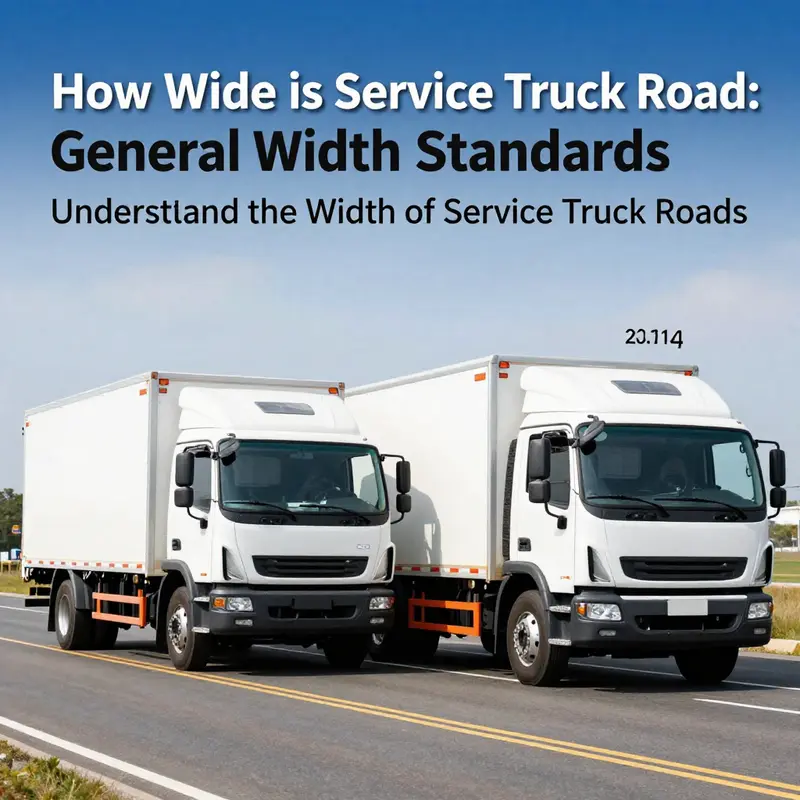
The width of a service truck is not just a matter of what looks practical in a shop or on a lot. It shapes how fleets plan routes, how crews access work sites, and how cities design streets and curbside work zones. The question, “How wide is a service truck on the road?” invites a layered answer. In practice, most service trucks are built to fit within a corridor that accommodates city streets, loading bays, and the need for safe operation alongside other traffic. The broad consensus across major maintenance and utility applications is a width around 2.5 meters, but that number is a threshold rather than a fixed decree. The real picture blends design intent, regulatory limits, and regional practice. In general, service trucks are planned within a narrow band that provides enough internal workspace for tools and equipment while staying within the envelope that cities and highway authorities deem safe and lawful. A practical way to think about it is to imagine the truck as a compact, well-organized workspace that remains within a standardized width, rather than a wagon that barely inches along urban corridors.
Across regions, the exact standard can shift. Among the most common references is a tolerance that places typical service truck bodies in the 2.2 to 2.5 meter range. This range reflects a balance: wide enough to house adequate shelving, tool storage, and workstations, yet narrow enough to negotiate narrow streets, tight curb ramps, and busy work zones without impeding traffic. In jurisdictions where urban lanes are choked with parked vehicles and pedestrians, fleets prize a conservative width that preserves clearance margins and reduces the risk of sideline contact with infrastructure or other moving vehicles. In practice, this means that the body width—what the maker refers to when describing a chassis with a service body—often sits at the lower end of the utility spectrum, with designers carefully trimming extra protrusions and optimizing cabinet layouts to maximize usable space without expanding beyond the common 2.5 meter ceiling.
The picture becomes more precise when looking at official standards in specific regions. In the United States, the maximum legal width for most commercial vehicles on public roads is 102 inches, which is about 2.59 meters. This cap acts as a hard boundary for the majority of service trucks used in utility work, municipal maintenance, and related fields. It provides a uniform ceiling that helps planners and operators anticipate how vehicles will perform on wide arterials and in the asphalt canyons of dense neighborhoods. Yet, the practical width of a fleet vehicle often narrows to fit more comfortably within these rules, especially when a truck must share lanes with passenger cars, buses, and other service units operating simultaneously on a single corridor. The regulatory emphasis here is safety and predictability: vehicles of a known width behave more reliably in peer traffic, making lane discipline and passing easier to manage for drivers and for the surrounding community.
On the other side of the globe, different regulatory envelopes shape what is considered a compliant width. In some large markets, including parts of Asia and Europe, the same logic applies, but the numerical thresholds vary or are implemented with different enforcement practices. A useful reminder from the comparative perspective is that the 2.59-meter ceiling seen in the United States often harmonizes with the practical need to accommodate a robust service body while ensuring entry into a broad swath of roadways. Nevertheless, local authorities may still grant permits for temporary oversize operations when a project requires equipment or configurations that exceed standard widths. In these cases, operators typically coordinate with law enforcement and transportation agencies to schedule travel windows, select appropriate routes, and ensure escort or signage measures are in place so as not to compromise safety.
A particular nuance comes into focus when considering the width of special-purpose service vehicles, which can push toward the lateral edge of the standard envelope. Fire and rescue units or other heavy-duty support vehicles, for example, may approach the upper bounds of 2.5 meters, especially when they carry equipment with wide stowage racks or modular compartments. Even so, most fleets keep these devices compact and recessed whenever possible to preserve maneuverability and curb clearance. The design challenge is to integrate durable construction with efficient internal layouts in a way that keeps overall width within a predictable range while preserving rapid access to tools and equipment. This balance explains why some manufacturers and fleets favor modular, drop-in components that can be adjusted or swapped as needs evolve, rather than permanently expanding the body footprint.
A robust service fleet also weighs the implications of width on maneuverability and safety. Width alone does not determine the utility of a vehicle; it interacts with turning radius, wheelbase, weight distribution, and the geometry of the equipment mounted on the body. In urban environments, the turning circle often governs the practical reach of a service truck. A body that is slightly narrower can drastically improve the ability to angle into tight pull-ins, align with open manholes, or maneuver around parked cars with less risk of side-swiping infrastructure. The interplay between available space and driver judgment becomes a daily discipline in the field. Even with a standard width, designers and operators must anticipate the variety of road configurations—from narrow residential streets to wider, multi-lane corridors—so that the vehicle remains agile at work and safe in traffic.
Beyond the physical shape of the vehicle, the internal arrangement of the service body matters. The trend toward optimized tool organization—shelves, bins, and fast-access drawers—enables technicians to perform tasks efficiently without needing to stretch beyond a reasonable reach. This efficiency translates into shorter worksite times, less idling on urban streets, and improved safety margins for pedestrians and moving traffic nearby. The width of the body becomes a canvas on which thoughtful design turns into practical productivity: every inch of width can be allocated to a dedicated workspace, a reinforced mounting point for heavy equipment, or a storage scheme that protects tools from the elements and from theft. When a fleet achieves this harmony, the vehicle becomes less a bulky obstacle and more a mobile workshop that travels comfortably within familiar traffic patterns.
The decision-makers who specify these dimensions are rarely solitary. Fleet managers, municipal procurement teams, and utility engineers collaborate to translate regulatory requirements into operational realities. They must consider daily routes, typical loads, and maintenance schedules. A narrower body may reduce drag on fuel consumption and improve fuel economy on long trunk routes, but it could also constrain payload or equipment access. Conversely, a slightly wider body might expand internal storage at the expense of clearance in congested districts. In practice, the process is iterative: engineers mock up the physical envelope, simulate turning and lane interactions, and assess how different configurations affect cycle times and safety metrics. The aim is not a one-size-fits-all solution but a proven configuration that behaves predictably under a wide range of conditions. The result is a standardization that supports predictable performance, while still leaving room for regional adjustments and fleet customization.
To broaden the perspective, the regulation-friendly viewpoint is paired with an operational one. Within the bounds of the law, fleet teams often pursue a reserve of flexibility. They may designate certain units as standard-width workhorses for routine maintenance and reserve a separate subset for special projects that may demand broader equipment arrays or alternate mounting strategies. This approach ensures the fleet can respond to diverse tasks without repeatedly stepping outside the lane limits or requiring cumbersome permits. It also invites a broader discussion about cross-border operations and the impact of differing width rules on multinational or interregional work. For those seeking a broader discussion on how regulatory contexts shape fleet choices in trucking and maintenance, see the linked discussion on cross-border regulatory issues.
The practical takeaway for readers planning, spec’ing, or evaluating service trucks is clear: while the common target hovers near 2.5 meters, the precise width is a negotiated outcome among regulatory ceilings, street design, and operational needs. In the United States, that ceiling is 2.59 meters, yet real-world practice tends toward a comfortable margin below that threshold to ensure safe passage through everyday traffic and to prevent last-minute route deviations. In other regions, the same tension plays out, often with the same goal: keep the vehicle wide enough to support a functional workspace, but narrow enough to glide through the urban fabric with confidence. This balanced approach helps maintain a responsive, reliable service network that can repair and protect essential infrastructure without becoming a liability on busy city streets.
For readers who wish to explore the regulatory landscape beyond national borders and appreciate how these dimensions interact with policy, a broader view is available via the cross-border regulatory issues that shape how fleets operate in multiple jurisdictions and under varying oversight. Cross-border regulatory issues.
As a final note, the authoritative reference for lawful vehicle dimensions and safety standards remains the Federal Highway Administration, whose guidelines provide the framework that underpins these regional interpretations and practical adaptations. For further detail, consult the official FHWA resources at https://www.fhwa.dot.gov/.
How Wide Is the Path for Service Trucks: Road Dimensions, Design, and Regulatory Bounds
The question of how wide a road must be to accommodate a service truck invites a broader look at what road designers and regulators mean by “width” in the first place. It is not simply the width of a vehicle, but a balance among vehicle dimensions, traffic patterns, curbside activity, and the rules that govern who may use what space and when. In practice, the width of a service truck—often around 2.2 to 2.5 meters for standard utility, municipal, or maintenance models—sets a floor for what drivers expect to encounter on typical streets. This width has become a practical reference point in many jurisdictions because it aligns with the largest practical size of non-articulated trucks used in daily service work. In China, for example, the outer dimension limits for many road vehicles cap at 2.5 meters, a figure that has shaped fleet design and routing decisions for fleets that must operate on busy urban corridors without specialized permits. Yet even this seemingly tidy number sits inside a wider framework of road design that considers every lane, every shoulder, and every curb cut.
To understand the road width issue, one must start with the pavement itself. A single travel lane in many cities is designed to be wide enough for two-way traffic with a comfortable margin, often ranging from about 3.0 to 3.75 meters in developed urban environments. In places where streets are narrow or where traffic is constrained by historic layouts, lanes can dip toward the lower end of that range. If a service truck must pass another vehicle in opposing traffic, or if it must skirt parked cars and pedestrians along a curb, the available maneuvering space becomes the limiting factor. It is here that the distinction between the vehicle’s width and the street’s width becomes crucial. A truck’s width is not the only constraint; it is the envelope that the driver must respect when steering, braking, and negotiating turns without encroaching on adjacent lanes or the sidewalk.
The practical implication for service fleets is clear: if a road has a nominal lane width of 3.0 meters and two lanes in each direction with no dedicated clearway, a vehicle at the upper end of the 2.2–2.5 meter class will still need room to operate safely, to pass by parked vehicles, and to recover if a misjudgment occurs. In addition to lane width, there is the matter of curbside space. When a truck pulls over for maintenance, emergencies, or delivery of equipment, it often relies on the shoulder or a designated pull-out. A narrow shoulder, a tight curb radius, or close-quartered utilities can sharply reduce the available working width. The difference between a street that allows a vehicle to “occupy” a portion of the lane and one that permits a safe shoulder work zone is not cosmetic; it affects response times, safety margins, and the ability to keep traffic flowing around work sites.
The regulatory backbone behind these spatial decisions is what turns width from a practical concern into a governance issue. In many jurisdictions, vehicle width is capped to protect all road users and to standardize operation between fleets and municipal crews. The Chinese regulation note—that the maximum width for many heavy vehicles and semi-trailers is 2.5 meters—illustrates the cohesion expected between vehicle design and road design. When fleets plan a route, they must account for the fact that a vehicle close to the upper legal width may require less clearance for turning in tight spaces but may demand more careful lane discipline on busier corridors. In other regions, the statutory ceiling is near 2.55 meters, reflecting a European standard derived from harmonized vehicle dimensions, with some allowances for special permits or oversized loads. Across the Atlantic in North America, the practical width most often cited for non-articulated service units lands around 2.59 meters, with exceptions that can allow slightly broader equipment when the permit process is navigated and the route is evaluated for feasibility.
The alignment between fleet design and regulatory limits has an architectural quality to it. Road designers anticipate the common service vehicle footprint when deciding lane counts, turning radii, and the spacing of curbside elements such as bollards, utility boxes, and streetlights. A city’s ability to accommodate maintenance vehicles hinges on code-compliant street geometry, clearly marked lanes, and predictable behavior by other road users. Yet the on-the-ground reality often diverges from idealized standards. Historic streets, pedestrian zones, and market-day contingencies frequently compress available space, forcing drivers to negotiate with finely tuned skill. In those moments, the width of the vehicle and the width of the road collide in real time, testing the margins that safety engineers have calculated but which the moving human mind must constantly adjust for.
The literature on road width for service vehicles is not uniformly prescriptive, and the available data rarely isolates “service truck road width” as a separate category. What is clear is that a vehicle’s width, commonly cited as 2.5 meters in many fleets, sits within a band that road authorities have learned to design around. The result is a practical ecosystem in which standard vehicle widths help shape lane and shoulder dimensions, while regulatory caps ensure consistency across the network. This dynamic also influences how fleets plan routes and how municipalities designate truck routes or loading zones. It is common for city planners to use standard fleet dimensions as a guideline when evaluating street rehabilitation projects or when extending utility corridors. In other words, a service truck’s width becomes a reference point for broader urban design decisions, not just a constraint on a single vehicle.
The broader implications connect to the modern push for resilience in supply chains and the evolving texture of urban logistics. For fleets, the width constraint translates into predictable routing and the ability to forecast where work can be done quickly and safely. For urban planners, it translates into a city that can sustain routine maintenance without gridlock. And for the public, it translates into streets that are safer and more navigable, even when service vehicles are at their maximum practical width. This interplay is where knowledge from adjacent domains becomes useful. For instance, the way a port city’s logistics footprint evolves—its road networks, its truck throughput, its loading zones—can be understood through the lens of how width constraints shape both movement and capacity. Consider how changes in a major port’s footprint might ripple through the surrounding road system, affecting service fleets that must operate in and out of the port precincts. For a broader context on how port infrastructure and supply chains adapt to shifting capacity, see: Montreal Port Expansion and its Impact on Supply Chains.
In the most congested urban cores, the tension between the need for width and the reality of narrow streets becomes a practical art. Drivers build their expertise around the smallest margin of safety, and dispatchers learn to time calls to minimize street-side operations during peak periods. The result is a culture of careful planning, where the consequences of a misjudged opening can ripple through a whole shift. Yet even with careful planning, there remains a fundamental truth: the width of service trucks and the width of the roads they use are not independent variables. They are bound together by law, by design standards, and by the lived experience of thousands of drivers who repeatedly negotiate the same urban canyons day after day.
As technology and data collection improve, the meaning of road width may shift from a static measurement to a dynamic one. Real-time data from road sensors, smart curb zones, and digital dispatch systems could someday allow fleets to choose routes that minimize width frictions or to schedule work in places where street geometry is already aligned with standard service vehicle footprints. Until then, the 2.2 to 2.5-meter width range remains the practical anchor for most service fleets, a figure reinforced by regulatory considerations and by the everyday realities of urban street design. The single most important takeaway is not the exact number alone, but the recognition that road width is a system attribute. It informs how fleets move, how cities maintain their infrastructure, and how the public experiences street life while service work unfolds just beyond the curb.
For readers who want to explore broader implications beyond a single region, the discussion below offers a link to a broader dialogue on how port-related and cross-border logistics intersect with road design and fleet management, illustrating how width restrictions can ripple through supply chains and planning cycles. The interconnection between fleet dimensions, regulatory ceilings, and urban street design is a reminder that even a number as simple as 2.5 meters participates in a larger choreography of movement, safety, and economic activity across the built environment.
External resources provide additional context on how vehicle width interacts with global standards and public policy. For a broader view on vehicle width and related standards, see https://en.wikipedia.org/wiki/Vehicle_width.
Note: This chapter intentionally centers on width as a design and regulatory issue rather than promoting any specific vehicle model or service category. It aims to illuminate how width figures shape the spaces where service trucks operate, and how those spaces in turn shape fleet practice and urban livability.
Urban Width by Design: How Wide Service Trucks Are and Why It Matters on City Roads
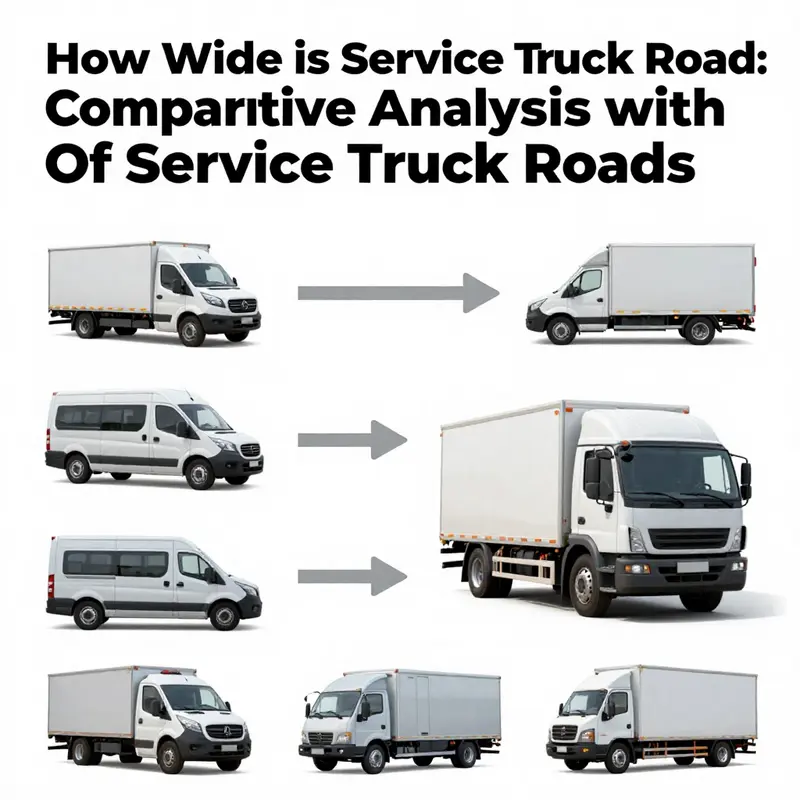
When people ask how wide a service truck must be, they are really asking a deeper question about how cities are engineered around work vehicles. Width is not a single number plucked from a datasheet; it is a constraint that travels through design, regulation, and everyday driving as workers move through crowded streets, service crews reach poles and pipes, and maintenance teams step in to keep essential infrastructure functioning. In practice, service trucks occupy a narrow band of physical space, a band that planners and manufacturers have learned to respect so these vehicles can operate effectively without bringing traffic to a halt. The common takeaway across many regions is that a typical service vehicle sits around 2.5 meters wide, a dimension that has proven workable for urban street geometry, curb lines, and on‑street parking. Within that general target, designers often specify ranges from about 2.2 meters to 2.5 meters to accommodate variations in equipment, wheel wells, mirrors, and the need to clear neighboring lanes when a truck is in motion or at a stop. This range is not arbitrary but reflects a balance between the practical realities of carrying specialized gear—whether it is tools for electrical maintenance, telecommunications work, or municipal repairs—and the legal frameworks that limit how wide a vehicle may be on public roads. In many jurisdictions, the width cap is deliberately set at or near 2.5 meters because this width enables passage alongside other traffic on standard urban arterials and through typical curb radii. The regulatory context matters because it frames the ceiling that even the most purpose-built service trucks must respect. For instance, in one significant national market, the outer dimension cap for motor vehicles, including heavy and semi‑trailer configurations, aligns with a 2.5‑meter limit. In practice, this means that the core family of service trucks designed for city service work typically does not exceed this widely adopted threshold. It is not uncommon to see specialized fleets that push toward the upper edge of the limit—particularly those carrying large booms, elevated platforms, or high‑capacity equipment—yet even these examples tend to keep under the 2.5‑meter ceiling in standard configurations. The result is a common, practical baseline: a width around 2.5 meters that remains compatible with urban street layouts, while still offering enough space to mount or stow the necessary on‑board tools and devices. The cross‑sectional footprint of a service truck, defined by its track width—the distance between the centers of the left and right wheels—appears in parallel with other vehicle types that populate city streets. This is not merely a coincidence. When you compare service trucks to other urban workhorses, a striking consistency emerges: the track width of these vehicles often hovers around 2.5 meters, even as the vehicles themselves vary in length, height, and equipment load. A single‑unit truck or a city bus, for instance, may share that same lateral footprint despite substantial differences in overall length. The implications for urban operation are meaningful. A 2.5‑meter track width creates predictable margins for lane width, curb clearance, and door swing, and it supports a safer dynamic when a vehicle negotiates a turn, exits a parking space, or repositions to service a streetlight or utility cabinet. In the broader family of service vehicles, this uniformity in track width simplifies planning for access to narrow roadways, congested corridors, and tight loading zones. It also clarifies the margin for error when crews align side equipment or when side mirrors extend into adjacent lanes during street work. The research data suggest that the practical design choice—to keep service trucks within a standard width around 2.5 meters—helps ensure that crews can operate with a degree of predictability in mixed traffic. A significant piece of this story is the recognition that width alone is not the sole determinant of urban effectiveness. Length, height, turning radius, wheelbase, and even the placement of restraint equipment and storage racks all contribute to how easily a service vehicle can maneuver in a crowded street scene. Yet width anchors a critical boundary: it defines the amount of space a vehicle requires at rest, in the act of loading or unloading, and during the precise, sometimes delicate, maneuvers that keep urban services online without compromising public safety. If one looks beyond domestic borders, the width discourse converges on a similar conclusion: most compliant service vehicles designed for municipal or utility work are built within the 2.2 to 2.5 meter spectrum. This is not solely a matter of domestic regulation; it reflects a universal constraint of human-scaled infrastructure. After all, many urban streets, lanes, and curb lines simply do not accommodate a broader body without substantial redesign. The practical takeaway for fleet managers and city planners is that a reliable, near‑2.5‑meter width offers a practical compromise: it is wide enough to accommodate on‑board equipment and operational needs, yet narrow enough to maintain access to narrow streets, parking bays, and curbside work areas. The alignment of this width with the tracks of other urban vehicles also reduces the need for specialized harboring strategies or unique lane allocations that could complicate traffic patterns. For readers who wish to connect this discussion to broader industry dynamics, consider the way economic forces, labor requirements, and regulatory trends shape fleet design. The broader trucking ecosystem has to balance efficiency, safety, and cost. In this balancing act, the width decision for service trucks is part of a larger puzzle about how fleets maximize uptime while minimizing road risk. One can explore how these trends interact with the wider logistics environment by engaging with current analyses of trucking economics and strategic planning—these considerations illuminate why a consistent vehicle footprint matters across different vehicle classes. For more context on how macroeconomic shifts influence the trucking sector, see the discussion of key economic trends impacting the trucking industry. Key Economic Trends Impacting the Trucking Industry. To the extent that a city or region contemplates future road upgrades or fleet modernization, the 2.2–2.5 meter width band serves as a reliable baseline that can be included in master plans, procurement criteria, and operator training without forcing costly retrofits to the road network. In practice, the width guideline is reinforced by safety considerations. Service crews must maneuver around parked cars, buses, and pedestrians. The width provides room for on‑board tools and equipment to remain secured during travel while still allowing drivers to keep their attention on the road and the task at hand. It also aligns with the ergonomics of maintenance work, where access to panels, cabinets, and equipment bays often requires a certain amount of lateral space for doors to swing open and for operators to reach tools without encroaching on the neighboring lane. While the 2.5‑meter target is common, the underlying principle is flexibility within a regulatory envelope. Municipal fleets often build in allowances for wider configurations when necessary, such as during emergency response or specialized construction, but those variations are typically managed within controlled environments and call for temporary traffic management measures. The bottom line is that width, though seemingly straightforward, is a nexus point where infrastructure design, vehicle engineering, and public safety converge. The shared track width around 2.5 meters across multiple vehicle archetypes—the service vehicle, the standard single‑unit truck or bus, and even certain specialized units—offers a practical, interoperable standard that helps municipal agencies plan for street access, parking logistics, and maintenance operations without compromising the flow of urban traffic. In a landscape where roads are not simply routes but active workplaces, width becomes a fundamental parameter that shapes the choreography of daily city life. The discussion continues to unfold in the context of regulatory nuance and evolving standards, yet the core observation remains stable: the service truck’s width lives in a narrow, well‑understood corridor that supports efficient, safe, and repeatable urban service work. For readers seeking further exploration of how broader market forces and regulatory frameworks intersect with fleet design, there is value in following the link to industry trend analyses and regulatory examples that frame these practical decisions in a wider context. External resources linked to official guidelines, such as the FMCSA vehicle size and weight regulations, provide authoritative reference points for those who want to drill into the specifics of legal limits and enforcement practices. https://www.fmcsa.dot.gov/regulations/vehicle-size-and-weight-regulations
How Wide Should Service Truck Roads Be? Aligning Vehicle Width with Urban Planning and Infrastructure Realities
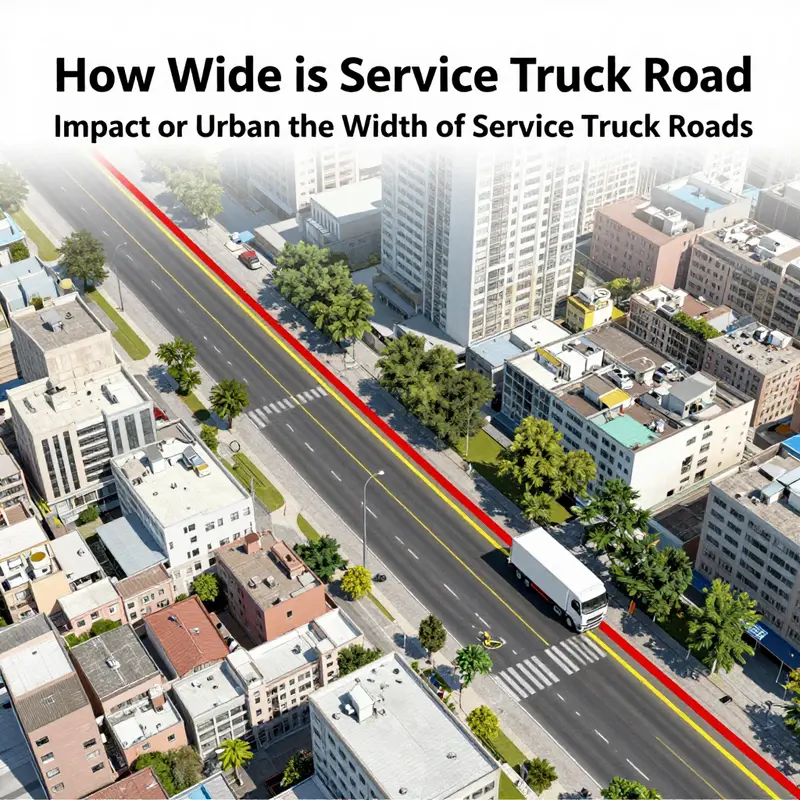
The width of a service truck road is rarely a single, universal number. In practice, it reflects a complex balance among vehicle design, operational needs, and regulatory boundaries that shape how cities grow and function. From the street-scale realities of daily maintenance to the broader arc of urban resilience, the question of road width is not merely a measurement issue but a foundational element of how traffic flows, how sidewalks and bike lanes coexist with work sites, and how long pavements endure under the pressures of heavy, frequent service movements. In many contexts, the familiar benchmark centers on a width near 2.5 meters. This figure, grounded in several national guidelines and industry norms, serves as a practical reference point for fleets that specialize in electrical, communications, and municipal maintenance work, where maneuverability through dense urban networks and at tight site entrances matters as much as the load each vehicle carries. Yet even this practical benchmark hides a spectrum of considerations that planners must weigh whenever they map routes, allocate curb space, and design recurring maintenance programs. It is against this backdrop that the urban fabric begins to reveal its own priorities: safety, efficiency, accessibility, and long-term durability of the streets themselves. When cities define the corridor for service trucks, they are also deciding how far a utility van can comfortably travel at a given hour, how many vehicles must wait at a signal, and how much space must be spared for emergency access or street emergency repairs. In China, where the formal limits on outer dimensions anchor a large portion of the regulatory framework, the maximum external width for many heavy or trailer-type vehicles is set at 2.5 meters. This numerical ceiling, or around 2500 millimeters, clarifies the outer envelope within which service fleets operate. Within that envelope, trucks might range in practice from about 2.2 meters to the full 2.5 meters, a spread that echoes both vehicle class differences and the practicalities of street geometry, curb radiuses, and parking provisions. For cities wrestling with high-density corridors, this means choosing widths that safeguard pass-by traffic while accommodating the unusual width of a mid-sized service unit when it carries substantial accommodation equipment or spare parts. The margin is not a trivial one. Even a half-meter difference in lane width translates into perceptible variations in where a vehicle can safely traverse a street, how quickly it can pass through a congested intersection, and how easily a driver negotiates a tight curb credit on a one-way street. This is not simply about comfort; it is about the rhythm of urban life. Narrower roads tend to slow traffic, creating a more forgiving environment for pedestrians and cyclists but requiring more stringent enforcement of clearance and loading zones. Wider roads can improve throughput and convenience for service fleets, yet they risk inviting higher operating speeds that elevate crash severity and complicate the safety envelope around work crews and parked vehicles. A balanced urban road must reconcile these forces so that service trucks can reach their destinations without becoming sources of risk for others on the same corridor. The literature repeatedly shows that uniformity matters as much as width. A 2014 study by A Manuel highlighted a clear safety advantage when roadways maintain consistent dimensions along midblock sections. When width changes abruptly, drivers can misjudge available space, leading to hesitations, late lane changes, or unintended encroachments toward pedestrian zones and parked cars. In practical terms, a city that ciclos through irregular cross-sections—perhaps due to historic street patterns or retrofit projects—will often experience greater variability in driver behavior, minor collisions, and near misses. The corollary is that a steady, predictable geometric framework supports safer work zones and smoother traffic for both service fleets and the general public. The relationship between road width and the wear of pavement is another hinge in this discussion. Heavier loads certainly accelerate surface deterioration, yet the distribution of weight—whether the vehicle concentrates it on a few axles or spreads it across multiple axles—also governs pavement life. Research summarized by F Schmidt emphasizes that wear does not always rise in direct proportion to the raw mass carried. When weight is consistently distributed through well-designed axle configurations, structural health can be preserved longer on routes that carry frequent service movements. That insight points toward a broader planning strategy: design service truck corridors with structural capacity that matches the intended traffic profile while maintaining a uniform geometry that minimizes stress concentrations. In practical terms, this means selecting road sections with appropriate subgrade strength and pavement depth, ensuring the pavement has the resilience to withstand repeated axle loads, and aligning curb-to-curb widths with the physical footprint of the typical service vehicle within regulatory bounds. The architectural logic here is not merely about preventing rutting or cracking; it is about sustaining mobility across decades of urban change. As cities begin to imagine smarter streets, the potential contribution of connected and autonomous trucks looms large. The integration of autonomous fleets into urban logistics carries with it the promise of more efficient, safer travel that can be coordinated with traffic signals, curb management, and real-time routing. Yet this potential depends on infrastructure that can support reliable vehicular sensing, predictable behavior, and robust communication between vehicle and city systems. In other words, the future of service truck corridors is inseparable from a smart upgrade of how we plan width, not only to accommodate today’s vehicles but to unlock precision control over speed and lane discipline in a changing traffic mix. A broader, globally informed perspective reinforces this point. A 2023 synthesis by SV Gomes collates international data on overweight vehicles and their pavement impacts, underscoring how road width, axle configurations, and consistent geometric design collectively influence safety outcomes and pavement longevity. The insights point to a universal principle: for maintenance fleets, a stable, well-designed cross-section reduces variability in truck trajectories, which in turn lowers the risk of incidents and extends the service life of road surfaces. For practitioners and planners, the takeaway is not a linear prescription but a framework for decision-making that ties truck dimensions, regulatory limits, and city context into a coherent strategy. Consider how such a framework translates into the physical world along major urban corridors, where maintenance crews routinely travel to repair electrical lines, telecommunications infrastructure, and municipal services. The corridor must provide enough width to accommodate the typical service unit, while also leaving room for the dynamic, unpredictable elements of city life—parking maneuvers, temporary lane closures, emergency access, and the movement of other heavy vehicles that share the same lanes. In this setting, a width near 2.5 meters often emerges as a practical default, balancing the need for clearance with the reality of street constraints. But this is not a one-size-fits-all rule. Some arterial or peripheral routes in older urban quarters may be tightened by curb radii, tree pits, or bus-stop infrastructure that effectively reduces workable width even when the nominal cross-section is 2.5 meters. Conversely, certain purpose-built service corridors adjacent to industrial zones or large utility yards may justify cautious allowances toward the upper end of the spectrum, especially where traffic volumes are predictable and where the benefits of smoother pass-throughs outweigh the costs of wider curb lines. The strategic challenge for urban planners is to design road networks that accommodate variability—by promoting uniform geometry across key segments, minimizing abrupt midblock width changes, and ensuring that widening or narrowing decisions are justified by clear safety and efficiency gains rather than ad hoc alterations spurred by evolving construction worked into a busy street. In this regard, the discipline is moving toward a holistic approach that treats road width as a shared asset, managed through clear guidelines for curb space, parking, and the coordination of street works. This means that when a city contemplates routine maintenance or a multi-year upgrade program, the plan should explicitly address how service trucks will use the corridors, how width interacts with other modes of transport, and how future innovations in vehicle technology will be accommodated. For readers who want a concrete illustration of how infrastructure decisions ripple through supply chains and urban operations, the case of port-related corridors offers a revealing lens. The Montreal port expansion, for instance, raises questions about road capacity along key freight routes and the need to harmonize service truck widths with increased freight volumes, tighter curb lines near waterfront facilities, and the evolving demands of multi-modal connectors. Montreal port expansion and its implications for road capacity. Such discussions remind us that the road width debate is not a theoretical exercise but a central piece of how cities stay functional under pressure. In the end, the roughly 2.5-meter width commonly cited for service trucks presents a robust baseline for many contexts. It reflects a pragmatic synthesis of regulatory constraints and operational realities, offering a workable standard that keeps fleets agile while preserving safety and pavement life. Yet the best outcomes emerge when width decisions are embedded in a broader planning philosophy—one that values uniform geometry, anticipates future changes in vehicle technology, and links street design to the resilience of the urban fabric. As cities continue to evolve and as freight patterns shift with new logistics models, the road width question remains a living constraint and a lever for optimization. The aim is not to chase a fixed number but to cultivate street designs that harmonize the needs of service work with the diverse demands of urban mobility, so that the roads can support reliable utility restoration, predictable traffic, and enduring pavement health for years to come. For readers seeking a wider, data-informed perspective on the pavement impacts of overweight vehicles and the safety implications of varying road widths, a comprehensive international synthesis published in 2023 provides valuable context and quantitative grounding to inform policy and design choices. External resource: https://www.sciencedirect.com/science/article/pii/S235279842300021X
Width on the Road: How Service Trucks Navigate Narrow Streets and the Rules Shaping Their Reach
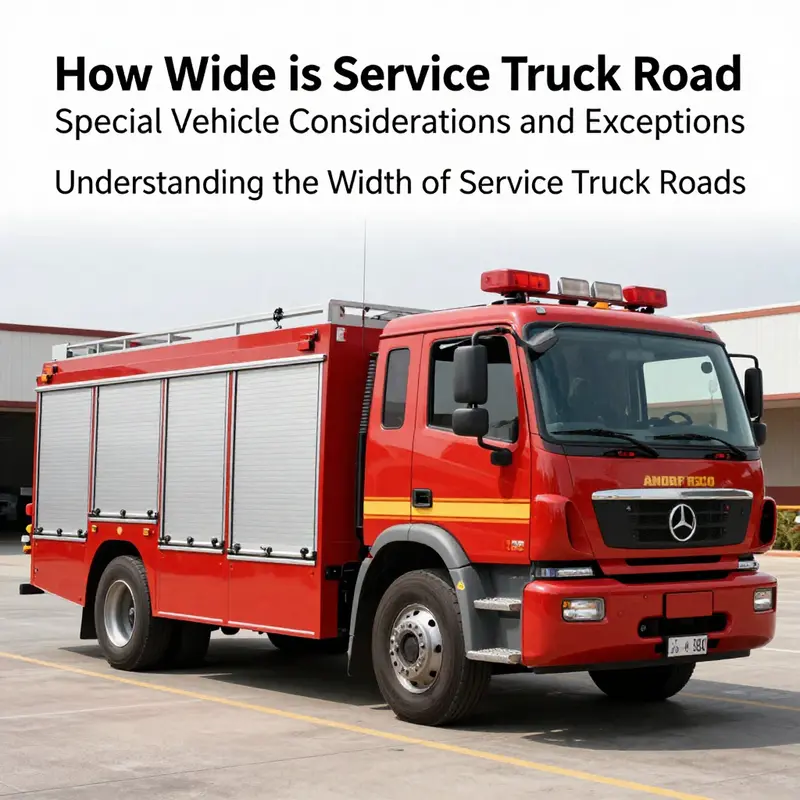
Width on the road is not merely a fixed number on a spec sheet. It is a living constraint that interacts with vehicle design, road geometry, traffic patterns, and legal limits. When we talk about how wide a service truck is, the conversation starts with a practical baseline. In most ordinary service applications—electric maintenance, communications, municipal upkeep—the design intent centers on a body width around 2.5 meters. That standard value shows up repeatedly across fleets and regions because it balances the need to carry tools and equipment with the imperative to fit through crowded urban cores. In many contexts, the commonly cited range is 2.2 meters to 2.5 meters. That spread is not arbitrary; it reflects differences in chassis width, body configurations, and the way manufacturers interpret the need for service access versus the ability to thread a vehicle through narrow lanes or past parked cars. The takeaway is simple and important: the width most people encounter in day to day service work tends toward 2.5 meters, and anything significantly fatter risks forcing a rethink of route planning and street interaction. This is not merely a theoretical bound; it shapes how operators size fleets, how cities design streets, and how regulators frame exceptions for special work.
From a regulatory standpoint, the picture sharpens further. In several jurisdictions, the outer contour of heavy and special purpose vehicles is governed by statutory limits that cap breadth, ensuring a uniform expectation for roadway compatibility. Where Chinese standards are cited, the outer width cap often lands at 2.5 meters for many heavy and articulated configurations. That ceiling 2.5 meters becomes a practical ceiling for most compliant service trucks, even when those vehicles carry heavy tool storage, lifts, or other bulky equipment. It is a boundary that supports predictable traffic flow, safer lane sharing, and simpler enforcement. Yet within that boundary, there is room for variation. Specialized service trucks, designed for particular tasks or to accommodate large payloads, can push the envelope. Fire service vehicles, for example, are sometimes noted as approaching the upper limit of the standard, reflecting the tension between rapid, high capacity response and street level navigability. The effect for fleets is a reminder that the baseline width matters, but the actual width a truck will present on a given job is a function of design choices, equipment load, and regulatory allowances granted for specific operations.
A second layer to this discussion concerns how width translates into maneuverability. The geometry of a vehicle—its track width, wheelbase, and, critically, its turning radius—plays a central role in how a service truck negotiates tight urban corridors. While a single unit service vehicle, especially one around 8.8 meters in length, tends to align with the conventional 2.5 meter width, the real world navigation experience is shaped by more than width alone. Track width—the distance between the centers of the two tires on the same axle—affects how a vehicle sits in a lane and how much room it requires to track through curves. Turning radius and steering lock speed are the technical measures that translate driver skill into practical outcomes on congested streets. For larger, non service buses—lengths around 12.5 meters—the curb to curb turning radius might be around 4.3 meters, with a lock to lock time approaching six seconds. These figures serve as benchmarks for similar, but not identical, vehicle classes. They remind operators and planners that a vehicle s width is only part of the story. The 8.8 meter service truck must contend with its own unique turning characteristics, which may be more forgiving or more restrictive depending on axle configuration and suspension design. In practice, this means that even when the body width stays within 2.5 meters, the combination of width, track, and turning performance determines whether a truck can maneuver safely within a given street network, especially where curb parking, bike lanes, or stray street furniture intrude into the available space.
Operational realities reinforce the idea that width is a shared concern among drivers, fleet managers, and public agencies. The capacity to fit within a lane is not the sole determinant of suitability. Fleet managers must consider route planning, scheduling, and the possibility of restricted hours when a vehicle is wider or longer than typical. In some regions, authorities may grant temporary exemptions for special vehicles engaged in construction or utility work, allowing them to operate under tailored conditions. Such exemptions are often contingent on factors like time of day, local traffic density, and proximity to vulnerable road users. This logic recognizes that rigid, universal rules can impede essential public service work, but it also places a premium on accountability, clear marking, and predictable behavior. For service fleets operating across municipal boundaries or in cross border corridors, understanding the regulatory framework for exceptions becomes part of risk management. An internal point of reference for many operators is to stay aligned with broader regulatory conversations, such as cross border regulatory issues, which emphasize consistent interpretation of width limits across jurisdictions. See Cross Border Regulatory Issues for a broader context on how these rules migrate across borders and how operators adapt to differing standards.
The practical upshot of all these considerations is that width is a meaningful constraint, but not an absolute barrier. A standard solution for many service fleets is to default to the familiar 2.5-meter width, while acknowledging that certain work scenarios require design adjustments and, at times, regulatory leeway. The decision trees that guide these adjustments include evaluating whether the equipment carried requires additional breadth, whether a wider body is essential to complete critical maintenance tasks, and whether the street environment offers alternative routes or timing that minimize exposure to narrow passages. In many urban projects, this translates into dynamic routing, specialized crew deployment, or the use of escorts to maintain safe clearance around the vehicle as it passes through congested segments. For municipal planners, the discussion centers on resilience: ensuring that streets can sustain essential service traffic without compromising safety or accessibility. The presence of sidewalks, curb heights, and street furniture all contribute to the practical limits of what a given street can absorb without sacrificing the needs of everyday users, from pedestrians to cyclists to other motorists.
Given these realities, the chapter’s focus remains anchored in the fact that a typical service truck is designed with a width around 2.5 meters, but that this figure cannot be read in isolation. It must be understood in concert with vehicle length, track width, turning characteristics, and the local regulatory environment. The interplay matters most when planning for sensitive urban areas where space is at a premium. Where parking lanes are narrow, or where parked vehicles frequently intrude into the roadway, even a modest difference in width becomes a practical decision point in the daily operations of utility crews and maintenance teams. The discussion thus extends beyond mere measurements into the realm of operational discipline: how drivers are trained, how routes are pre planned, and how fleets audit their performance in real time to avoid conflicts with other road users. In this way, width becomes not just a static parameter but a living variable that shapes service delivery, safety standards, and the cadence of public service work.
As with many aspects of vehicle regulation, there is an ongoing tension between standardization and the realities of diverse job sites. The absence of a universal width standard across all countries means that fleets operating internationally must remain vigilant about local specifications. Even within a single jurisdiction, the presence of exemptions for special operations introduces a spectrum of permissible configurations. The practical effect is a risk managed flexibility: operators adjust their approach to suit the street, rather than forcing streets to conform to rigid vehicle templates. For readers seeking a broader regulatory lens beyond the immediate example, consider the international perspective on special vehicles and the guidelines that govern them. These guidelines inform how authorities balance the need for rapid service delivery with the obligation to keep road users safe and informed. They also underscore the value of clear communication between fleets and road authorities about anticipated movements and potential constraints.
The bottom line is straightforward: the standard width you are most likely to encounter for a service truck is about 2.5 meters, and that figure is reinforced by widely cited regulatory limits. Yet the available width is not the whole story. The surrounding road geometry, the vehicle s turn geometry, and the presence of special equipment or permits all shape what drivers experience on the ground. In practice, the best way to navigate width is through a combination of disciplined vehicle design, careful route planning, and thoughtful coordination with traffic management and permitting authorities. This integrated approach helps ensure that essential service work proceeds with minimal disruption to city life while preserving a margin of safety for everyone on the road. To those responsible for moving critical services through crowded streets, the lesson is clear: width matters, but it is the harmonization of width with operation, policy, and planning that makes service delivery reliable and safe. For a broader policy context that informs these decisions in cross border settings, readers can refer to the external guidelines on special vehicles. Transport guidelines on special vehicles Further exploration of how regulatory environments evolve in response to changing traffic demands can be found through industry discussions on cross border regulations and the evolving needs of utility and municipal work. For a broader industry perspective on regulatory alignment and its impact on fleet structure, see the linked discussion on cross border regulatory issues in the industry. Cross Border Regulatory Issues.
Final thoughts
In conclusion, the width of service truck roads is a multifaceted issue that impacts various industries, from manufacturing to urban logistics. Recognizing these dimensions and the regulatory requirements surrounding them is essential for optimizing operations and adhering to compliance standards. As we navigate the intricacies of service truck configurations and their implications on urban planning and infrastructure, businesses can better position themselves for efficient logistics and successful transportation strategies.