
Logistics services in the trucking industry are integral to the efficient movement of goods, ensuring that products reach their destinations on time and in optimal condition. As manufacturing and distribution companies, retail and e-commerce businesses, construction firms, and small businesses with shipping needs increasingly rely on these services, understanding their components becomes essential. This article delves into key aspects: Transportation Management, Fleet Management, Order Fulfillment and Warehousing, and Real-Time Tracking and Visibility, providing you with a comprehensive view of how these logistics services can enhance operational efficiency and customer satisfaction.
Navigating the Road to Reliability: Transportation Management as the Engine of Trucking Logistics Services
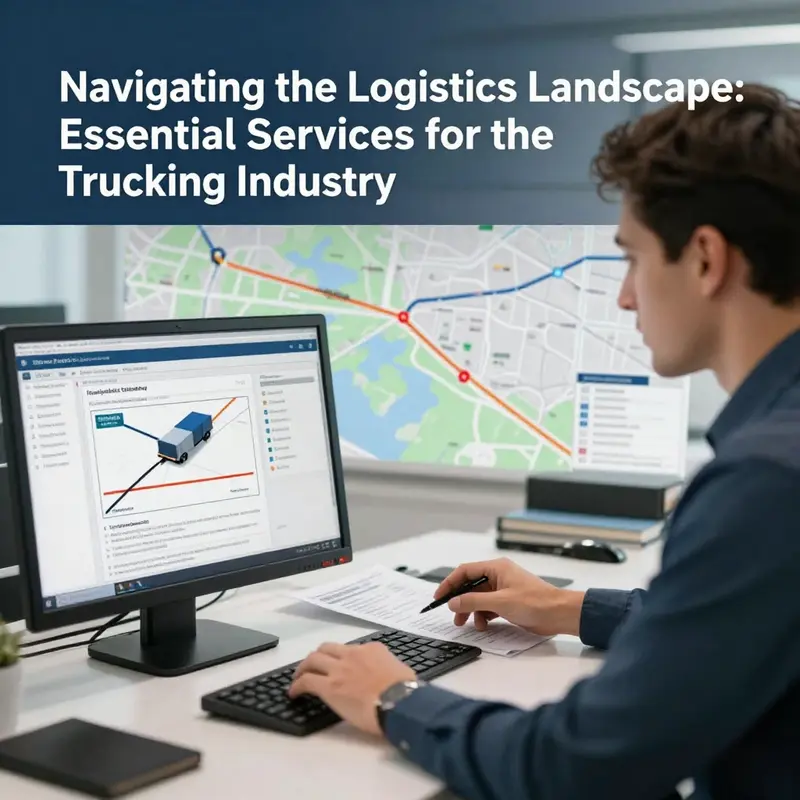
Transportation management is more than a function within trucking operations; it is the deliberate orchestration of planning, execution, and continuous optimization that transforms a fleet into a reliable, efficient spine for the supply chain. In the broader context of logistics services for the trucking industry, transportation management serves as the central process by which a complex web of routes, carriers, regulations, and customer expectations is converted into predictable outcomes. This chapter explores how a modern transportation management approach binds together the essential activities that keep trucks moving on time, at the right cost, and with the visibility that customers increasingly demand.
At the heart of transportation management lies route planning. The goal is simple in language, but complex in practice: determine the most efficient path that respects time windows, payload constraints, and service level agreements. Planners weigh distance against time, traffic patterns against weather forecasts, and the cost implications of tolls, idling, and road restrictions. The most advanced route planning isn’t a static map; it is an adaptive process that responds to real-time data. When road conditions shift, a flexible plan can reroute a truck to avoid congestion, reduce miles, and preserve precious delivery windows. In a trucking context, these decisions ripple outward, affecting carrier utilization, fuel consumption, driver hours, and customer satisfaction. The magic happens when planning tools translate a myriad of inputs—origin and destination coordinates, service requirements, and carrier capacity—into a cohesive schedule that is both resilient and efficient.
Carrier selection and freight rate negotiation are the next crucial threads in the transportation management fabric. The goal is to pair the right carrier with the right load under the right terms. This means evaluating carriers not solely on the lowest rate, but on reliability, service capabilities, equipment availability, and the ability to meet specialized requirements such as time-critical shipments or sensitive cargo. The negotiation process benefits from data-rich insights: historical on-time performance, damage rates, dwell times at facilities, and the capacity to meet tight pickup or delivery windows. In a mature logistics ecosystem, these factors are not an afterthought but the centerpiece of cost planning and risk management. A well-structured carrier selection framework helps reduce late deliveries, driver wait times, and detention charges, all of which directly influence the total cost of ownership for a shipment.
Freight rate negotiation, when informed by robust data, becomes a strategic exercise rather than a simple price comparison. Shippers and freight managers gain leverage from consolidating loads, identifying backhauls, and scheduling multiple shipments to optimize equipment utilization. This approach supports more predictable budgeting and more transparent pricing structures for customers. While rates reflect market conditions, the emphasis should always be on creating sustainable partnerships with carriers that share a commitment to safety, compliance, and continuous improvement. In that sense, transportation management supports a broader objective: stable, mutually beneficial relationships that sustain capacity and service levels across cycles of demand, seasonality, and macroeconomic shifts.
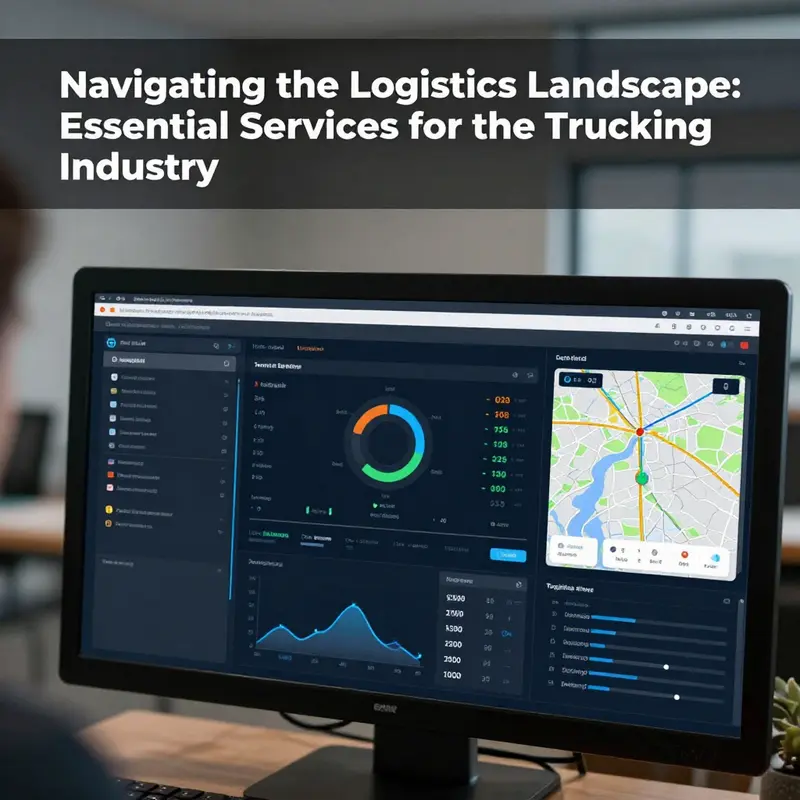
Shipment tracking and real-time visibility are no longer luxuries but expectations. The integration of global positioning systems, telematics, and electronic logging devices feeds a continuous stream of location data, status updates, and event triggers. Real-time visibility does more than satisfy curiosity; it enables proactive problem-solving and operational agility. When a shipment deviates from its expected path or encounters a hold at a border crossing, dispatch teams can respond promptly, reallocate resources, or inform customers with accurate, timely updates. The objective is not just to know where a load is, but to understand why it is where it is and what mitigations are possible. Visibility also enhances compliance, particularly with hours-of-service rules and other regulatory requirements that govern driver rest, restarts, and driving windows. A Transportation Management System (TMS) embedded with GPS, telematics, and ELD data creates a single source of truth that aligns dispatch, operations, and customer service in a shared dashboard of accountability.
The role of the Transportation Management System (TMS) deserves particular attention. A TMS is the digital backbone that enables planning, execution, and optimization to occur in a unified environment. It ingests inputs from disparate sources—GPS feeds, ELDs, warehouse management systems, order management platforms, and carrier portals—to craft a coherent operational plan. On the planning side, the TMS supports route optimization, mode selection, and carrier matching. In execution mode, it automates load assignments, dispatches drivers, and coordinates with warehouses and shippers for pickup, staging, and final delivery. The optimization feature is where the TMS truly shines, continuously evaluating trade-offs between service levels, transit times, and total cost, and proposing alternative routes or carrier mixes to improve overall performance.
Beyond immediate logistics efficiency, the TMS acts as a catalyst for safety and regulatory compliance. By consolidating data from GPS, telematics, and electronic logs, the system provides evidence of adherence to hours-of-service (HOS) rules and safety practices. This compliance dimension is not merely a legal shield; it translates into more predictable driver schedules, reduced fatigue-related risk, and fewer unplanned detours that disrupt downstream operations. When coupled with maintenance data and telematics alerts, a mature TMS supports proactive maintenance planning and asset utilization. The integration of safety and compliance data into the same decision-making framework helps trucking operations strike a balance between aggressive service commitments and prudent, sustainable operating practices.
The overarching objective of transportation management is to deliver timely, cost-effective, and reliable service while preserving visibility across the end-to-end supply chain. This triad—timeliness, cost discipline, and transparency—forms the core of performance expectations for customers and partners. In practical terms, performance analysis becomes the compass by which continuous improvement is charted. Key performance indicators such as on-time delivery rates, average transit times, and measured variance against planned schedules reveal where processes are efficient and where friction persists. Cost metrics, including fuel consumption per mile, detention costs, and accessorial charges, illuminate the true drivers of expense beyond the headline rate. A robust analytics framework within the TMS translates raw data into actionable insights: where to reroute, which lanes to preferentially dedicate to certain carriers, and how to rebalance loads to maximize capacity while minimizing risk.
The conversation about transportation management would be incomplete without acknowledging the broader ecosystem in which trucking operates. The integration and coordination across the supply chain—suppliers, customs brokers, intermodal partners, and even final-mile networks—determine whether a truck can maintain a smooth, uninterrupted journey. A truly effective transportation management approach does not view trucking in isolation. It recognizes how handoffs between modes, such as truck-to-rail or truck-to-ship, depend on coordinated timing, compliant documentation, and synchronized data exchanges. In this sense, transportation management becomes a partner in multi-modal logistics, ensuring that road movements align with the larger plan for goods to reach their destinations promptly and in good condition.
As the industry evolves, the value proposition of transportation management extends into the realm of certification and quality assurance. Standards-based management systems, such as ISO 9001, provide a framework for continuous improvement, process efficiency, and customer focus. Independent auditing and certification, such as that offered by recognized bodies, validate that the organization maintains robust processes and a culture of reliability. Certification is not a mere badge; it is a signal of risk mitigation, consistent performance, and a commitment to accountability that resonates with customers seeking predictable service levels in a volatile market. The emphasis on process discipline, measured outcomes, and continual refinement aligns with the fundamental goals of transportation management: to reduce transit times, lower fuel consumption, and minimize out-of-pocket costs, all while elevating customer satisfaction through reliable, transparent service.
The importance of data-driven decision-making in transportation management cannot be overstated. Modern logistics relies on the convergence of real-time data, predictive analytics, and automation to plan more accurate routes, anticipate disruptions, and optimize utilization of assets. This data-centric approach supports proactive exception handling rather than reactive firefighting. With better information, dispatchers can preempt bottlenecks, adjust driver assignments before delays cascade, and communicate credible updates to customers. The outcome is a network that behaves more like a living system—adaptive, resilient, and capable of recovering quickly from disturbances. In this environment, the role of the TMS expands beyond scheduling and tracking to become a strategic instrument for capacity planning, investment decisions, and long-term network design.
The Montreal port expansion, a real-world example of gateway evolution, highlights how transportation management must adapt to shifting infrastructure and policy landscapes. As ports extend their capacity, logistics professionals recalibrate routing and intermodal transitions to capitalize on new access points and increased throughput. The decision calculus involves not just shorter routes but smarter sequences of movement that leverage the enhanced port capabilities while aligning with customer deadlines and carrier availability. This example underscores a broader truth: transportation management is not static. It thrives on continuous learning, scenario planning, and the willingness to adjust tactics as the gateways to markets change. In this sense, the chapter’s focus on planning, execution, and optimization becomes a practical, ongoing discipline rather than a one-off task.
To balance the immediacy of routing decisions with the strategic horizon of supply chain design, transportation management demands collaboration across stakeholders and a culture that values data literacy, safety, and service reliability. The capacity to share timely information with customers, suppliers, and carriers creates a foundation of trust and predictability. In an industry characterized by tight margins and high variability, predictable service is itself a competitive differentiator. The TMS acts as the enabler of this predictability by providing a single, coherent view of the entire shipment lifecycle—from pickup through delivery—while preserving the flexibility to adapt when unforeseen events occur. The ambition is not to eliminate risk but to manage it so that it becomes a controllable variable rather than an uncontrollable disruption.
In closing, transportation management is the engine that powers the broader spectrum of logistics services for the trucking industry. It coordinates route optimization, carrier relationships, rate negotiation, real-time visibility, and compliance into a cohesive workflow that drives performance and customer satisfaction. It also anchors the capability for continuous improvement through robust data, standardized processes, and evidence-based decision-making. As the industry continues to evolve—with greater emphasis on intermodal coordination, regulatory resilience, and sustainable operations—the transportation management framework will only grow more essential. It is the mechanism by which trucking becomes not only a means of moving goods but a reliable, intelligent, and trusted component of modern supply chains.
For readers seeking deeper context on quality standards that support reliable logistics operations, a relevant external resource offers further guidance on quality management systems and how independent certification reinforces performance and risk management across transportation networks: Quality Management Systems by TÜV Rheinland.
Internal note: to explore a practical case related to gateway logistics and port capacity shifts, consider the discussion on the Montreal port expansion and its impact on supply chains: Montreal port expansion impact on supply chains.
Steering Efficiency: Fleet Management as the Pulse of Modern Trucking Logistics
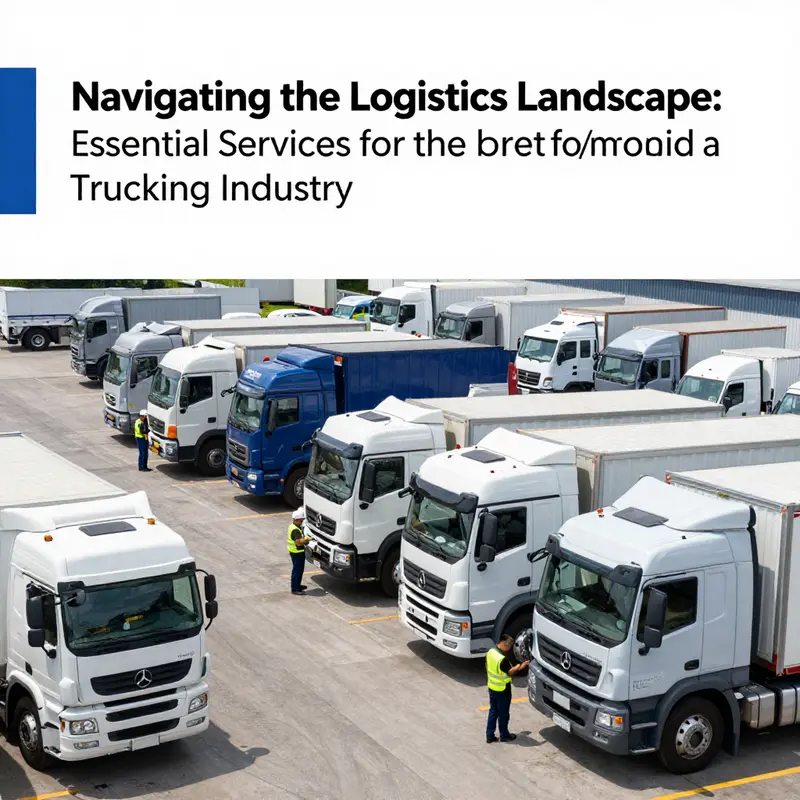
Fleet management sits at the core of logistics services for the trucking industry, tying together planning, execution, and continuous improvement in a way that touches every mile of the road and every interaction with customers. It is the mechanism that translates strategic goals—reliability, speed, cost control, and sustainability—into actionable daily practice. When done well, fleet management becomes the invisible layer that makes transportation management possible at scale. It informs which routes are chosen, how trucks are assigned, when maintenance must occur, and how drivers are coached to operate safely and efficiently. It also shapes the way customers experience service, because the systems that monitor asset health, track shipments in real time, and coordinate handoffs between modes create a transparency that buyers increasingly expect. In the broader context of logistics services for the trucking industry, fleet management is less a single service than a dynamic discipline that coordinates multiple services—transportation management, warehousing, real-time visibility, and cross‑border coordination—into a coherent value proposition for shippers and carriers alike.
At the heart of modern fleet management is technology, deployed not as a gadget but as a strategic enabler. GPS tracking and telematics have evolved from convenience features to essential risk controls. They provide real-time location data, engine diagnostics, fuel consumption metrics, and driver behavior indicators. When data streams from vehicles, drivers, and attached devices flow into a centralized fleet management software platform, managers can see patterns that would be invisible from a spreadsheet or a weekly report. This visibility supports a shift from reactive firefighting to proactive stewardship of assets. It allows managers to reallocate assets quickly in response to an interruption, reroute a late shipment, or swap a driver who has reached a legally mandated limit, all while maintaining service levels. The value of such visibility is not limited to speed; it extends to safety and compliance, because continuous monitoring helps ensure that hours-of-service rules are observed and that fatigue indicators can trigger timely interventions.
The next layer, data analytics and predictive maintenance, transforms what once were fixed schedules into adaptive care for a fleet. Real-time diagnostic data from onboard sensors enables condition-based maintenance, where service is scheduled according to the actual state of a component rather than a calendar date. This approach reduces unnecessary maintenance activity, lowers the risk of unexpected breakdowns, and extends the lifespan of critical assets. It also helps allocate maintenance resources more efficiently—technicians, parts inventory, and service windows can be planned around the fleet’s operational calendar rather than around a generic timetable. The financial and operational impact of predictive maintenance is substantial: fewer breakdowns mean less unscheduled downtime, which in turn translates into higher asset utilization, more predictable delivery windows, and lower overall operating costs. For fleets that operate in high-value or time-sensitive segments, the reliability gained through predictive maintenance is a differentiator that customers notice and are willing to pay for. As maintenance decisions become more data-driven, fleets also refine their parts stocking strategies, tooling inventories, and technician training programs, all of which contribute to a leaner, more responsive maintenance ecosystem.
Alongside maintenance, route optimization is a pillar of efficiency. Advanced routing uses algorithms that consider distance, traffic patterns, weather, driver availability, delivery windows, and regulatory constraints to identify the best possible sequence of runs. The results are tangible: reduced mileage, lower fuel consumption, shorter delivery times, and a smaller carbon footprint. Yet route optimization is not simply about the shortest path; it is about the most reliable path that preserves service quality. For example, a route that looks optimal on a map may be suboptimal when you factor in peak-hour congestion, temporary road restrictions, or the need to pass through border checks. Thus, the optimization process is tightly linked to real-time visibility systems and to the broader planning function that balances speed with safety and compliance. In practice, this means that dispatchers can adjust plans on the fly, reassign loads to available equipment, and keep shipments aligned with customer commitments even when disruptions occur.
Beyond the mechanics of software and sensors, fleet management is driven by a clear set of strategy-informed practices. Its success rests on standardized operating procedures that codify how assets are acquired, assigned, maintained, and retired. A well-documented SOP reduces variation, supports training, and makes it easier to scale operations as demand grows or shifts. Training is a constant in this ecosystem. Drivers are not just operators but crucial data points in the safety and efficiency equation. Continuous coaching on speed management, braking habits, idle time, lane discipline, and driver health contributes to a safer, more productive fleet. Compliance monitoring—covering hours-of-service rules, vehicle regulations, and safety inspections—acts as the guardrail that keeps operations within legal and ethical bounds while preserving reliability. When SOPs, training, and compliance are aligned, fleets experience fewer excursions into downtime or regulatory trouble, which translates into smoother service lines and improved customer trust.
It is important to view fleet management as a centralized discipline that interacts with multiple facets of logistics services. On the transportation management side, decisions about carrier selection, lane optimization, and capacity planning depend on the health and performance of the fleet. Real-time tracking feeds the broader visibility picture that customers rely on, making it possible to share timely shipment statuses and expected arrival times. When combined with warehousing and order fulfillment capabilities, fleet data helps orchestrate end-to-end flows—from receiving inventory to preparing it for loading, storing it efficiently, and finally delivering it to the customer or to a distribution point. The value of integration becomes even more apparent when considering cross-border or multi-modal operations. A well-coordinated fleet can act as a seamless bridge between trucks, rail, ships, or air transport, smoothing the transitions that keep the supply chain resilient in the face of disruption.
The practical implications of robust fleet management extend to cost control and sustainability as well. Fuel is a major expense, and even small improvements in routing, idle time reduction, and vehicle tuning accumulate into meaningful savings. Telematics-based feedback on driver behavior supports coaching that reduces unnecessary acceleration and braking, which also lowers wear and tear on the engine and transmission. Predictive maintenance keeps engines in their optimal operating ranges, which improves fuel economy and reduces the risk of performance dips. In parallel, the environmental profile of a trucking operation improves as idle reductions and efficient routing cut emissions. This is not merely a corporate social responsibility stance; it aligns with customer expectations and regulatory trends that pressure logistics providers to demonstrate measurable efficiency and lower environmental impact.
For fleets that maintain their own assets, the decision to manage maintenance in-house versus outsourcing has pronounced implications for control and cost. In-house maintenance can deliver tight oversight of vehicle readiness, specialized expertise, and rapid turnarounds, but it requires capital investment in facilities, technician training, and parts inventories. Outsourced maintenance can provide scale, access to broader expertise, and risk sharing, yet it may introduce scheduling dependencies and longer lead times for parts. A hybrid approach often works best: core preventive maintenance stays in-house, ensuring assets stay within a predictable health envelope, while non-core activities are outsourced to trusted specialists during peak periods or for less critical assets. The guiding principle is that maintenance must align with operations—what keeps trucks on the road and on schedule without compromising safety or service quality.
In this landscape, the human element remains central. Technology enables better decisions, but people translate those decisions into execution. Dispatchers, fleet managers, maintenance supervisors, and drivers collaborate in a cycle of plan, monitor, adjust, and learn. Feedback loops—from drivers who report equipment quirks to technicians who confirm the effect of a repair—feed back into the analytics that drive future actions. Cultural factors matter as well: an organization that treats data as a shared resource and values continuous improvement is more likely to realize sustained gains. Transparent communication about performance metrics, goals, and expectations fosters trust and accountability across the workforce. The result is a fleet that is not just a collection of trucks but a living system capable of adapting to demand, weather, and regulatory changes without sacrificing reliability or safety.
An important nuance in this conversation is the growing emphasis on private fleets and how their maintenance strategies are evolving in response to cost pressures and demand volatility. For readers interested in how private fleets approach maintenance trends and what distinguishes their practices, see Private Fleets Trends in Trucking Maintenance. This resource highlights the practical shifts organizations are making—from predictive maintenance adoption to scaling preventive programs—as they seek to balance control with efficiency. Such trends underscore a broader theme in fleet management: the pursuit of reliability and cost discipline through disciplined data use, targeted investments, and disciplined execution across the equipment lifecycle.
As fleet management continues to mature, the ecosystem around it becomes more intelligent and interconnected. IoT devices, machine learning insights, and connected maintenance platforms enable fleets to anticipate issues before they affect service. This predictive capability feeds into the broader workflow of logistics services by reducing uncertainty in capacity planning, improving on-time performance, and enabling more precise customer promises. It also enables smarter capital planning. Fleets can align vehicle replacement cycles with actual wear patterns and the evolving demand for capacity, rather than relying on generic depreciation schedules. In addition, the data produced by mature fleet management systems supports supplier and carrier negotiations by providing transparent performance metrics and a verifiable basis for pricing, service levels, and risk management.
The chapter closes not with a final verdict but with a perspective on growth. The trucking sector is changing in ways that demand more sophisticated orchestration of assets, information, and people. Fleet management is the hub around which this orchestration revolves. The goal is not merely to move goods from point A to point B; it is to do so with consistent reliability, at predictable cost, and with a level of transparency that reassures customers and partners. When organizations invest in technology, cultivate data-informed decision-making, and embed a culture of continuous improvement, they build a foundation that supports every other service in the logistics portfolio—from warehousing and order fulfillment to cross-border coordination and multimodal handoffs. In this sense, fleet management is the pulse that keeps modern trucking logistics alive and thriving, a continuous cycle of planning, execution, and learning that translates complex supply chains into dependable, sustainable throughput.
External reference for foundational concepts can deepen understanding of these principles: Fleet and Transport Management: A Study and Practice Guide. https://www.researchgate.net/publication/384726500FleetandTransportManagementAStudyandPractice_Guide
Between Shelves and Highways: The Integrated Role of Order Fulfillment and Warehousing in Trucking Logistics
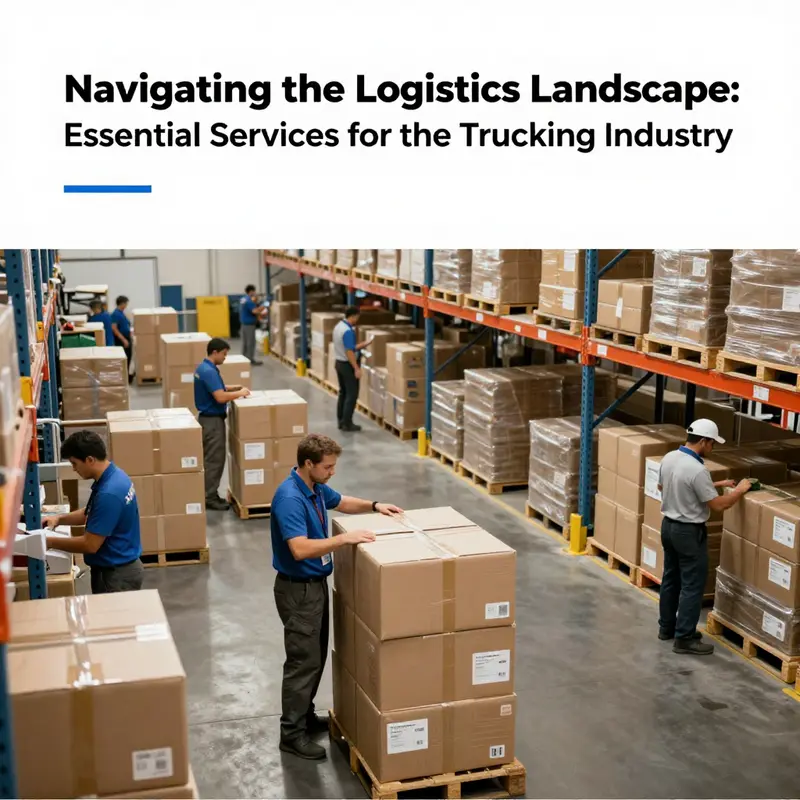
In the trucking world, order fulfillment and warehousing are not distant back-office functions. They are the living bridge between what begins on a supplier’s dock and what arrives at a customer’s door. When shippers think of logistics services, they often picture fleets on the road, but the real bottlenecks and opportunities sit where goods wait, are sorted, and are prepared for movement. A seamless choreography between order processing, storage, retrieval, and final mile delivery determines whether a shipment leaves on time, travels efficiently, and lands with the right condition and quantity. In practice, this means that every order is a promise kept by a system that links receiving, processing, picking, packing, and shipping into a continuous flow. The strength of this flow rests on two interdependent capabilities: precise warehousing and responsive order fulfillment, both aligned with the broader transportation plan and the customer’s required delivery windows. The modern trucking ecosystem recognizes that transportation management alone cannot salvage a misaligned inventory position or a slow pick cycle. Fleet optimization, load planning, and route selection gain value only when the goods are ready to move at the moment they are scheduled to depart. This is why order fulfillment and warehousing are treated as core components of logistics services for trucking, not peripheral add-ons. They set the pace, quality, and reliability of every shipment, shaping customer trust and the provider’s competitive edge. When these elements operate in harmony, trucks do not simply depart; they depart with confidence that the right goods are on board, correctly labeled, and scheduled to reach their destination within the promised time frame. The outcome is a reduction in idle time, lower handling costs, and a smoother handoff from storage to transportation. In environments where demand is volatile and capacities are tight, the ability to align inventory readiness with dispatch windows becomes a premium capability that drives service levels and cost efficiency alike. The best systems make this alignment visible. Real-time visibility across the warehouse floor, the yard, and the road creates a single picture of progress. Such visibility rests on integrated warehouse management software, automated picking systems, and data from barcode and RFID scans that confirm where each item sits and when it is moved. This is not simply about tracking; it is about making proactive decisions. When a shipment slips on a dock, the same data that shows where the goods are can also show the quickest alternative paths—perhaps rerouting a pickup to a different dock, adjusting packing configurations, or expediting a high-priority item out the door before others can be loaded. In this sense, warehouse operations become a form of on-ramp control for the trucking network, converting storage capacity into transport readiness. The practical implications of this integration extend across every tier of the supply chain. Receiving and put-away processes set the baseline accuracy for every order. If items are miscounted or misplaced, every subsequent step—picking, packing, and loading—depends on corrections that slow the entire flow and creates knock-on delays for downstream customers. Accurate inventory is not a luxury; it is a prerequisite for just-in-time models and for minimizing safety stock while sustaining reliable service. Modern warehouses combat errors through a blend of technology and disciplined processes. Automated picking systems inventory items with precision, while advanced warehouse management software coordinates every action: wave planning that groups orders by destination, slotting strategies that minimize travel time inside the warehouse, and real-time updates that synchronize with trucking schedules. The result is shorter lead times and higher fill rates, even during peak seasons when the volume of orders surges. With these tools, a carrier’s day becomes more predictable. Picked orders are prepared with exact quantities, properly packed, labeled, and staged in loading zones that align with the day’s planned departures. Such synchronization reduces the likelihood of late pickups and ensures that dwell times in the yard are kept to a minimum. The relationship between order fulfillment and trucking grows even more intimate when we consider how orders are received and processed. The moment a customer places an order, fulfillment workflows kick in. The system checks inventory across the network, prioritizes items based on demand signals, and triggers picking tasks that are timed to match the planned departure. When the distribution center or warehouse acts as the nerve center for a regional or national fleet, the speed and accuracy of these tasks directly influence the network’s confidence in meeting delivery promises. This is why real-time tracking and visibility have become indispensable. The telemetry of a shipment is no longer limited to the truck’s current location. It extends to every leg of the journey, including the moment when the goods were picked, how many items remained in stock, and when the last scan occurred before the truck pulled away from the dock. Customers increasingly expect this level of transparency. They want to know that their order was processed correctly, that the goods were packed securely, and that the truck carrying their load remains on track to arrive within the agreed window. In practice, the data that underpins this visibility feeds several critical decisions. If inventory shows a sudden discrepancy or a miss on a particular item, the fulfillment system can adjust by substituting or reallocating stock from another warehouse with minimal disruption to the truck’s schedule. If weather, traffic, or regulatory constraints threaten a delivery timeline, planners can re-sequence orders, re-slot inventory, or arrange alternative carriers who can meet the revised window. The goal is to make disruption manageable rather than disruptive. Another layer of complexity—and opportunity—arises when the warehouse functions as a multi-functional hub rather than a single-purpose facility. Warehousing today often includes value-added services that support trucking logistics. Kitting, labeling, and even simple assembly allow items to be prepped in packages that are optimized for the truck’s route structure. Temperature-controlled zones safeguard perishable goods, while secure zones manage high-value shipments. This specialization becomes particularly meaningful for shipments that demand climate control, enhanced security, or precise handling procedures. The ability to pre-stage, pre-pack, or pre-sort at the warehouse reduces in-transit handling and accelerates loading, which in turn shortens the time a truck spends idling at the dock. In a complete logistics services model for trucking, the warehouse is more than storage. It is a strategic staging ground where inventory is prepared to move with precision, where carriers’ capacities are matched to demand signals, and where the choreography between receiving, storage, picking, packing, and loading is constantly refined. Regional hubs, cross-docking facilities, and bonded warehouses each play a distinctive role in this orchestra. Cross-docking, in particular, can compress lead times dramatically. Goods arriving from suppliers are quickly sorted and immediately redirected to outbound loads with minimal interim storage. This approach hinges on tight operational discipline and robust IT systems that can route items in near real time. The synergy with trucking is clear: when cross-docking reduces the time items sit idle in a facility, trucks depart sooner and with fewer line-haul detours, improving asset utilization and reducing overall landed costs. The network effects are especially pronounced in regions experiencing port activity, where the volume of imports and exports pressures warehousing capacity and, by extension, truck availability. Regional supply-chain hubs become pivotal, not only for storing goods but for coordinating multi-modal handoffs and ensuring that the transition from warehouse to road is smooth. In this context, regional insights such as those captured in analyses of ports and hinterlands help illustrate how warehousing capacity can influence trucking operations. For example, the Montreal port expansion and its impact on supply chains underscores how a regional hub can ripple through storage capacity, order fulfillment speed, and scheduling reliability across a wide geographic area. You can explore that topic here: Montreal port expansion and its impact on supply chains. The point is not to chase port gossip but to recognize how changes at a regional hub alter the flow of goods into the warehouse, how quickly orders can be staged for outbound transport, and how much buffer exists to accommodate peak volumes without sacrificing service levels. In the broader picture, this integrated approach to warehousing and order fulfillment aligns with the goals of modern logistics: higher accuracy, faster dispatch, lower costs, and greater visibility across the entire journey. It is about turning storage capacity into a reliable source of throughput, ensuring that the clockwork of fulfillment never breaks down when demand spikes or disruption arises. Technology remains a central enabler here, from the sensors and scanners that confirm exact item location to the cloud platforms that synchronize inventory with carrier capacity and delivery windows. Automated picking, real-time yard management, and predictive analytics together create a signaling system that helps planners anticipate issues before they become problems. They also support smarter decision-making about mode shifts, carrier selection, and load optimization, which keeps trucking operations lean and responsive. Yet even with sophisticated tools, the fundamentals are straightforward: accurate receiving, disciplined put-away, precise picking, careful packing, and timely loading. When each step is performed with care and coordinated with the trucking plan, the entire supply chain breathes more easily. Service levels improve because production plants, distribution centers, retailers, and end customers all experience fewer delays and greater reliability. Costs stabilize as waste and idle time decline, while asset utilization rises. And perhaps most importantly, the customer experience improves because orders arrive on time, in good condition, and with transparent tracking throughout the journey. The chapter on logistics services for trucking would be incomplete without acknowledging that this is not a one-off optimization but a continuous cycle. Shippers re-evaluate inventory strategies, warehouses invest in automation, and carriers adjust dispatch patterns in response to shifts in demand, labor availability, and regulatory requirements. The most resilient networks embed flexibility into both fulfillment and storage processes, so they can adapt to new routes, new markets, and new forms of collaboration. As networks evolve, the boundary between warehousing and transportation softens. A warehouse becomes a dynamic node that can quickly shift from storage to staging to consolidation, while a fleet becomes more than a line of trucks; it becomes a moving extension of the warehouse floor with the ability to redeploy capacity where it is needed most. This synergy is at the heart of modern logistics services for the trucking industry, shaping not only how goods move but how supply chains respond to an ever-changing world. For readers seeking a broader framework on logistics practices, particularly as they relate to policy and national guidance, a comprehensive overview is available from the U.S. Department of Transportation: https://www.transportation.gov/logistics.
null
null
Final thoughts
In conclusion, logistics services play a critical role in the trucking industry, affecting every facet from transportation management to real-time tracking. By integrating these elements effectively, businesses can ensure better operational efficiency, cost reductions, and enhanced customer satisfaction. Understanding and implementing these logistics solutions will empower companies to not only meet but exceed the demands of today’s competitive marketplace.