

The efficacy of manufacturing, distribution, and heavy industry firms hinges significantly on the performance and reliability of their semi trucks. Ensuring these vehicles are well-maintained affects not only safety but also operational efficiency and cost management. This guide provides a thorough insight into servicing semi trucks, encompassing pre-service inspections, routine maintenance, and advanced diagnostic tools. Each chapter delves into essential practices tailored for those involved in logistics and transportation industries, ensuring your fleet operates at peak efficiency.
Pre-Flight for the Road: The Vital Pre-Service Inspection

Before a semi moves, a disciplined pre-service inspection sets the tone for safety, reliability, and uptime. It is not a ritual to appease regulators; it is a practical, observable process that translates how a truck should behave into evidence you can verify on the ground.\n\nThe pre-service inspection begins the moment a driver or technician approaches the vehicle. It follows a logical sequence that mirrors the truck’s systems, from fluids under the hood to the visibility offered by lighting and mirrors, to the braking and towing interfaces that connect tractor and trailer. The goal is simple: identify issues before they become roadside failures and document them so the team can act promptly.\n\nFluids and basic subsystems: start with fluid levels and signs of health. Engine oil, coolant, brake fluid, transmission fluid, and windshield washer fluid tell stories about how the engine and powertrain are behaving. Check dipsticks and reservoirs with care, looking for clean oil, the right viscosity, and no signs of contamination or leakage. Coolant should be at a proper level and free of rust or sediment. Brake fluid should be clean and free of moisture; in air-brake systems, moisture content can degrade braking performance. Transmission fluid should be present, correctly colored, and free of burnt odors. The windshield washer reservoir should be adequately filled and the pump should operate. This fluid health check is the first signal that conditions across the truck support safe operation.\n\nHoses and belts: next, inspect hoses for cracks, bulges, or signs of aging, particularly those carrying coolant, hydraulic fluids, and air lines. Belts should show only light wear and no fraying. A damaged hose or a worn belt is a time bomb for a roadside breakdown, so any abnormality warrants investigation and potential replacement before departure.\n\nTires and wheel ends: verify tire pressures are within manufacturer specifications for load and speed. Use a cold-tire check unless the vehicle has just been driven. Check tread depths: steer tires commonly require at least 4/32 of an inch; drive and trailer tires usually require at least 2/32 of an inch. Look for uneven wear, cupping, cracking, or sidewall damage. Inspect wheel ends for overheating signs, such as a warm hub after a short drive, which could indicate lubrication or bearing issues. Ensure lug nuts are present and tight and that wheel components show no obvious damage.\n\nLighting and signaling: test headlights, marker lights, taillights, brake lights, turn signals, and hazard lights. Clean mirrors and adjust them for a full field of view around the vehicle and trailer. Functioning lighting is essential for visibility and for communicating intent to other road users.\n\nBrakes and air system: in air-brake configurations, inspect air lines, hoses, and the condition of brake components. Check for air leaks, proper line routing, and secure connections. Look at slack adjusters, brake pads or shoes, and the overall brake system for wear, proper clearance, and absence of leakage. Brakes are a system where a fault rarely stays isolated; a wear trend in one component can affect the entire stopping performance.\n\nCoupling and hitch: examine the fifth wheel or kingpin for cracks, excessive wear, or looseness. Confirm locking devices are engaged and that there is no excessive movement that would compromise the coupling. A rough coupling surface or play beyond manufacturer guidance should be addressed before road use.\n\nElectrical and safety systems: check battery health, corrosion on terminals, and secure connections along major harnesses. Confirm fuses and circuits controlling critical functions are intact. Verify that safety systems—such as ABS indicators—are functioning as expected. If a dash warning or blinking light appears, note it and plan diagnostic steps with appropriate tools.\n\nDocumentation and workflow: record any anomalies with clear descriptions and recommended actions. A standardized checklist helps ensure nothing is missed and supports a smooth handoff to maintenance personnel. The inspection should feed into the maintenance schedule, informing what to monitor, what to replace at next service, and what requires immediate attention.\n\nMaintenance integration and uptime: a robust pre-service inspection connects to the broader maintenance program. By documenting wear, contamination, or looseness, teams can plan parts stocking, technician readiness, and the timing of more in-depth diagnostics. A reliable inspection process reduces unplanned downtime and supports a predictable maintenance cadence that keeps fleets performing.\n\nCompliance, culture, and improvement: the inspection aligns with regulatory expectations and the company’s safety culture. The data drawn from the inspection informs daily operations and long-term reliability goals. In practice, this discipline translates to safer roads, higher uptime, and a stronger brand promise to customers.\n\nAs you move from inspection to maintenance planning, remember that the value lies not only in what you find but in how you react. Isolate the issue when necessary, document it clearly, and schedule the corrective action within the maintenance window that minimizes disruption. The cycle of inspection, diagnosis, and repair builds resilience into the fleet and becomes a strategic asset rather than a chore.\n\nExternal references and guidance: for recognized, official procedures, consult the operator manuals and the regulations that govern your region. Use the recommended diagnostic tools to quantify the issues and prioritize actions based on safety and operational impact.
null

null
Reading the Signals: Mastering Advanced Diagnostic Tools to Keep a Semi Truck Roadworthy
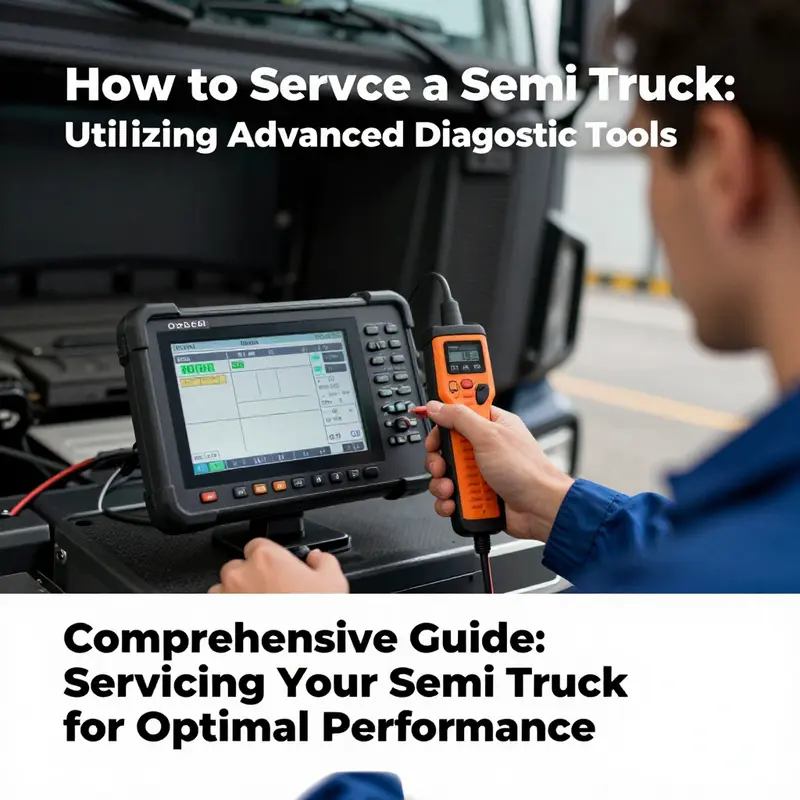
Diagnostics have become the central nervous system of modern semi truck servicing. Gone are the days when a mechanic could rely on listening for rattles or feeling for vibration to guide repairs. Today, fleets depend on real time data, fault codes, and system logs to anticipate failures before they strand a driver. This shift changes how technicians approach every service event. The goal is no longer simply to fix what breaks but to understand why it broke and to prevent recurrence. Advanced diagnostic tools are the bridge between raw device signals and concrete action. They translate streams of telemetry into actionable maintenance plans, improve safety, and drive down unplanned downtime. The result is a more reliable vehicle, a happier driver, and a tighter grip on the cost of operation.
The core toolkit centers on three linked layers. First, the onboard fault-detection system, accessible through an OBD port or other vehicle interface, provides fault codes and performance data. These scanners can read ECU fault codes, monitor live engine and transmission parameters, and perform quick checks that confirm basic health. They are not a substitute for hands-on inspection, but they dramatically reduce guesswork. A mechanic who can extract and interpret a fault code can quickly determine whether a problem is a minor sensor hiccup, an aging component, or a developing fault that could escalate if ignored. A crucial practice is to pull the complete fault code history and freeze-frame data from the moment a warning appeared. That snapshot often reveals whether a sensor drift, a wiring issue, or a mechanical wear pattern is at play.
Second, manufacturer-specific software platforms extend diagnostic reach far beyond generic scanners. These systems connect to the vehicle over the air or through a wired interface, pulling deeper data from ECUs, subsystems, and proprietary control modules. They can display battery temperatures and pack health in electric or hybrid configurations, monitor motor efficiency, and reveal the timing and effectiveness of regenerative braking. Within these platforms, technicians can access calibration data, firmware versions, and service bulletins that point to intended updates or recalls. Importantly, these tools enable remote monitoring and software-based tuning. If a fleet operates multiple units, the same software environment allows uniform analysis, standardized maintenance triggers, and consistent interpretation of results across vehicles and routes. The real power is predictive maintenance: when data show a component trending toward an end of life, maintenance can be scheduled before symptoms become roadside emergencies.
Third, cloud-based telematics completes the diagnostic loop by aggregating data from dozens or hundreds of vehicles. Telematics platforms collect sensor streams, fleet usage, fault codes, and service history in one durable data lake. Technicians and fleet managers can spot patterns that no single vehicle’s data would reveal. For example, a cluster of near-threshold brake sensor readings across multiple units may indicate a broader issue with air supply density, or a heat trend on wheel bearings that only becomes apparent when seen in aggregate. With intelligent alerts, maintenance staff can queue parts, book technicians, and assign mobile response units so that when a vehicle returns for service, it has almost everything it needs to complete the work. The efficiency gains are tangible: fewer trips to a shop, faster turnaround, and more miles logged at peak performance.
In practice, the diagnostic journey begins the moment a vehicle comes into a shop or a driver reports a warning light. The technician starts with a careful, structured data pull. An OBD-II scanner connected to the truck’s diagnostic port retrieves fault codes, and the technician notes any emission-related or drivetrain codes that appear. Next, live data streams are inspected. Engine temperature, fuel trim, air intake pressure, turbo boost, transmission temperature, and hydraulic pressures all become part of a single diagnostic narrative. This fusion of data points helps answer a simple question: is the system operating within its designed envelope, or is there an anomaly that warrants deeper inspection? A blinking ABS light, for instance, may not stop a trip, but it signals a fault that can compromise safety if left unresolved. A well-executed diagnostic routine often reveals that what seems like a single fault is actually a cascade of minor issues that, when corrected together, restore optimal performance.
The capability to access and interpret this data hinges on skilled technicians who speak fluent diagnostic language. Proficient users can translate numerical readouts into actionable next steps. They understand not only what the codes mean, but why the codes appear under specific operating conditions. They know how to correlate a high-pressure reading with a potential leak in a brake line or how a data spike during idle could point to a sensor that is intermittently failing. This level of interpretation requires a blend of mechanical knowledge and data literacy, often developed through OEM training, hands-on experience, and exposure to a wide array of vehicle configurations.
A practical aspect of mastering diagnostics is maintaining disciplined data hygiene. This means documenting every fault code, every live data snapshot, and every software update. When a fleet relies on telematics, it is essential to merge the on-vehicle findings with the remote data stream to build a coherent maintenance history. Digital records enable technicians to see how a component performed over several maintenance cycles, whether wear patterns align with duty cycles, and how environmental conditions might influence reliability. In this way, the diagnostic process expands beyond the present repair and becomes part of a longer-term reliability strategy. Pro Tip: keep a running log that captures not only the fault codes but the timing, the driving conditions, and the corrective actions taken. The best technicians treat diagnostics as a learning system, one that continuously refines the maintenance playbook as data accumulate.
When a fleet moves toward more electrified or hybrid propulsion, diagnostic complexity increases. Battery management systems, thermal controls, and electric traction components introduce new fault modes and aging patterns. The diagnostic approach must expand to include battery health indicators, cell balancing status, state of charge and state of health metrics, and thermal runaway indicators in extreme cases. The cloud platforms often provide dashboards that visualize battery health trends across a fleet, enabling managers to preemptively balance aging packs and allocate spare packs to where they are most needed. In parallel, electrical subsystems such as inverters, motors, and power electronics require specialized checks. A seemingly minor coolant temperature reading in a battery system could be the first hint of a cooling loop issue that, if ignored, reduces battery efficiency and accelerates degradation.
The case for robust diagnostics grows even stronger when you consider the broader operational context. Advanced tools support not only maintenance but route planning and uptime commitments. Real-time fault codes can trigger service advisories that inform drivers about recommended actions or knock items off a maintenance schedule entirely. This is particularly valuable for fleets that run continuous service lanes or operate on tight delivery windows. By aligning diagnostic insights with the fleet’s calendar, operators can schedule shop visits during maintenance windows, align spare parts stocking with observed wear patterns, and minimize the effect of unscheduled maintenance on deliveries. The overarching objective remains simple: keep assets healthy, predictable, and compliant with safety and emissions standards while maximizing uptime.
The road toward comprehensive diagnostics also raises questions about training and certification. The most effective technicians are those who combine hands-on mechanical skills with ongoing education in electrical systems, computer-based diagnostics, and software updates. OEM training programs, while demanding, equip technicians with the latest diagnostic workflows, fault code libraries, and calibration procedures. The goal is not merely to fix the current issue but to understand the fault’s place in the vehicle’s overall system health. This mindset helps prevent recurrence and supports safer, more reliable driving experiences for operators.
Beyond the shop floor, a clear connection exists between diagnostics and customer service. In a fleet setting, technicians translate diagnostic findings into actionable service plans for drivers and fleet managers. A transparent diagnostic narrative builds trust: drivers know why a repair is necessary, managers understand the impact on uptime, and the fleet can plan with a degree of certainty. Digital service records, accessible via fleet management platforms, ensure that every maintenance action is traceable. When a truck returns to service, the evidence trail from fault codes, live data, and service notes tells a compelling story about reliability and performance.
The broader ecosystem around diagnostics also shapes how service is delivered. With cloud-based telematics, maintenance teams can push software updates and calibrations remotely in some cases. This capability reduces on-site time and enables a more responsive maintenance program. It also imposes a responsibility: technicians must stay current with software changes, learn how to interpret new data displays, and understand how new firmware alters baseline performance. In this environment, staying informed becomes a continuous practice, not a one-time training event. The industry moves quickly, and the most successful shops cultivate a culture of ongoing education, rapid adaptation, and disciplined data management.
To connect these ideas back to everyday practice, consider how advanced diagnostics integrate with the more traditional maintenance schedule discussed earlier. The diagnostic tools do not replace routine maintenance; they inform it. For example, if an air intake sensor begins to drift within a few cycles, a mechanic might decide to replace it proactively before it causes a fault that triggers brake or emissions issues. If telematics show a few instances of elevated transmission temperature under heavy tow, the shop may adjust the cooling system inspection cadence or verify the cooling fan operation. In each case, the diagnostic data refines the maintenance plan, enabling targeted interventions rather than blanket checks. This targeted approach keeps maintenance costs lean while preserving safety and reliability.
As technology evolves, the dialog between diagnostics and maintenance will continue to deepen. The industry is moving toward unified data models, where fault codes, parameter thresholds, and maintenance outcomes map to standardized health scores. Fleet operators will run dashboards that synthesize data across vehicles, routes, and seasons, generating strategic insights about where to deploy resources and how to optimize duty cycles. For technicians, this evolution means expanding their toolkits with more sophisticated analytics, better simulation capabilities, and more powerful remote diagnostic capabilities. It also means embracing a mindset that treats software and hardware as partners in the same system rather than separate domains. The health of a semi truck is no longer a matter of mechanical integrity alone; it is a fusion of software health, electrical reliability, and mechanical wear, all governed by data-driven decisions.
This broader perspective helps explain why diagnostics are not a single event but a continuous discipline. Every maintenance encounter offers an opportunity to gather data, validate assumptions, and update the maintenance plan. The best shops embed diagnostic thinking into every step—from pre-service checks to component replacements, from lubrication schedules to wheel-end inspections. In this way, diagnostics become not just a tool for fixing problems but a framework for sustaining performance across the vehicle’s life cycle. They empower technicians to prevent failures, reduce downtime, and deliver consistent, high-value service to fleets that depend on reliable transportation.
To tie this discussion to practical steps you can implement, begin with a clear diagnostic protocol. Start with a structured data pull using an OBD-like interface and record all fault codes with their timestamps. Move to live data inspection during both idle and load conditions, paying close attention to readings that drift from baseline values. Then consult manufacturer guidance for any codes that appear, checking for active bulletins or firmware requirements before making hardware changes. Supplement this with cloud data from telematics to confirm whether a symptom is isolated or part of a broader pattern across the fleet. Finally, document every action and follow up with a preventive plan that reflects both the current issue and the vehicle’s historical health trends. This approach ensures that a diagnostic session becomes a meaningful, repeatable process rather than a one-off fix.
For fleets that are transitioning toward electrification or advanced propulsion, ensure your shop is ready to handle battery and high-voltage systems. Train technicians on high-voltage safety, thermal management, and diagnostic methods specific to electric powertrains. Build a spare parts strategy that aligns with observed wear and predictive maintenance timelines. And maintain clear communication channels with drivers so they understand what the diagnostic findings mean for their routes and schedules. In short, mastering advanced diagnostic tools is not an isolated skill; it is a strategic capability that underpins safety, reliability, and efficiency across the entire operation. This chapter is a reminder that the signals we read every day—the fault codes, the live sensor streams, the telemetry alerts—are not just diagnostic artifacts. They are the keys to maintaining a future-ready, resilient trucking operation.
As a final note, consider how continuous learning and cross-functional collaboration can transform diagnostic insights into action. Mechanics, fleet managers, and drivers all contribute data points, and when they share a common framework for interpreting those data points, maintenance becomes faster, smarter, and more proactive. The path to reliable servicing lies in the disciplined use of diagnostics, the humility to learn from data, and the commitment to translate insights into practical, timely maintenance actions. For fleets exploring electrification or modern high-tech powertrains, this disciplined, data-driven approach will determine both uptime and profitability in the years ahead. See the broader discussion on electrified fleet trends at Harbinger Electric Trucks Canada to understand how the infrastructure and maintenance models are evolving in the near term.
Harbinger Electric Trucks Canada
External resources provide additional context for the diagnostics landscape. For a deeper look at semi truck diagnostics and software-driven maintenance, refer to the official resource on semi truck diagnostics and maintenance available online. External diagnostic resource
Final thoughts
Maintaining a semi truck is more than a series of mechanical tasks; it’s about ensuring safety and reliability on the road. Regular inspections, systematic maintenance scheduling, and utilizing advanced diagnostic tools are keys to extending the life of your fleet while enhancing its performance. Embracing these practices empowers transportation companies to minimize downtime, enhance safety, and ensure compliance with industry regulations. As you move forward, make proactive servicing a cornerstone of your operational strategy.